English
 Arabic
 French
 Spanish
 Portuguese
 Deutsch
 Turkish
 Dutch
Dutch
 Italiano
 Russian
 Romaian
 Portuguese (Brazil)
 Greek
Greek

Special Insight: The Growing Demand for Luxury Escort Services in Istanbul
Other |
2026-02-05 09:10:48
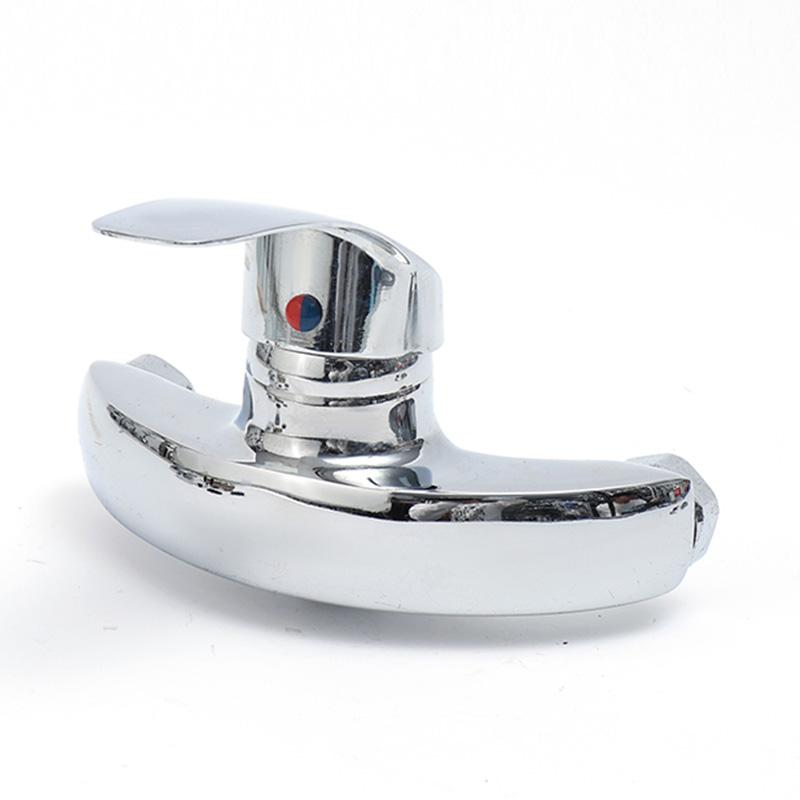
The dependable and safe performance of a modern shower faucet is the result of precision engineering within its valve system. These internal mechanisms are designed to solve specific problems: delivering consistent water temperature, preventing scalding, and enabling easy switching between water outlets. Moving beyond simple mixing, contemporary shower faucet designs incorporate pressure-balancing and thermostatic technologies that actively manage the water supply to protect users and provide a stable bathing environment. Understanding these internal systems explains the functional differences between basic and advanced models and highlights the engineering focus on safety and comfort. This analysis examines the key valve technologies and functional components found in a quality shower faucet, concluding that its internal sophistication is what defines a superior showering experience.
The pressure-balancing valve, often referred to as an anti-scald valve, is a standard safety feature in many shower faucets. It is designed to compensate for sudden pressure changes in the plumbing system. Inside the valve, a piston or a flexible diaphragm moves in response to the relative pressures of the incoming hot and cold water lines. If the cold water pressure drops suddenly, the mechanism automatically reduces the flow of hot water proportionally to maintain a safe mixed outlet temperature, and vice versa. This prevents the bather from being exposed to a dangerous temperature spike. A shower faucet equipped with a pressure-balancing cartridge provides a fundamental layer of protection, making it a common code requirement in many residential and commercial installations.
Thermostatic valve technology represents a more advanced approach within a shower faucet. This system goes beyond pressure reaction to actively control temperature. A thermostatic shower faucet contains a temperature-sensitive element, typically a wax cartridge or a bi-metal coil, that expands or contracts with heat. This element is in direct contact with the mixed water flow. If the mixed water temperature deviates from the user’s set point, the element’s physical change adjusts the ratio of hot to cold water entering the valve, restoring the desired temperature. A key advantage of a thermostatic shower faucet is its ability to maintain a set temperature regardless of pressure fluctuations or simultaneous water use elsewhere in the building. Many thermostatic models also include a maximum temperature limit stop for added safety.
The diverter mechanism is another important functional subsystem in a shower faucet. It directs water flow to the selected outlet. In a simple two-outlet system (tub spout and showerhead), the diverter may be a simple knob on the tub spout or a three-way valve integrated into the shower faucet trim. For systems with a handheld shower and a fixed head, a more sophisticated diverter within the shower faucet allows selection between the two, or even simultaneous flow to both. The durability and smooth operation of this diverter contribute significantly to the user experience. Additionally, the trim kit—the visible handles, plates, and cover—must be designed to interface seamlessly with these internal mechanisms while resisting corrosion and lime scale buildup in the humid shower environment.
The engineering inside a shower faucet is focused on achieving safety, stability, and control. The choice between a pressure-balancing and a thermostatic valve dictates the level of temperature precision and protection. The integration of a reliable diverter ensures flexible water delivery. Therefore, when selecting a shower faucet, evaluating the type of valve technology is as important as considering the aesthetic design. A shower faucet built with robust internal engineering provides peace of mind through its safety features and delivers a consistently comfortable shower by actively managing the variables of water pressure and temperature, proving that its true value is housed within its unseen components.