English
 Arabic
 French
 Spanish
 Portuguese
 Deutsch
 Turkish
 Dutch
Dutch
 Italiano
 Russian
 Romaian
 Portuguese (Brazil)
 Greek
Greek

Mobile Energy Storage Charging Pile Deployment Strategies
Other |
2026-02-07 01:59:35
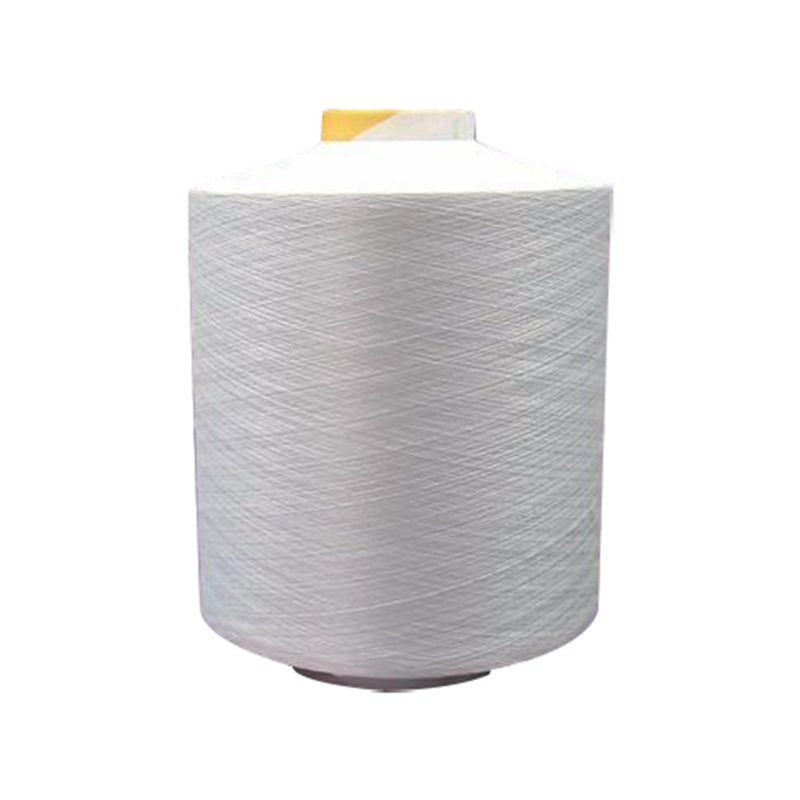
The performance characteristics of functional yarns are not incidental but are the result of deliberate engineering at various stages of production. Specific technologies are employed to embed, encapsulate, or structurally arrange materials to achieve targeted functions such as conductivity, odor control, or thermal regulation. The manufacturing pathway chosen—whether through polymer modification, fiber treatment, or yarn construction—directly influences the durability, effectiveness, and cost of the final functional yarn. Understanding these technical approaches provides insight into how a simple strand of fibers can be transformed into a high-performance component. This analysis explores the key technological routes for creating functional yarns, concluding that the integration method is as important as the active agent itself.
One fundamental route is integral incorporation during polymer processing. Here, functional additives are mixed directly into the polymer melt or solution before it is extruded into filaments. For instance, titanium dioxide or zinc oxide nanoparticles can be dispersed in the polymer to create UV-blocking functional yarns. Conductive carbon black or metallic particles can be compounded to produce fibers with static-dissipative or sensing capabilities. This method ensures the functionality is intrinsic to the fiber, offering good wash durability. However, it requires compatibility between the additive and the polymer and can affect the fiber’s mechanical properties and spinnability. The resulting functional yarns have the active property distributed throughout their cross-section.
A second major approach is surface modification of existing fibers or yarns. This can be achieved through coating or grafting techniques. A thin layer of a functional substance, such as a hydrophilic polymer for moisture management or a silver-based antimicrobial compound, is applied to the yarn’s surface. Coating can be done via dip-coating, spray coating, or chemical vapor deposition. Surface grafting uses chemical or plasma treatments to bind functional molecules to the fiber surface. Functional yarns produced this way can exhibit strong immediate effects, but the longevity of the functionality against abrasion and laundering is a key engineering challenge that determines the quality of the functional yarn.
Structural engineering of the yarn represents a third pathway. This method focuses on the physical architecture of the yarn to achieve a function. Hollow-core fibers, for example, trap air for thermal insulation, creating lightweight, warm functional yarns. Certain bicomponent fiber geometries can promote capillary action for enhanced wicking. The core-sheath structure is a classic example of structural engineering for functional yarns: an elastic core (like spandex) provides stretch, while a sheath of other fibers provides touch and additional properties. By constructing a yarn from multiple material components in a specific configuration, manufacturers can create multifunctional yarns that combine, for example, stretch, moisture-wicking, and antimicrobial properties in a single strand.
The engineering of functional yarns is a multi-disciplinary endeavor combining chemistry, physics, and textile science. The choice between integral, surface, or structural methods depends on the desired property, the required durability, and economic considerations. Therefore, a functional yarn is more than a carrier of additives; it is a precisely designed system where the method of integration is critical to performance consistency. Whether the functionality is locked within the polymer, bonded to the surface, or derived from the yarn’s geometry, successful functional yarns are those where the engineered property remains effective throughout the lifecycle of the textile product, enabling reliable performance in demanding applications.