


Design and Capabilities: The Technology Inside an Off-Grid Inverter
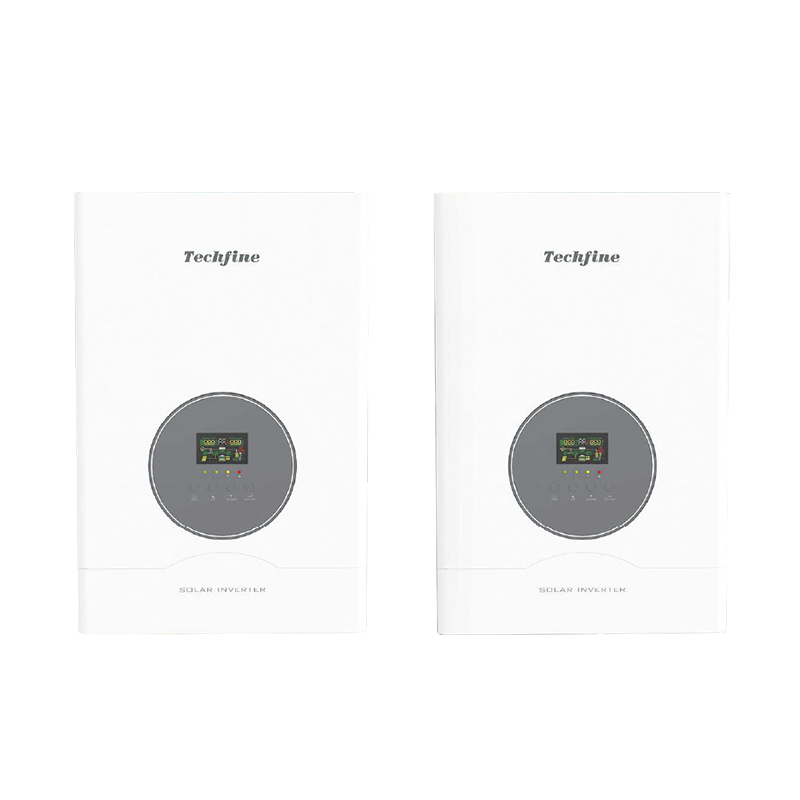
The functional capability of a modern off-grid inverter extends far beyond basic inversion, encompassing integrated battery charging, sophisticated load management, and often, generator control. This device is engineered to be the intelligent command center of a standalone energy system, coordinating between various DC and AC sources to maintain a continuous and stable power supply. Understanding its internal architecture and feature set explains how a single unit can manage complex energy flows and ensure system reliability. This analysis explores the technological components and advanced functionalities that define a high-performance off-grid inverter, concluding that its integrated design is what enables robust off-grid living.
At its electrical core, an off-grid inverter utilizes high-frequency or low-frequency transformer-based topology to convert power. High-frequency designs are typically lighter and more efficient for moderate power levels, while low-frequency designs often provide higher surge capacity for starting motors and are considered robust. The inverter section must produce a clean sine wave output to avoid damaging sensitive electronics, a standard expected from quality off-grid inverters today. Equally important is the integrated battery charger. This is not a simple charger; it is a multi-stage smart charger (bulk, absorption, float) designed for deep-cycle batteries. It optimizes charging from an AC source like a generator to extend battery life, a critical consideration in an off-grid system where battery replacement is a major cost.
A defining feature of many advanced off-grid inverters is the transfer switch and generator control logic. The unit contains an automatic transfer switch that can seamlessly connect loads to a backup AC source, such as a generator, when battery voltage drops too low. Furthermore, the off-grid inverter can send a "start" signal to an auto-start capable generator, run it for a sufficient period to recharge the batteries, and then send a "stop" signal. This automation ensures power continuity without manual intervention. The off-grid inverter also manages the safe connection between its own AC output and any auxiliary AC input, preventing back-feeding and other hazardous conditions.
System integration and monitoring capabilities are also central. Many off-grid inverters offer programmable relay outputs and load control functions. For example, an off-grid inverter can be configured to shed non-critical loads if battery voltage falls below a set point, preserving energy for essential circuits. Communication ports allow the off-grid inverter to connect to external battery monitors, solar charge controllers, and network hubs. This enables system-wide monitoring and control through a single interface, providing data on energy harvested from renewables, battery state of charge, power consumption, and inverter status. This data is vital for efficiently managing the finite energy resources in an off-grid system.
A contemporary off-grid inverter is a multi-functional power platform. Its value lies in combining the inverter, battery charger, transfer switch, generator controller, and system manager into one coordinated unit. Therefore, when evaluating an off-grid inverter, it is important to assess the full suite of features—charging current capability, transfer switch rating, programmability, and communication options—not just the wattage rating. A well-designed off-grid inverter simplifies system architecture, enhances reliability through automation, and provides the tools needed to effectively manage an independent power supply, making it the true brains and backbone of any sophisticated off-grid installation.

 English
 Arabic
 French
 Spanish
 Portuguese
 Deutsch
 Turkish
 Dutch
Dutch
 Italiano
 Russian
 Portuguese (Brazil)
 Greek
Greek