English
 Arabic
 French
 Spanish
 Portuguese
 Deutsch
 Turkish
 Dutch
Dutch
 Italiano
 Russian
 Romaian
 Portuguese (Brazil)
 Greek
Greek

Squad Australia – Non-Profit Workforce, Employment Services & Training Solutions | Apprenticeships, Traineeships, Recruitment & Skills Development Services
Other |
2026-02-23 17:30:01
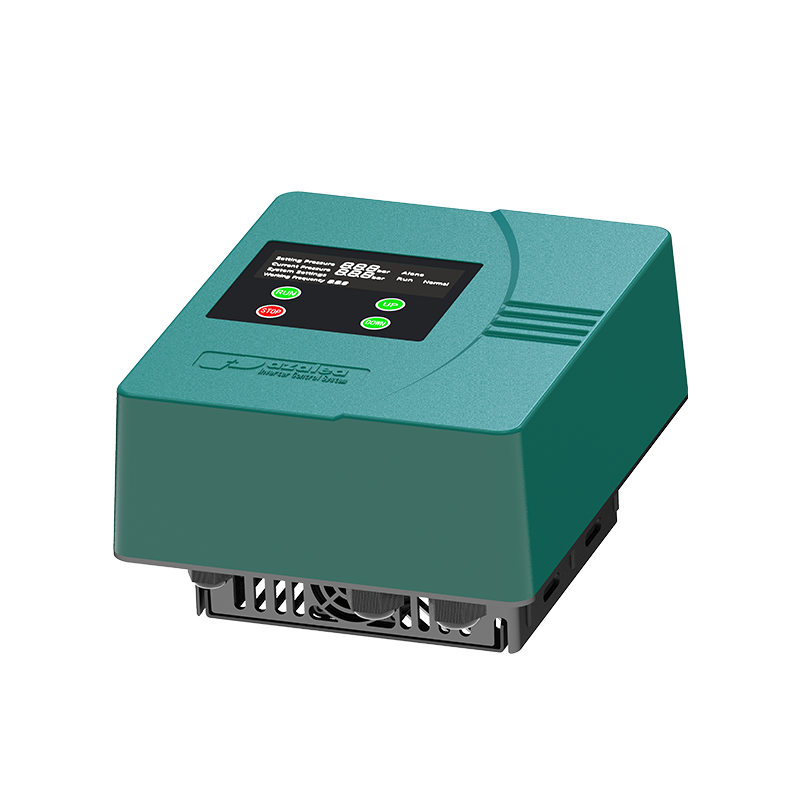
The universe of pump controllers is diverse, encompassing a range of technologies and form factors designed to meet specific operational challenges and system complexities. Choosing the right type of controller is a critical engineering decision that affects everything from initial cost and ease of installation to long-term energy consumption and maintenance requirements. These devices can be standalone units mounted near a single pump, or they can be complex multi-function panels managing an entire pump station. Their integration into a broader system—whether it's a building's plumbing, an industrial process line, or a municipal water network—requires careful planning around wiring, sensor placement, and communication protocols. Understanding the available configurations and integration strategies is key to deploying an effective and reliable pumping solution.
A fundamental distinction lies between direct-on-line (DOL) starters and more advanced soft starters or Variable Frequency Drives (VFDs). A basic DOL pump controller is essentially a motor starter with overload protection. It provides a safe means to start and stop the pump and protects the motor from current overload, but offers no control over the start-up torque or running speed. A soft starter controller adds functionality by ramping up the voltage to the motor during startup, reducing the inrush current and mechanical shock on the pump and piping system. This extends equipment life, especially for larger pumps. The most sophisticated option, a VFD controller, provides full speed control as described previously, making it the most flexible and energy-efficient option for variable load applications. The choice among these depends on the pump's duty cycle, the need for speed modulation, and the available budget.
Pump controllers are also categorized by their control methodology and the primary parameter they regulate. Pressure controllers are the most common, used wherever constant pressure must be maintained, such as in domestic water boosting or hydraulic systems. Level controllers are standard for sump pumps, sewage lift stations, and tank filling/transfer operations. Flow controllers are employed in processes where a specific volumetric rate must be guaranteed. Modern controllers often combine these functions, capable of accepting multiple sensor inputs and using complex logic (e.g., "start pump if pressure is low OR if tank level is high"). Furthermore, controllers can be designed for single pump duty, duplex (two-pump) systems with alternation logic to equalize wear, or multi-pump systems that can stage numerous pumps in and out of service based on total demand.
System integration elevates the pump controller from an isolated device to the command center of a fluid system. In an industrial setting, the controller is typically integrated into a larger automation network using standard communication protocols like Modbus, Profibus, or Ethernet/IP. This allows the pump controller to send operational data (status, speed, power consumption, fault alerts) to a central Supervisory Control and Data Acquisition (SCADA) system or a Plant DCS (Distributed Control System). Conversely, it can receive setpoints or commands from the higher-level system. For building management, a pump controller might connect via BACnet or LonWorks to the Building Management System (BMS), allowing for coordinated control of HVAC, plumbing, and fire protection pumps. This connectivity enables remote monitoring, centralized data logging for predictive maintenance, and holistic optimization of the entire facility's energy and fluid management.
The selection and integration of a pump controller are pivotal steps in system design. The type of controller—from basic starter to intelligent VFD—dictates the system's capabilities and efficiency profile. Its configuration, based on the controlled parameter and the number of pumps, determines its functional scope. Successful integration into broader control networks unlocks the full potential of modern automation, transforming raw pump operation into valuable, actionable data. Whether as a standalone panel in a remote location or a networked node in a smart city's infrastructure, the pump controller serves as the vital interface between operational goals, sensor data, and physical pump action, ensuring the entire fluid system performs as a cohesive, efficient, and reliable whole.