


The Urban Pest Problem: Understanding Why City Dwellers Battle More Infestations
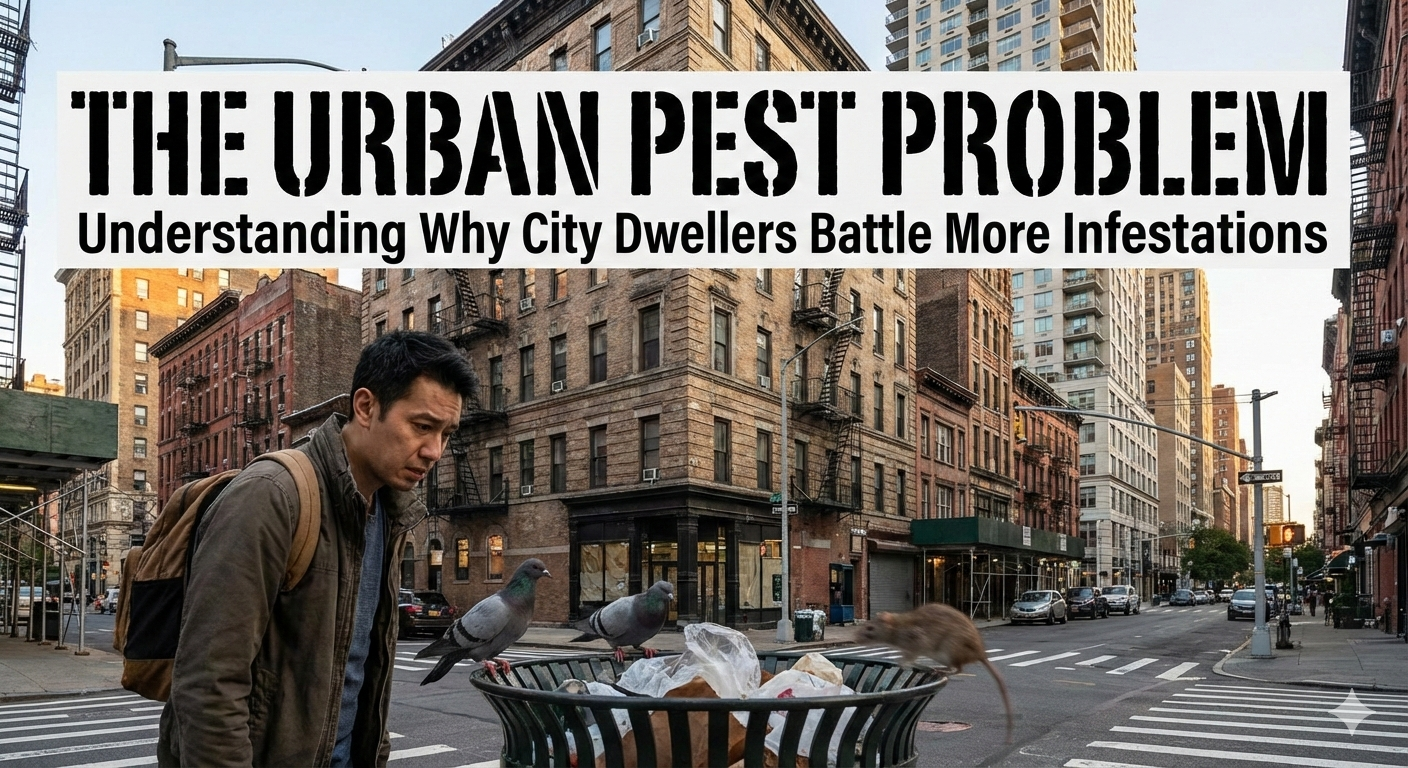
Living in the city offers countless advantages—access to culture, career opportunities, dining experiences, and vibrant communities. But along with these perks comes an often-overlooked challenge: pests. Urban homes face unique pest pressures that their suburban and rural counterparts simply don't encounter with the same intensity.
If you've ever wondered why city apartments and homes seem to battle more cockroaches, rodents, and other unwanted visitors, you're not alone. The urban environment creates a perfect storm of conditions that attract and sustain pest populations in ways that can feel overwhelming.
The Density Factor
One of the biggest challenges urban dwellers face is density. Cities pack thousands of people into relatively small areas, and where there are people, there's food, water, and shelter—everything pests need to thrive.
In apartment buildings and row houses, you're not just dealing with your own space. You're connected to dozens or even hundreds of other units through shared walls, ventilation systems, and plumbing. If your neighbor three floors down has a roach problem, there's a good chance you'll be dealing with it too.
This interconnectedness means that pest control isn't just an individual responsibility. It becomes a community issue that requires coordinated efforts to truly address.
Constant Food Sources
Cities never sleep, and neither does the food supply that attracts pests. Restaurants, food trucks, grocery stores, and residential kitchens create an endless buffet for urban pests.
Dumpsters and trash collection areas become feeding grounds. In densely populated areas, garbage accumulates quickly and frequently sits in accessible locations before pickup. For rats, mice, and cockroaches, this is paradise.
Even the most careful residents contribute to the problem unknowingly. Crumbs on subway platforms, discarded food wrappers on sidewalks, and outdoor dining areas all provide sustenance for pest populations that then move into nearby buildings seeking shelter.
Aging Infrastructure
Many urban buildings are old—really old. Historic charm comes with a price: aging infrastructure that creates countless entry points and hiding spots for pests.
Cracks in foundations, gaps around old pipes, deteriorating mortar between bricks, and worn weather stripping all serve as highways for pests to enter buildings. In older apartments, the spaces behind walls can be like underground cities for rodents and insects.
Updating infrastructure in densely populated areas is expensive and disruptive, so many issues persist for years or decades. This gives pest populations time to establish themselves deeply within the building structure.
Heat Islands and Climate Conditions
Cities are typically warmer than surrounding areas due to the "heat island effect." All that concrete, asphalt, and metal absorbs and retains heat, creating microclimates that are several degrees warmer than nearby suburban or rural areas.
Many pests thrive in warmth. Cockroaches, in particular, breed faster and remain active year-round in these conditions. While a suburban home might get a winter reprieve from certain pests, city dwellers often battle them continuously.
The warmth also means pests don't need to travel as far to find suitable living conditions, keeping populations concentrated in urban areas.
Construction and Renovation
Urban areas are constantly evolving. New construction, demolitions, and renovations are happening all the time, and these activities disturb established pest populations.
When an old building is torn down or renovated, the pests living there don't simply disappear. They relocate to nearby structures, often causing sudden infestations in buildings that previously had no issues.
Construction sites also create temporary debris piles and disturbed soil that can harbor pests. The constant churning of the urban landscape keeps pest populations mobile and adaptable.
Limited Outdoor Space
In cities, there's limited green space and soil. This might seem like it would reduce pest problems, but it actually concentrates them.
Without expansive yards to spread out in, pests must live in closer proximity to human dwellings. Rats that might burrow in a distant field in rural areas instead nest in building foundations and subway tunnels in cities.
The parks and green spaces that do exist become oases for pests, creating concentrated populations that then radiate outward into surrounding buildings.
Transportation Networks
Cities are connected by extensive transportation systems—subways, bus terminals, train stations. These underground and enclosed spaces create ideal environments for pests.
Rats in subway systems are a well-documented urban phenomenon. These transit networks provide shelter, warmth, and food scraps in abundance. They also connect different neighborhoods, allowing pests to travel across the city quickly.
Above ground, delivery trucks, moving vans, and the constant flow of goods into the city can inadvertently transport pests from one location to another.
Human Behavior and Lifestyle
Urban living often means different lifestyle patterns that can inadvertently support pest populations. Many city residents work long hours and may not notice or address pest signs as quickly.
Shared living spaces like apartment buildings can have varying standards of cleanliness. One tenant's habits can create problems for everyone in the building.
The transient nature of city living, with people frequently moving in and out, can disrupt pest control efforts. New residents may unknowingly bring pests with them in furniture or boxes.
Water Sources
Cities have extensive water systems—pipes, drains, sewers, and water features. Every building has bathrooms and kitchens with plumbing that provides moisture pests need.
Leaky pipes in old buildings create ideal conditions for pests like German cockroaches and silverfish. Condensation in basements and poor drainage around foundations attract various insects and rodents.
Unlike rural areas where water sources might be more dispersed, urban pests have reliable access to moisture throughout the city's infrastructure.
The Multiplier Effect
Perhaps the most challenging aspect of urban pest problems is the multiplier effect. When you combine high density with abundant food and water sources, aging buildings, and constant construction, pest problems don't just add up—they multiply.
A small infestation can quickly become a major problem when conditions are optimal. Cockroaches can produce thousands of offspring in a year. A pair of mice can lead to dozens within months.
Taking Action
Understanding these unique urban challenges is the first step in addressing them. While you can't control city-wide conditions, you can take steps to protect your own space.
Seal cracks and gaps around windows, doors, and pipes. Store food in airtight containers and clean up crumbs immediately. Fix leaks promptly and reduce moisture where possible. Work with your building management to ensure common areas are well-maintained.
For persistent problems, professional pest control becomes necessary. Urban pest issues often require specialized knowledge and approaches that go beyond basic DIY methods.
For more insights on urban pest challenges, check out this detailed article on Medium about city living and pest pressures.
The Bottom Line
Urban pest problems are a reality of city living, but they're not insurmountable. By understanding the unique pressures urban environments create, residents can be more proactive and realistic about pest management.
The good news is that awareness is growing. More cities are implementing comprehensive pest management strategies, and building owners are recognizing that pest control is an ongoing investment, not a one-time fix.
City living will always come with challenges, and pests are certainly one of them. But with knowledge, vigilance, and the right approach, you can enjoy all the benefits of urban life without sharing your space with unwanted roommates.

 English
 Arabic
 French
 Spanish
 Portuguese
 Deutsch
 Turkish
 Dutch
Dutch
 Italiano
 Russian
 Romaian
 Portuguese (Brazil)