


Enhancing Efficiency with Semi-Automatic Band Saw Systems
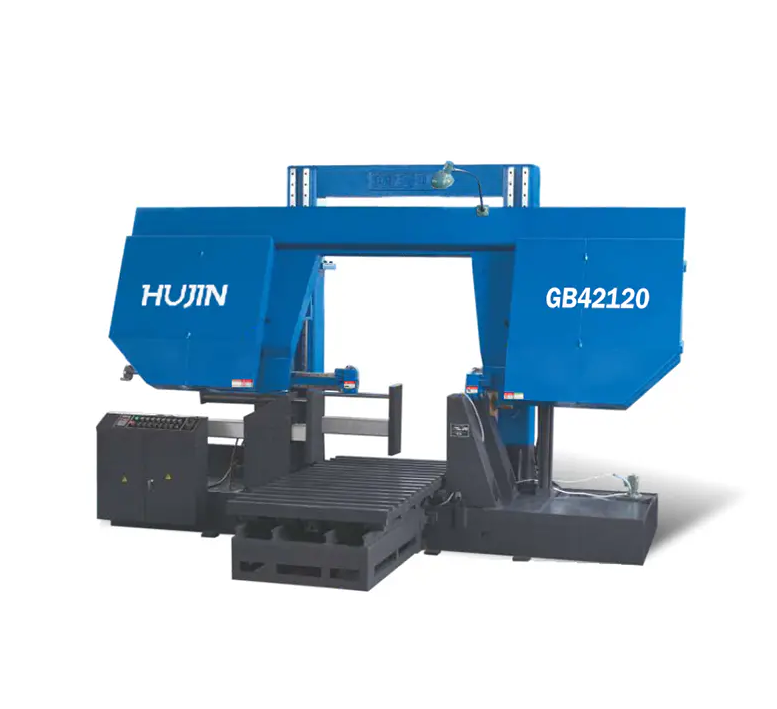
Introduction to Semi-Automatic Band Saw Automation
Semi-Automatic Band Saw machines are widely used in workshops and manufacturing facilities due to their balance of manual control and automated features. While fully manual band saws require the operator to feed material and initiate each cut, semi-automatic models often incorporate partial automation to improve efficiency. One of the most common questions is whether these machines can perform automatic feeding or cutting operations, which directly impacts productivity, consistency, and operator workload.
Understanding the Semi-Automatic Mechanism
A Semi-Automatic Band Saw typically combines manual setup with automated cutting cycles. The operator usually positions the workpiece and sets the desired cutting length, after which the machine can perform the downward cutting motion automatically. Some models also feature hydraulic or mechanical clamps that secure the material in place during cutting. This automation reduces the need for continuous manual intervention and ensures more consistent cuts compared to fully manual operations. However, fully automatic material feeding, where the machine continuously draws in new stock, is usually limited or optional in semi-automatic designs.
Automatic Feeding Capabilities
Automatic feeding in semi-automatic band saws varies depending on the machine model and configuration. Certain semi-automatic models are equipped with motorized feed rollers or hydraulic pushing systems that allow the material to advance incrementally after each cut. This semi-automated feeding can significantly improve production efficiency for repetitive tasks, particularly when cutting multiple pieces of uniform length. However, unlike fully automatic or CNC band saws, these machines often require the operator to monitor and adjust feeding parameters to prevent misalignment or material jamming.
Automatic Cutting Functionality
The automatic cutting function of semi-automatic band saws is typically limited to executing a programmed downward cut once the material is secured. The blade descends at a controlled speed, ensuring consistent cutting depth and angle. Once the cut is complete, the machine often resets to its original position, ready for the next piece. While this reduces operator effort and improves precision, it does not fully replace human intervention in terms of material positioning and setup. Full automation, where multiple pieces are fed and cut consecutively without operator input, generally requires a fully automatic or CNC-controlled band saw system.
Advantages of Semi-Automation
Even with partial automation, semi-automatic band saws offer significant benefits. They reduce operator fatigue by handling the cutting motion, improve cut accuracy through controlled blade movement, and can speed up repetitive production tasks. For small to medium-scale operations, these machines provide a cost-effective solution that combines the reliability of manual control with the efficiency of automated cutting cycles. By implementing features such as automatic clamps, semi-automatic feed, and adjustable cutting speed, operators can achieve a balance between productivity and flexibility.
Limitations and Considerations
While semi-automatic band saws offer improved efficiency, they are not a full substitute for fully automated systems in high-volume production. Operators must remain attentive to material alignment, feed consistency, and blade maintenance. Additionally, the semi-automatic feed is often slower than fully automated systems, making it less suitable for continuous, high-speed operations. Understanding these limitations helps in selecting the right machine for specific workshop requirements and ensures that semi-automation enhances rather than complicates workflow.
A Semi-Automatic Band Saw can perform partial automation, including automatic cutting and, in some models, incremental material feeding. While it does not provide fully continuous automatic feeding like CNC band saws, the semi-automated features improve precision, efficiency, and operator convenience. By understanding the machine’s capabilities and limitations, workshop managers can optimize production processes, reduce manual labor, and maintain consistent cutting quality. Semi-automatic band saws strike a practical balance between manual control and automation, making them an ideal choice for small to medium-scale cutting operations.
Cutting Capacity(mm): Round Φ800 Plate 800x1000
Blade speed(m/min): 15~60
Blade Size(mm): 1.6*80*8700
Motor main output(kw): 11
Hydraulic(kw): 2.2
Coolant pump(kw): 0.125
Machine Size(LxWxH)(mm): 4200*1800*2400

 English
 Arabic
 French
 Spanish
 Portuguese
 Deutsch
 Turkish
 Dutch
Dutch
 Italiano
 Russian
 Romaian
 Portuguese (Brazil)