


Redefining Structural Reinforcement: The Shift Toward Automated Stirrup Fabrication
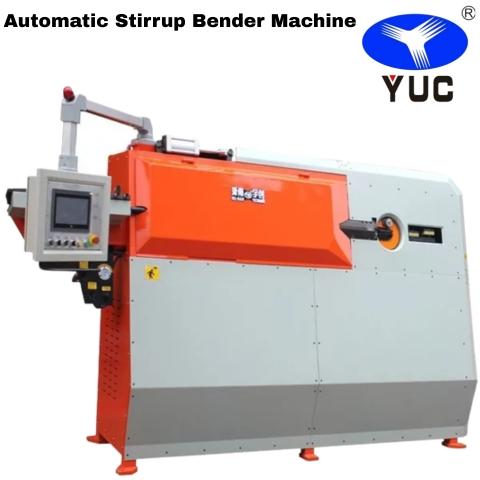
The integrity of any reinforced concrete structure depends heavily on the stirrups—the steel loops that hold longitudinal bars in place and provide essential shear resistance. Traditionally, creating these components was one of the most tedious and error-prone tasks on a construction site. Laborers spent hours manually bending steel, often resulting in inconsistent angles and wasted material. However, the industry is undergoing a digital transformation. With the introduction of the automatic stirrup bender machine, contractors are now able to achieve a level of precision and speed that was once unimaginable.
The Precision of CNC Control
Modern infrastructure requires strict adherence to architectural specifications. In high-rise buildings or seismic zones, even a small deviation in a stirrup’s dimensions can compromise the tension-bearing capacity of a column. An automated system utilizes CNC (Computer Numerical Control) technology to eliminate human error. By inputting the exact dimensions and angles into a programmable interface, the machine ensures that every single stirrup is an identical replica of the blueprint.
This consistency is vital for large-scale projects where thousands of stirrups are required. The machine’s ability to maintain high precision across high-volume batches ensures that building inspections pass smoothly and structural safety is never in doubt.
Exponential Gains in Productivity
Efficiency is the lifeblood of a profitable construction project. A professional automated bender can take coiled rebar and perform multiple functions—straightening, measuring, bending, and cutting—in one continuous, fluid motion. This "all-in-one" workflow allows a single operator to outperform an entire manual crew, completing in minutes what used to take hours.
By centralizing the fabrication process, firms can maintain a "just-in-time" supply of reinforcement components. This reduces the need for large on-site storage areas for pre-fabricated steel, minimizing clutter and improving overall site logistics.
Safety and Waste Reduction
Manual steel bending is physically punishing work that carries a high risk of repetitive strain injuries and accidents. Transitioning to automation moves workers away from the "danger zone" of high-tension steel bars, creating a significantly safer environment. Furthermore, the precision of automated cutting means that material waste is reduced to near-zero. Every inch of rebar is accounted for, which directly lowers material costs and supports more sustainable, eco-friendly building practices.
Durability for Industrial Demands
Equipment used in steel fabrication must be exceptionally rugged. Leading models, such as those from XYC Steel Machine, are engineered with hardened alloy components and heavy-duty servo motors designed to withstand 24-hour operation in dusty, high-intensity environments. This industrial-grade construction ensures a long service life and a high return on investment (ROI) across multiple project cycles.
Conclusion
As urban landscapes grow more complex, the tools we use must be as advanced as the structures we design. Investing in automated steel processing is a commitment to quality, speed, and safety. By optimizing your stirrup fabrication, you ensure that every project starts on a foundation of absolute precision.

 English
 Arabic
 French
 Spanish
 Portuguese
 Deutsch
 Dutch
Dutch
 Italiano
 Russian
 Romaian
 Portuguese (Brazil)
 Greek
Greek