


What Causes a Continuously Variable Transmission to Slip?
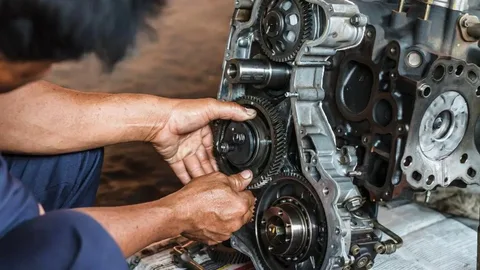
Understanding how your vehicle operates is essential for long-term maintenance, especially when dealing with modern technology like the Continuously Variable Transmission (CVT). Unlike traditional automatic transmissions that rely on a fixed set of gears, a CVT uses a belt and pulley system to provide an infinite range of gear ratios. This results in smoother acceleration and better fuel economy. However, when things go wrong, one of the most common complaints is "slipping."
If you notice your engine revving high without a corresponding increase in speed, it’s a sign of trouble. For drivers seeking CVT transmission repair in Sterling, VA, addressing these symptoms early can save you from a total transmission failure. At Latino’s Auto Service and Repair, we believe that knowing the "why" behind the "how" is the first step toward a healthy vehicle. Here is what you should know about the mechanics and causes of CVT slippage.
Low or Contaminated Transmission Fluid
The most frequent culprit behind a slipping CVT is the fluid. Unlike manual transmissions, where fluid primarily lubricates, CVT fluid serves as a hydraulic fluid that provides the pressure necessary to move the pulleys and grip the metal belt.
- Fluid Degradation: Over time, the heat generated inside the transmission breaks down the chemical properties of the fluid. When it loses its viscosity, it can no longer provide the friction required to keep the belt from sliding against the pulleys.
- Contamination: Metal shavings or debris can clog the internal filters. This leads to a drop in hydraulic pressure, causing the transmission to "hunt" for the right ratio or slip entirely.
- The Solution: Regular transmission fluid flushes are non-negotiable. If you are experiencing hesitation during acceleration, it might be time to visit a specialist for CVT transmission repair in Sterling, VA, to check your fluid levels and quality.
Overheating Issues
CVTs are notoriously sensitive to temperature. If the transmission runs too hot, the fluid thins out significantly. In this thinned state, the fluid fails to maintain the necessary hydraulic pressure to keep the steel belt tight against the conical pulleys.
Common reasons for overheating include:
- Heavy Towing: Exceeding the vehicle's weight capacity.
- Aggressive Driving: Constant high-speed acceleration.
- Cooling System Failure: A clogged transmission cooler prevents heat from escaping.
When a CVT overheats, the onboard computer may trigger "limp mode," which reduces engine power to protect the transmission from melting internal components.
Worn Pulley Faces and Belt Stretch
The heart of the CVT is a high-strength steel belt (or chain) that sits between two variable-width pulleys. For the car to move, there must be a massive amount of friction between these metal surfaces.
- Scuffing: If the belt slips even slightly, it can score or "scuff" the smooth surface of the pulleys. Once the surface is damaged, it becomes harder for the belt to find a grip, leading to a cycle of more slipping and more damage.
- Belt Stretching: While these belts are designed for durability, they can stretch or become brittle over hundreds of thousands of miles. A loose belt cannot maintain the tension required for efficient power transfer.
Sensor and Electronic Control Module (TCM) Issues
Modern transmissions are governed by electronics. The Transmission Control Module (TCM) uses data from various sensors—such as the speed sensor and pressure sensor—to adjust the pulleys.
If a sensor sends incorrect data, the TCM might not apply enough hydraulic pressure to the pulleys for the current load. This "miscommunication" results in the belt sliding because the mechanical grip doesn't match the engine's torque output. This is often misdiagnosed as a mechanical failure when it is actually an electronic one.
Why Professional Diagnosis Matters
Ignoring a slipping transmission is a recipe for a massive repair bill. Because CVTs are integrated systems, a small leak or a faulty sensor can quickly lead to the destruction of the expensive belt and pulley assembly.
When searching for transmission shops near CVT service experts or me, you need technicians who understand the specific pressures and tolerances required by these units. At Latino’s Auto Service and Repair, we use advanced diagnostic tools to pinpoint whether your issue is a simple fluid pressure problem or a more complex mechanical wear-and-tear situation.
Related Keywords to Watch For:
- Transmission fluid exchange: A preventative measure to stop slipping before it starts.
- TCM recalibration: Fixing electronic "slipping" through software updates.
- Hydraulic pressure loss: The technical term for why the belt loses its grip.
Summary of Preventative Maintenance
To keep your CVT running smoothly and avoid the dreaded "rubber band effect" or slipping sensation, follow these three rules:
- Follow the Service Schedule: Don't wait for the "check engine" light. Change your CVT fluid every 30,000 to 50,000 miles, depending on your driving habits.
- Watch for Leaks: CVT systems operate under high pressure; even a small leak can lead to a rapid drop in performance.
- Listen to Your Car: Whining noises or a burning smell are early warning signs that the transmission is struggling.
Your vehicle is an investment, and the transmission is its most complex component. Understanding the causes of slippage empowers you to take action before you're left stranded on the side of the road.

 English
 Arabic
 French
 Spanish
 Portuguese
 Deutsch
 Turkish
 Dutch
Dutch
 Italiano
 Romaian
 Portuguese (Brazil)
 Greek
Greek