


How Valve Selection Influences System Operation
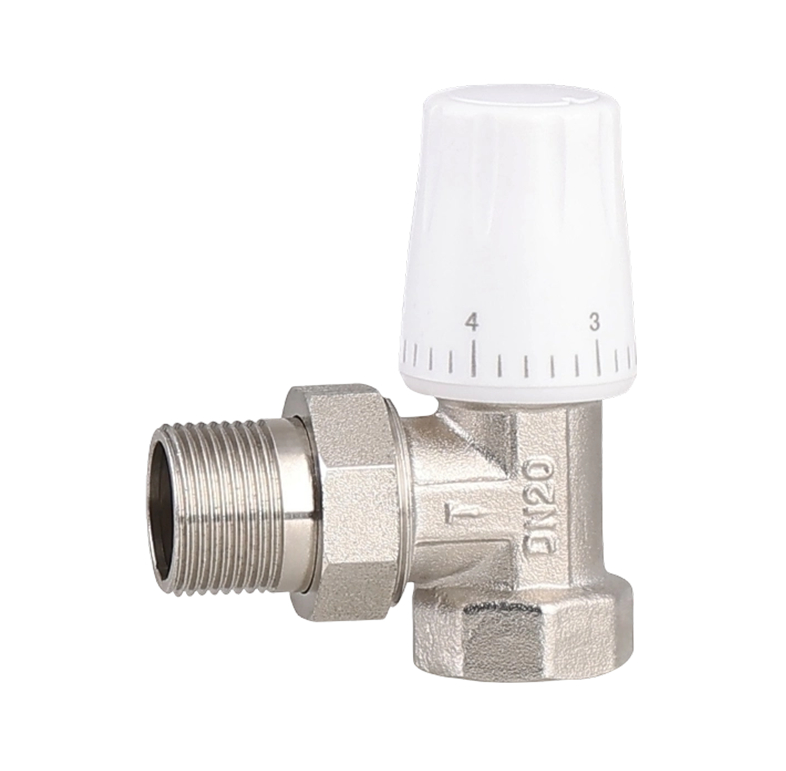
The Globe Valve/Stop Valve and Manual Temperature Valve are commonly applied in piping systems where operators expect steady control, clear feedback, and predictable mechanical response. These components are often selected not only for their functional purpose, but also for how their internal structure supports long-term use under varying flow and temperature conditions.
Functional Role of Globe and Stop Valves
Globe valves regulate flow by altering the distance between disc and seat. This design supports controlled throttling, which is useful in systems sensitive to pressure fluctuations. Stop valves emphasize isolation and are commonly used to interrupt flow during maintenance.
Both valve types share a linear motion mechanism, which simplifies operation and inspection. Their internal geometry supports consistent performance when manufactured with proper tolerances.
Manual temperature valves operate on similar mechanical principles but focus on thermal regulation rather than flow volume alone.
Production Techniques and Quality Control
Valve production involves casting, machining, surface treatment, and assembly. Each stage contributes to the final performance. Improper surface finish can affect sealing, while inconsistent threading may cause uneven operation.
ZHEJIANG PENGBANG TUBE INDUSTRY CO.,LTD. applies inspection measures during multiple production stages. Dimensional checks and pressure testing help ensure valves meet functional expectations before delivery.
Material traceability also plays a role in maintaining consistent output across batches.
Installation Context and System Interaction
Valve behavior is influenced by upstream and downstream conditions. Turbulence, debris, and pressure variation can affect how the disc seats over time. Proper installation orientation reduces unnecessary stress on internal components.
Manual temperature valves are often placed where temperature adjustment directly influences user comfort or equipment stability. Their location allows operators to respond quickly to environmental changes.
Engineers typically consider accessibility when specifying manual valves, ensuring that adjustment does not require disassembly of surrounding components.
Service Life and Usage Patterns
Manual valves experience wear primarily through repeated adjustment rather than continuous motion. Usage patterns therefore influence service life more than operating hours alone.
Routine inspection and cleaning support reliable operation. Packing replacement may be required over time, depending on frequency of use and operating conditions.
ZHEJIANG PENGBANG TUBE INDUSTRY CO.,LTD. supplies guidance on replacement parts and servicing methods to support long-term use.
Practical Integration into Engineering Projects
From small-scale installations to larger networks, globe and temperature valves remain practical solutions. Their mechanical clarity supports troubleshooting and reduces dependency on specialized tools.
By aligning manufacturing quality with application needs, these valves continue to serve as dependable components across various systems.

 English
 Arabic
 French
 Spanish
 Portuguese
 Deutsch
 Turkish
 Italiano
 Russian
 Romaian
 Portuguese (Brazil)
 Greek
Greek