


Efficiency by Design: Engineering the Modern Three-Phase Asynchronous Motor
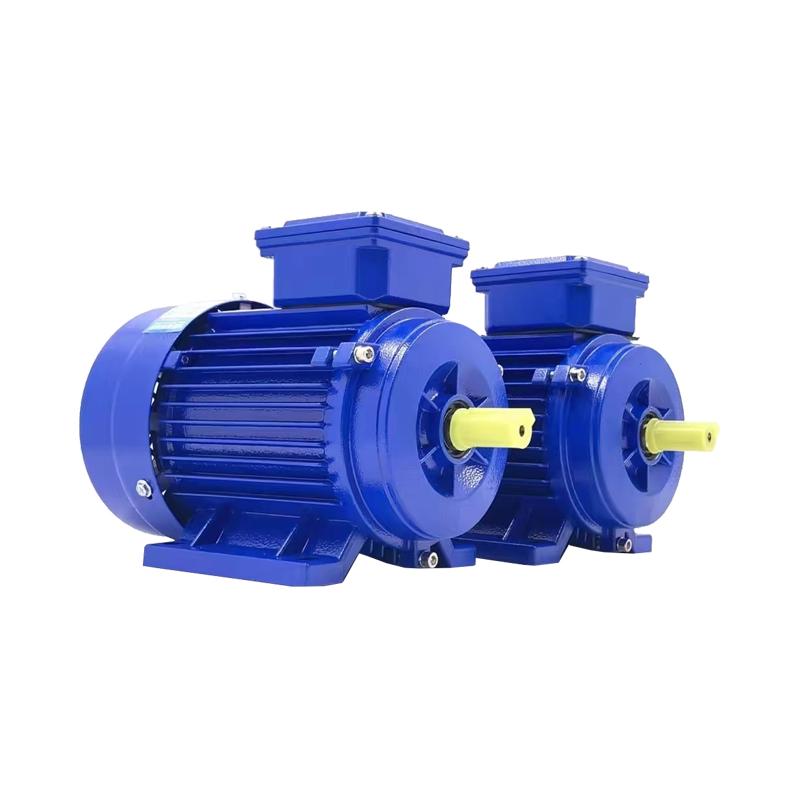
The evolution of the three-phase asynchronous motor is characterized by a sustained focus on improving energy efficiency and operational performance. While its core inductive principle remains constant, advancements in materials, electromagnetic design, and manufacturing processes have systematically reduced internal losses. These improvements are driven by global energy conservation standards and the economic imperative to lower the total cost of ownership for motor-driven systems. Designing a high-efficiency three-phase asynchronous motor involves a comprehensive approach targeting copper losses in windings, iron losses in the magnetic core, and mechanical losses. This discussion examines the key technological developments that define contemporary versions of this motor and considers the factors behind its continued development.
A primary avenue for enhancement lies in sophisticated electromagnetic design. Engineers use computer-aided simulation and finite element analysis to optimize the magnetic circuit of a three-phase asynchronous motor. This includes refining the geometry of stator and rotor slots, adjusting the air gap, and optimizing winding patterns to create a more sinusoidal magnetic flux distribution. These refinements reduce core losses (hysteresis and eddy currents) and minimize stray losses, which are caused by leakage fluxes. The goal is to ensure a greater proportion of the input electrical power is converted into useful mechanical output rather than dissipated as heat within the three-phase asynchronous motor itself.
Material selection plays an equally critical role. The use of high-grade, low-loss electrical steel for the stator and rotor laminations directly decreases iron losses. Thinner steel laminations with improved magnetic properties are now common in premium efficiency motors. For windings, increasing the cross-sectional area of the copper conductor reduces resistance and thus copper losses. Advanced insulation materials with higher thermal class ratings allow a three-phase asynchronous motor to operate safely at elevated temperatures or enable a more compact design for a given power rating. Even rotor manufacturing techniques, such as die-casting of aluminum or copper for squirrel-cage rotors, influence electrical conductivity and mechanical integrity, impacting overall motor efficiency and starting characteristics.
The integration with power electronics has arguably brought the most significant functional expansion. When paired with a variable frequency drive, a three-phase asynchronous motor becomes a highly controllable prime mover. The VFD allows precise adjustment of speed and torque by varying the frequency and voltage of the power supplied to the motor. This not only enables process automation but also generates substantial energy savings in centrifugal load applications like pumps and fans, where power consumption is proportional to the cube of speed. Modern control algorithms, such as vector control, further enhance the dynamic performance of a three-phase asynchronous motor, allowing for independent control of flux and torque for demanding applications.
Looking forward, the trajectory for the three-phase asynchronous motor includes greater integration and intelligence. Motors with embedded sensors for temperature, vibration, and magnetic field analysis can facilitate condition monitoring and predictive maintenance. Connectivity to industrial networks allows for system-level optimization of energy use. Continued research into new materials and cooling methods promises further gains.
The three-phase asynchronous motor is a dynamic field of engineering innovation. Through meticulous design, superior materials, and advanced control, it continuously meets rising demands for efficiency, reliability, and functionality. This capacity for incremental but impactful improvement ensures that the three-phase asynchronous motor remains a competitive and vital technology, effectively adapting to serve both traditional industrial roles and new applications in an increasingly electrified and efficiency-conscious world.

 English
 Arabic
 French
 Spanish
 Portuguese
 Deutsch
 Turkish
 Dutch
Dutch
 Italiano
 Russian
 Romaian
 Greek
Greek