


Engineering Convenience: The Mechanics of a Folding Step Stool
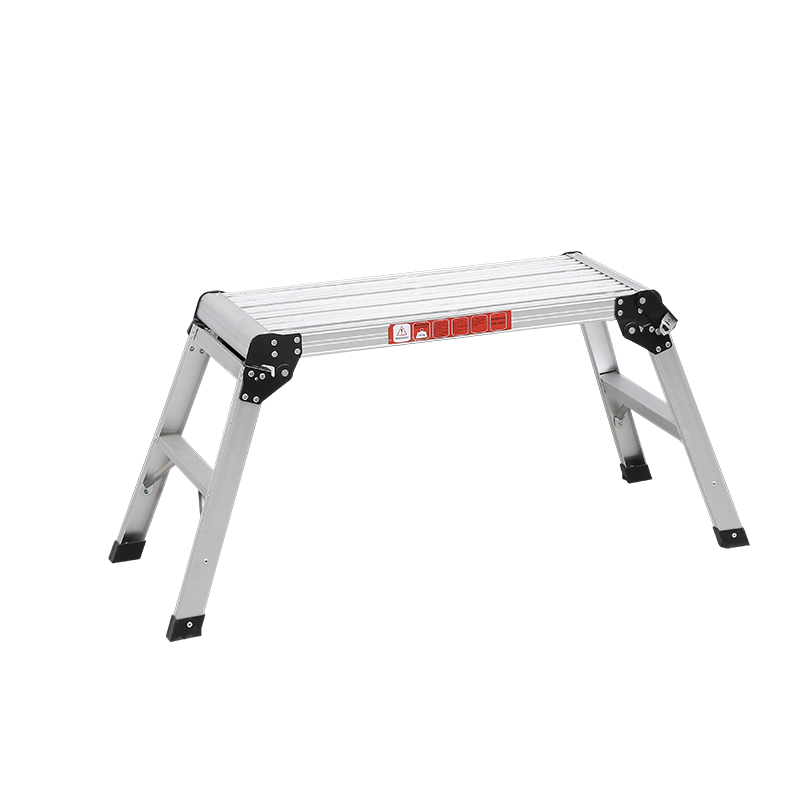
The apparent simplicity of a folding step stool belies a considered engineering process focused on safety, durability, and user-friendly operation. Creating a tool that must be lightweight for portability yet robust enough to support weight, and that must transition smoothly between two stable states—open and closed—requires careful material selection and mechanical design. The development of a folding step stool involves balancing competing demands: strength versus weight, rigidity in use versus compactness in storage, and ease of operation versus safety assurance. This analysis delves into the specific components and engineering choices that define a well-constructed folding step stool, from its structural frame to its locking system, concluding with an assessment of how these elements converge to create a dependable and long-lasting product.
The structural skeleton of a folding step stool is its frame, typically formed from tubular steel or high-strength aluminum for a favorable strength-to-weight ratio. The geometry of this frame is calculated to distribute the user's load effectively when open. Pivot points, or hinges, are the most critical mechanical elements. These hardened steel pins or rivets connect the frame sections and must withstand repetitive stress cycles without loosening or shearing. The steps or platforms are mounted onto this frame. They are commonly injection-molded from high-impact plastic, which can be textured and ribbed for both grip and structural reinforcement, or they may consist of plywood or coated metal. These steps are not merely surfaces; they are integral structural members that help prevent the frame from racking (deforming into a parallelogram) under load, thereby enhancing the overall stability of the folding step stool.
The locking mechanism is the system that ensures safety in the open position. A common and effective design incorporates a scissor-style brace or a locking bar that automatically engages when the stool is fully opened. This brace physically prevents the frame from folding back inward until a deliberate release action, such as lifting a latch or squeezing a lever, is performed. The quality of this mechanism is paramount. It must produce a positive, audible "click" or a firm resistance that gives the user clear tactile feedback that the folding step stool is securely locked. Some designs employ a secondary safety feature, such as a locking pin or a redundant latch, to provide an extra layer of security. This focus on a fail-safe locking system is what differentiates a trustworthy folding step stool from a flimsy or hazardous one.
Ergonomic and functional details further refine the design. The height of the steps is calculated to provide useful elevation while maintaining a low enough center of gravity for stability. The top step often incorporates a rounded or scooped handle, serving both as a grip for carrying the folded stool and as a supportive handrail when open. Non-slip rubber or thermoplastic feet are fitted to the bottom of the frame legs to prevent skidding on smooth floors. Some advanced models of a folding step stool might include additional features like a tool tray on the top step, a magnetic strip to hold metal items, or a lanyard to secure it to a fixed point for specialized industrial use. These additions showcase how the basic platform of a folding step stool can be adapted for niche requirements.
A well-engineered folding step stool is a product of iterative design and rigorous testing. It must pass standards for static load capacity, stability, and cycle life (the number of times it can be opened and closed without failure). The choice of materials, the precision of the hinges, the reliability of the lock, and the thoughtful inclusion of ergonomic details all contribute to a tool that feels solid and inspires confidence.
The folding step stool is a mature product whose evolution has been guided by practical experience and safety science. Its engineering is not about technological spectacle but about achieving reliable performance through sound mechanical principles. Every component, from the broad base of the frame to the secure engagement of the locking brace, works in concert to create a temporary but stable elevated workspace. Therefore, selecting a folding step stool involves looking past its basic form to appreciate the quality of its construction—the sturdiness of its frame, the authority of its lock, and the robustness of its steps. These are the silent assurances that make a simple folding step stool a dependable partner in daily tasks, a cleverly engineered answer to the perpetual challenge of reaching up.

 English
 Arabic
 French
 Spanish
 Portuguese
 Deutsch
 Dutch
Dutch
 Italiano
 Russian
 Romaian
 Portuguese (Brazil)
 Greek
Greek