


How Professional Warehouse Racking Inspection Identifies Structural Weak Points
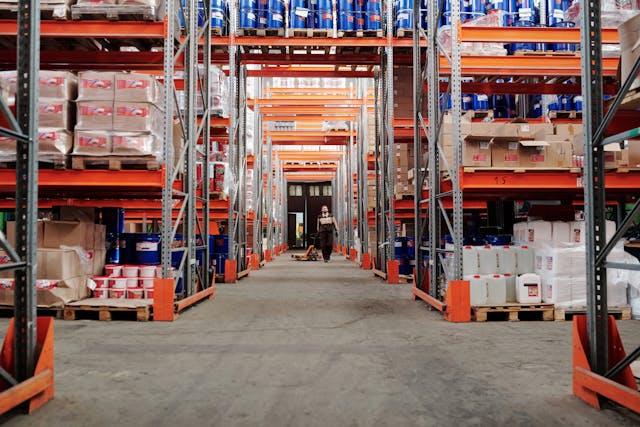
Professional warehouse racking inspection doesn't just look at racks; it diagnoses hidden weaknesses the same way a structural engineer evaluates a building. Their process is systematic, technical, and based on industry standards. Below is a detailed, human-written explanation of how inspectors actually identify structural weak points inside a warehouse.
1. They Start With a Ground-Up Visual Assessment
A professional racking inspection always begins from the floor level, because most structural failures originate from the base. Inspectors walk the aisles slowly, scanning every upright, footplate, and anchor. They look for the kind of subtle damage, like slight bending or hairline cracks, that warehouse workers usually overlook. Even a 2–3 mm misalignment can signal that a rack has shifted from an impact or floor settlement.
Inspectors use high-lumen flashlights, digital levels, and sometimes laser alignment tools to confirm the smallest deviations. This phase helps them build an early picture of where the structural load might be compromised.
2. Inspectors Check Load Distribution and Pallet Positioning
Most racking collapses happen not because of impact alone, but because weight isn’t distributed properly across the system. Professionals analyze how pallet warehouse storage: Is the weight centered? Are beams sagging? Are pallets oversized or extending beyond the designed limits?
When they notice sagging beams, they don’t assume it’s normal wear—they evaluate whether the sag is within safe tolerance or a sign of fatigue in the steel. Overloaded or uneven beams act as early indicators of structural weakness.
3. They Identify Impact Damage on Uprights
Forklift impacts are the number one cause of racking failure. However, light collisions often go unreported by workers. Inspectors know how to spot them instantly. They examine:
-
The back corners of the uprights
-
The lower 24 inches (the most impact-prone zone)
-
Areas around intersections and turns
Even a slight dent in an upright compromises its load capacity drastically. Professionals measure deflection precisely to determine whether the upright still meets structural strength requirements or must be repaired immediately.
4. Inspectors Evaluate Beam Connections for Hidden Weaknesses
The connection points, beam hooks, safety locks, and connector plates are critical. Inspectors physically test beams by applying slight upward pressure. If a beam disengages with minimal force, it signals:
-
Worn-out connectors
-
Bent hooks from past impact
-
Safety locks are missing or improperly installed
A loose beam is a disaster waiting to happen, and this is one of the most common weak points professionals catch early.
5. They Check Rack Plumbness and Alignment
Racks must remain perfectly vertical. Professionals use laser tools or plumb gauges to check if the rack has tilted beyond acceptable limits. Even a small lean indicates:
-
Floor cracking or settlement
-
Unreported impact damage
-
Overloaded bays
-
Improper installation from day one
Detecting alignment issues early helps prevent progressive leaning that eventually leads to a full-system collapse.
6. Inspectors Examine the Floor and Anchoring System
Strong racks mean nothing if the anchoring is weak. Inspectors verify every anchor bolt, looking for:
-
Missing bolts
-
Loose anchors
-
Sheared or rusted anchors
-
Concrete spalling
They also check the condition of the warehouse racking inspection floor—because cracks, moisture, or vibration can weaken the entire racking structure. A compromised anchor is one of the most dangerous weak points in any warehouse.
7. They Compare Actual Conditions With Engineering Specifications
No inspection is complete without verifying that racks are being used as per the original design specs. Professionals compare real-world conditions with:
-
Load capacity labels
-
Manufacturer beam ratings
-
Engineering drawings
-
Seismic design guidelines
If the warehouse layout has changed or new products with different weights are stored, the original design may no longer be safe. Inspectors identify these mismatches as structural weak points.
8. They Document Every Weak Point With Photos and Clear Severity Levels
A professional inspection ends with a risk-graded report. Weak points are labeled as:
-
Red — Critical: Immediate repair required
-
Amber — Moderate: Schedule repair soon
-
Green — Minor: Monitor regularly
This ensures warehouse managers know exactly which problems need urgent attention and which can be addressed through preventive maintenance.
Final Thoughts
Professional warehouse racking inspection doesn’t rely on guesswork. They use a mix of industry standards, technical measurements, and years of field experience to uncover structural weaknesses that could otherwise stay hidden. Their step-by-step approach ensures that every beam, upright, anchor, and pallet warehouse storage position is assessed for safety, protecting both inventory and workers.
Ensure your pallet warehouse storage is safe and reliable. Schedule a professional warehouse racking inspection with ruschrackinspections today.
FAQs
1. What are the most common structural weak points found during a warehouse racking inspection?
Most weak points include damaged uprights from forklift impacts, loose or missing beam locks, overloaded beams, misaligned racks, and weakened anchor bolts. These issues often go unnoticed until a professional inspection reveals them.
2. How do inspectors determine if a bent upright is still safe to use?
Inspectors measure the exact degree of deflection and compare it with RMI/ANSI safety tolerances. If the bend exceeds the allowable limit, the upright is marked unsafe and must be repaired or replaced immediately.
3. Why is proper pallet placement so important during inspections?
Improper pallet placement causes uneven weight distribution, which increases stress on beams and uprights. Inspectors check pallet positioning to ensure the load stays centered and does not exceed the system’s engineered limits.
4. How often should a warehouse schedule professional racking inspections?
Industry best practice recommends a full professional inspection once a year, with internal inspections every month. High-traffic warehouses or facilities with frequent forklift incidents may require quarterly inspections.
5. What tools do professional inspectors use to identify hidden structural weaknesses?
Inspectors commonly use laser plumb tools, digital levels, impact gauges, deflection rulers, and high-lumen flashlights. These tools help reveal misalignment, sagging, subtle dents, and anchor movement that cannot be detected with a quick visual check.

 English
 Arabic
 Spanish
 Portuguese
 Deutsch
 Turkish
 Dutch
Dutch
 Italiano
 Russian
 Romaian
 Portuguese (Brazil)
 Greek
Greek