


The Importance of Resistor Trimming Machines in Precision Electronics Manufacturing
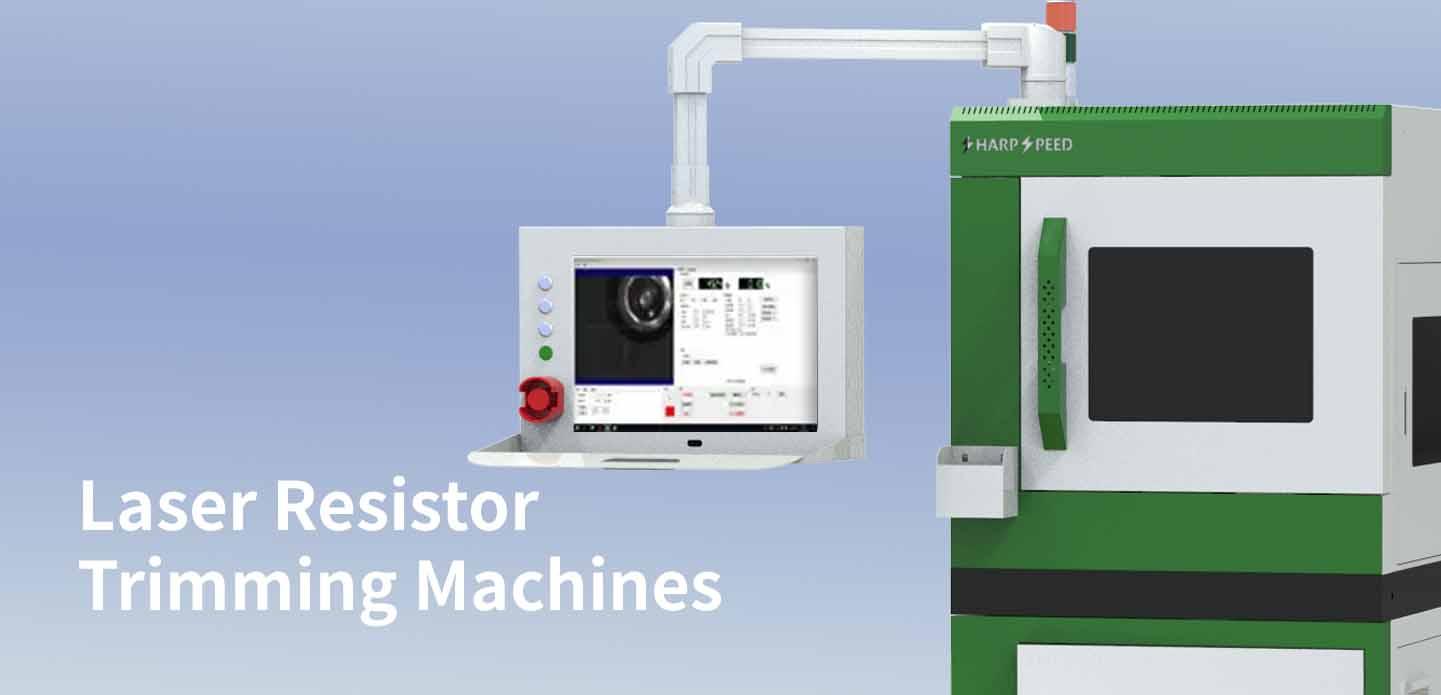
As electronic components continue to shrink in size while increasing in performance requirements, precision has become a defining factor in modern electronics manufacturing. One critical process that ensures accuracy and reliability is resistor trimming, carried out by specialized resistor trimming machines.
These systems are widely used in the production of thick-film, thin-film, and hybrid circuits, where precise resistance values are essential for circuit stability and long-term performance.
What Is a Resistor Trimming Machine?
A resistor trimming machine is a laser-based system designed to fine-tune resistor values by selectively removing material from resistive films. By precisely controlling laser parameters and trimming paths, manufacturers can achieve resistance tolerances that are difficult to reach through traditional fabrication methods alone.
Compared with mechanical trimming, laser-based trimming offers:
-
Higher precision and repeatability
-
Non-contact processing
-
Minimal thermal impact on surrounding components
-
Improved consistency for mass production
As a result, resistor trimming machines have become a standard solution in high-precision electronics manufacturing.
Laser Technology in Modern Trimming Systems
Most modern trimming systems utilize laser technology, combining stable laser sources with advanced motion control and measurement systems. During the trimming process, real-time resistance measurement allows the system to stop trimming immediately once the target value is reached.
Key technical advantages include:
-
Real-time closed-loop resistance feedback
-
High-speed laser scanning for efficient trimming
-
Support for multiple trimming patterns and strategies
-
Compatibility with various resistor materials
This intelligent control approach significantly improves yield and reduces material waste.
Applications of Resistor Trimming Machines
Resistor trimming machines are widely applied across multiple industries where precision electronics are required, including:
-
Automotive electronics and sensors
-
Medical devices
-
Industrial control systems
-
Power management modules
-
Consumer electronics
In these applications, accurate resistance values directly affect signal stability, measurement accuracy, and overall product reliability.
Why Precision Trimming Matters in Production
Even small deviations in resistance values can lead to performance instability or product failure over time. By integrating a resistor trimming machine into the production line, manufacturers can ensure tighter tolerances and improved consistency across batches.
Additionally, automated trimming systems help reduce manual intervention, lower labor costs, and support scalable production processes, making them suitable for both R&D environments and high-volume manufacturing.
Future Trends in Resistor Trimming Technology
As electronics manufacturing moves toward higher integration and smarter production lines, resistor trimming machines are evolving accordingly. Future systems are expected to feature enhanced automation, improved data analysis, and seamless integration with manufacturing execution systems (MES).
These advancements will further strengthen the role of laser trimming technology in ensuring quality and reliability in next-generation electronic products.

 English
 French
 Spanish
 Portuguese
 Deutsch
 Turkish
 Dutch
Dutch
 Italiano
 Russian
 Romaian
 Portuguese (Brazil)
 Greek
Greek