


Foreign Ownership Laws in Spain: What Expats Must Know
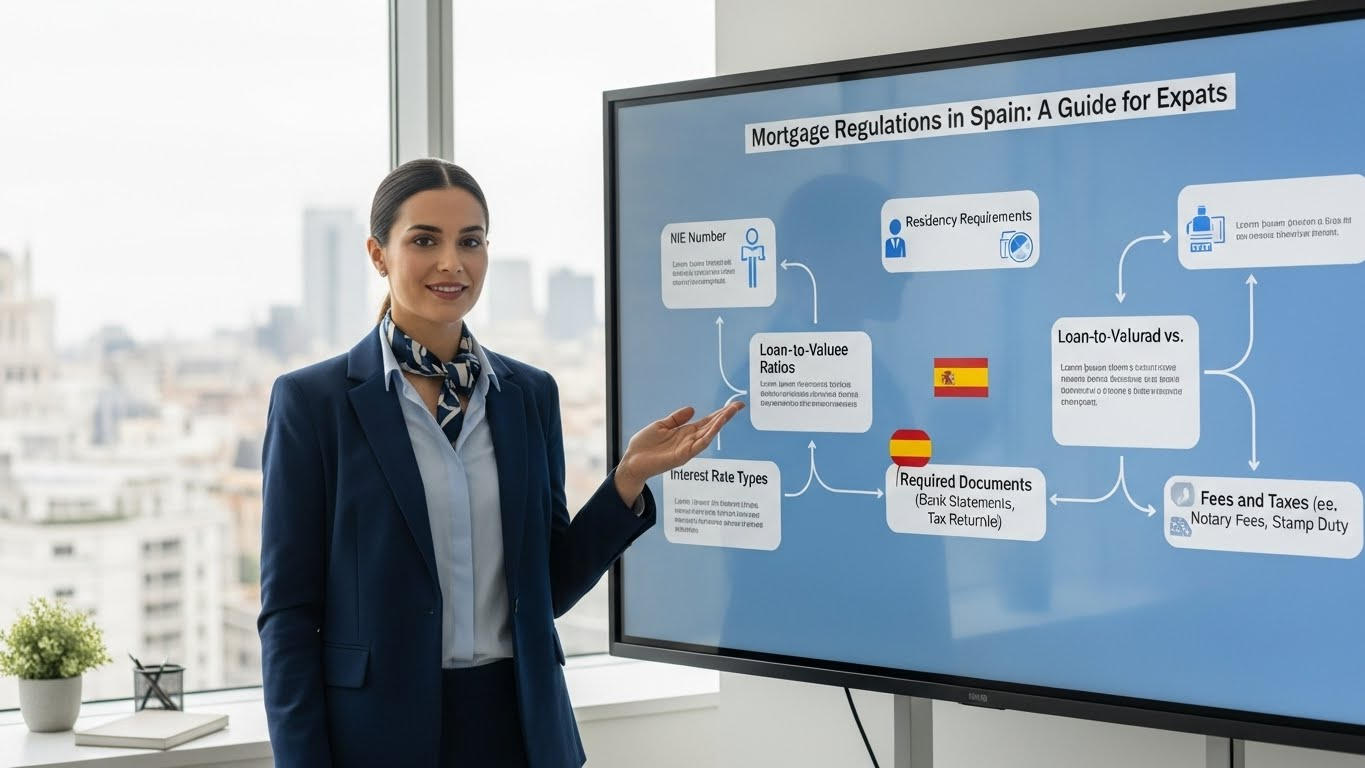
Spain has long been a magnet for expats, retirees, digital nomads, and international investors. Sunshine, lifestyle, and relatively affordable property make it appealing but before you sign anything, you need to understand foreign ownership laws in Spain.
The good news? Spain is one of the most foreigner-friendly property markets in Europe. The bad news? The legal process, documentation, and taxes can trip up even seasoned buyers if they’re unprepared.
This guide explains Spanish property laws for foreigners in plain English covering who can buy, what restrictions exist, required documents, taxes, registration, and the most common mistakes expats make. Learn about the "How mortgage in Spain works".
Can Foreigners Buy Property in Spain?
Yes. Foreigners can buy property in Spain with virtually the same ownership rights as Spanish citizens.
Under Spain foreign property laws, there are:
-
No nationality bans
-
No quotas on foreign buyers
-
No requirement to be a resident
Both residents and non-residents can legally own:
-
Apartments
-
Houses
-
Commercial property
-
Urban land
This openness is rooted in Spanish and EU law and reinforced by Law 19/2015, which regulates foreign ownership and investment reporting—not ownership limits.
Who Can Buy Property in Spain: EU vs Non-EU Buyers
EU Citizen Property Rights in Spain
If you’re an EU citizen:
-
You face no ownership restrictions
-
You can buy urban or rural property
-
The process is simpler administratively
EU buyers benefit from freedom of movement and fewer reporting requirements.
Non-EU Citizen Property Rules Spain
Non-EU buyers (UK, US, Canada, Australia, etc.) can also buy property freely, but with:
-
More documentation
-
Stricter bank checks (if financing)
-
Additional reporting for large investments
Ownership rights are still full and permanent.
Spain Property Regulations for Expats: Legal Framework
Foreign ownership is governed by several interconnected laws and institutions:
-
Spanish Civil Code – Property rights
-
Ley Hipotecaria (Mortgage Law) – If financing
-
Ley 19/2015 – Foreign investment reporting
-
Registro de la Propiedad – Ownership registration
-
Notario (Notary) – Legal authentication
Together, these ensure transparency, legal certainty, and strong protection of ownership rights.
NIE Requirement Spain: The First Legal Step
The NIE number (Número de Identificación de Extranjero) is mandatory.
You cannot:
-
Buy property
-
Sign a deed (escritura)
-
Pay property taxes
-
Register ownership
…without a NIE.
What Is the NIE Used For?
-
Property purchase records
-
Tax identification
-
Bank accounts
-
Utility contracts
Apply early—this is the number one cause of purchase delays.
Legal Documentation Requirements for Foreign Buyers Spain
When buying property in Spain as a foreigner, expect to provide:
-
Passport (valid)
-
NIE certificate
-
Proof of funds (anti–money laundering rules)
-
Spanish bank account
-
Property reservation contract
-
Purchase contract (contrato de arras)
If you’re married, Spanish law may also require:
-
Marriage certificate
-
Spouse consent (depending on regime)
Do I Need a Spanish Bank Account to Buy Property?
Technically, no—but in practice, yes.
A Spanish bank account is needed to:
-
Pay taxes and notary fees
-
Set up utilities
-
Pay community charges
-
Manage ongoing costs
Most notaries and sellers strongly expect one.
Registration and Notary Process for Foreign Buyers
Spain uses a two-step ownership protection system.
1. Notary (Notario)
The notary:
-
Verifies identity and legal capacity
-
Confirms payment methods
-
Reads and explains the deed
-
Oversees signing of the escritura
The notary is neutral—not your lawyer.
2. Registro de la Propiedad (Property Registry)
After signing:
-
The deed is registered
-
Ownership becomes fully protected
-
Your title is enforceable against third parties
This step is critical for legal security.
How to Register Property in Spain as a Foreigner
Registration includes:
-
Submitting the notarized deed
-
Paying applicable taxes
-
Recording ownership details
Once registered, your ownership is public and legally protected.
Land vs Urban Property: Restrictions for Expats
Urban Property Rules
-
No restrictions for foreigners
-
Apartments, houses, commercial units are unrestricted
Rural or Strategic Land Restrictions
In rare cases, restrictions apply to:
-
Military zones
-
Border areas
-
Certain islands or coastal land
Non-EU buyers may need government authorization, but this is uncommon for residential purchases.
Restrictions on Land Purchase by Foreigners
Restrictions are based on:
-
National security
-
Strategic location
-
Agricultural or protected land classification
Most expats buying normal homes will never encounter this.
Buying Off-Plan Property in Spain for Foreigners
Off-plan purchases are legal but riskier.
Spanish law requires:
-
Bank guarantees for deposits
-
Developer licensing
-
Clear delivery timelines
Always verify:
-
Planning permission
-
Insurance guarantees
-
Developer track record
Spanish Property Taxes for Foreigners
Foreign buyers pay the same taxes as locals.
Key Taxes When Buying
-
Transfer Tax (ITP) – Resale property (6–10%)
-
VAT (IVA) – New build (10%)
-
AJD Tax Spain – New build stamp duty
-
Notary & registry fees
AJD Tax Explained for Foreign Buyers
AJD applies mainly to:
-
New builds
-
Mortgage deeds
Rates vary by region.
Ongoing Taxes for Foreign Property Owners
After purchase:
-
IBI (local property tax)
-
Non-resident income tax (even if empty)
-
Wealth tax (region-dependent)
Owning property ≠ automatic residency, but it does create tax obligations.
Golden Visa Spain Real Estate Rules
Spain’s Golden Visa allows residency through property investment.
Key Requirements
-
€500,000 minimum investment
-
No financing on first €500,000
-
Property must be debt-free up to that amount
The Golden Visa grants:
-
Residency rights
-
Schengen travel
-
Family inclusion
Ownership alone does not grant residency without this program.
Residency and Property Purchase Spain: What’s the Link?
You can:
-
Buy property without residency
-
Hold residency without owning property
They are legally separate.
However, property ownership can support residency applications by showing financial stability.
Expat Mortgage Eligibility Spain (Brief Overview)
Foreigners can get mortgages, but:
-
Non-residents face lower LTV (60–70%)
-
Income is stress-tested
-
Documentation is heavier
Mortgage eligibility does not affect ownership rights—only financing access.
Common Mistakes Expats Make When Buying Property
Avoid these costly errors:
-
Skipping independent legal advice
-
Paying deposits without guarantees
-
Assuming verbal promises are binding
-
Ignoring registry checks
-
Underestimating taxes and fees
Spain’s system is safe—but only if you follow it properly.
Property Due Diligence Spain: Why It Matters
Proper due diligence checks:
-
Ownership title
-
Debts or charges
-
Planning permissions
-
Community fee arrears
-
Zoning classification
Never rely solely on the seller or agent.
Spanish Property Purchase Process for Expats (Summary)
-
Get NIE
-
Open bank account
-
Find property
-
Legal checks
-
Sign reservation / deposit
-
Sign deed before notary
-
Pay taxes
-
Register ownership
Simple on paper—detailed in practice.
Need clarity on your mortgage options? Speak with a Tharros Brokers expert and get personalised guidance for your situation.
Conclusion
Foreign ownership laws in Spain are among the most welcoming in Europe. Whether you’re EU or non-EU, resident or non-resident, Spain allows full property ownership with strong legal protections.
The key is preparation: understanding documentation, taxes, registration, and due diligence. With the right approach—and professional advice—buying property in Spain as a foreigner can be secure, transparent, and rewarding.
FAQs: Foreign Property Ownership in Spain
Can foreigners buy land in Spain?
Yes, though rare restrictions may apply to strategic or protected land.
Do I need a notary to buy a house in Spain?
Yes. A notary is legally required to complete the purchase.
Are there restrictions on EU vs non-EU buyers?
Ownership rights are the same; non-EU buyers face more administrative checks.
What documents are required to buy property in Spain?
Passport, NIE, proof of funds, bank account, and legal contracts.
Can non-residents get a mortgage in Spain?
Yes, but with lower loan-to-value ratios and stricter requirements.

 Arabic
 French
 Spanish
 Portuguese
 Deutsch
 Turkish
 Dutch
Dutch
 Italiano
 Russian
 Romaian
 Portuguese (Brazil)
 Greek
Greek