


A Breakthrough in Advanced Cancer Treatment! Everolimus Tablets Approved for Marketing, Ushering in a New Chapter of Precision Targeted Therapy
As the treatment of malignant tumors enters the era of precision targeted therapy, mTOR inhibitors—owing to their ability to precisely block key signaling pathways that drive tumor cell growth—have become cornerstone agents across multiple cancer types. Qingweishi® Everolimus Tablets, the first domestically developed generic and currently the only accessible locally manufactured everolimus formulation in China, not only fill a critical gap in domestic substitution but also provide a high-quality, affordable therapeutic option for patients worldwide. At the same time, they are driving meaningful transformation within the global oncology pharmaceutical landscape.
This article provides a comprehensive overview of this important medicine from the perspectives of core drug information, mechanism of action, clinical value, global patient benefit, and pharmaceutical industry development.
I. Core Drug Profile: Quality and Positioning of the First Domestic Generic
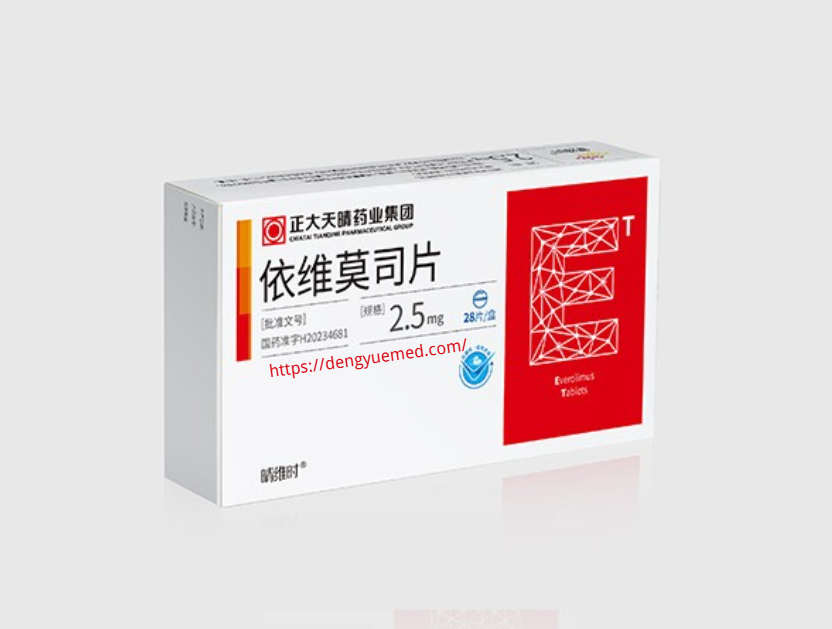
Qingweishi® Everolimus Tablets are an oral small-molecule targeted therapy developed by Chia Tai Tianqing Pharmaceutical Group. The generic name is Everolimus Tablets, with everolimus as the active ingredient. The chemical formula is C₅₃H₈₃NO₁₄, with a molecular weight of 958.22. Excipients include butylated hydroxytoluene (BHT), hydroxypropyl methylcellulose, lactose, and others. The tablets are white to off-white in appearance, with a commonly available strength of 2.5 mg.
As a prescription medicine listed under China’s National Reimbursement Drug List (Category B), Qingweishi® significantly reduces patients’ financial burden.
From a positioning standpoint, Qingweishi® represents a benchmark domestic alternative to the originator everolimus product. In January 2024, it received marketing approval from the National Medical Products Administration (NMPA). By virtue of being the first approved generic following a successful patent challenge, it was granted a 12-month market exclusivity period, making it the only accessible domestically produced everolimus formulation in China during that time.
The product has passed consistency evaluation, demonstrating equivalent quality and clinical efficacy to the originator drug, while offering a substantially lower price. This effectively addresses long-standing issues of limited accessibility caused by the high cost of the branded product.
II. Mechanism of Action: Precise Inhibition of the mTOR Pathway to Suppress Tumor Progression
The core mechanism of action of Qingweishi® lies in the selective inhibition of the mammalian target of rapamycin (mTOR) signaling pathway, particularly the mTORC1 complex. This pathway is a central regulator of cell growth, proliferation, metabolism, and angiogenesis, and is frequently overactivated in various malignancies and tuberous sclerosis complex (TSC)–related lesions.
The mechanism can be summarized in three key steps:
-
Intracellular Binding: Everolimus enters the cell and selectively binds to the intracellular protein FKBP-12, forming a stable inhibitory complex.
-
Target Engagement: This complex specifically binds to mTORC1, directly inhibiting its kinase activity.
-
Downstream Effects: Inhibition of mTORC1 suppresses downstream signaling through S6K1 and 4E-BP1, resulting in multiple antitumor effects:
-
Induction of G1-phase cell cycle arrest, effectively inhibiting tumor cell proliferation
-
Reduction of vascular endothelial growth factor (VEGF) expression, thereby inhibiting tumor angiogenesis and cutting off nutrient supply
-
Modulation of glucose uptake and cellular metabolism, suppressing tumor energy metabolism
-
Reversal of endocrine therapy resistance, enabling synergistic effects in hormone receptor–positive breast cancer and other indications
-
Notably, everolimus exhibits high selectivity for mTORC1 with minimal impact on mTORC2. This selectivity helps maintain antitumor efficacy while reducing the risk of adverse reactions, thereby improving overall treatment safety.
III. Clinical Applications: Broad Indication Coverage and Proven Therapeutic Value
Supported by a well-defined mechanism of action and robust clinical evidence, Qingweishi® Everolimus Tablets have been approved for multiple indications spanning oncology and rare diseases, making them an important therapeutic option across diverse patient populations. Approved indications include the following six major categories:
-
Advanced Renal Cell Carcinoma (RCC)
For adult patients whose disease has progressed following treatment with sunitinib or sorafenib, everolimus serves as a second-line targeted therapy. The disease control rate (DCR) reaches 65%–70%, with a median progression-free survival (PFS) of approximately 5.4 months. The combination of everolimus with lenvatinib has also been listed in international guidelines as a preferred option after failure of anti-angiogenic therapy. -
Progressive, Well-Differentiated Pancreatic Neuroendocrine Tumors (pNETs)
In adult patients with unresectable, locally advanced, or metastatic disease, clinical studies show that everolimus extends median PFS to 11.0 months, compared with 4.6 months for placebo, significantly delaying disease progression. -
Progressive, Non-Functional Gastrointestinal or Lung Neuroendocrine Tumors
In adult patients with unresectable, locally advanced, or metastatic well-differentiated disease, everolimus prolongs PFS by approximately 7 months, offering new hope to patients with limited treatment options. -
TSC-Associated Subependymal Giant Cell Astrocytoma (SEGA)
For adult and pediatric patients requiring therapeutic intervention but unsuitable for surgical resection, everolimus demonstrates tumor volume reduction as its primary efficacy endpoint, with ≥50% tumor shrinkage observed in more than 50% of patients, helping avoid or delay surgery and reduce surgical risk. -
TSC-Associated Renal Angiomyolipoma (AML)
In adult patients not requiring immediate surgical intervention, everolimus effectively controls tumor progression and reduces bleeding risk, improving quality of life and treatment timing. -
Hormone Receptor–Positive, HER2-Negative Advanced Breast Cancer
In postmenopausal women whose disease has progressed following letrozole or anastrozole therapy, everolimus combined with exemestane extends median PFS to 11.0 months and reduces the risk of disease progression by 57% compared with exemestane alone, significantly improving outcomes in endocrine-resistant patients.
Dosage and Administration
Qingweishi® should be prescribed by physicians experienced in relevant therapies. Recommended dosages vary by indication. For advanced RCC and pNETs, the recommended dose is 10 mg once daily, taken with or without food. Tablets should be swallowed whole and not chewed or crushed.
Dose adjustments are required for patients with hepatic impairment or those receiving concomitant CYP3A4 inhibitors or inducers. Therapeutic drug monitoring is recommended to maintain trough plasma concentrations within the effective range of 5–15 ng/mL.
Safety Profile
Common adverse reactions include stomatitis, infections, fatigue, diarrhea, and rash, most of which are Grade 1–2 and can be effectively managed through preventive mouth rinses and dose adjustments. Grade ≥3 adverse events occur in fewer than 10% of patients, and long-term tolerability is generally favorable.
IV. Global Patient Perspective: From Accessibility to Efficacy, Restoring Treatment Confidence
Prior to the launch of Qingweishi®, treatment with everolimus relied primarily on the originator drug, whose high cost (previously approximately RMB 7,500 per box for the 5 mg formulation) posed a significant barrier—especially for patients requiring long-term therapy.
The approval of Qingweishi® fundamentally changed this situation. As a first domestic generic, its price is substantially reduced. Combined with inclusion in the national reimbursement list (covering five core indications), patients in most provinces now pay only 20%–30% out of pocket. Using the standard breast cancer dose of 10 mg/day as an example, monthly treatment costs have dropped from approximately RMB 22,500 to around RMB 700, reducing the annual financial burden from RMB 270,000 to less than RMB 9,000 and dramatically improving accessibility.
Globally, the availability of Qingweishi® not only meets the needs of patients in China but also offers a cost-effective option for patients in other developing countries and regions, facilitating broader global adoption of everolimus. In this process, DengyueMed, a Chinese innovative pharmaceutical distributor, has played a critical bridging role by leveraging its mature global distribution network to deliver high-quality domestic innovative medicines such as Qingweishi® to healthcare institutions and patients worldwide.
For patients with rare diseases, such as TSC-associated tumors, improved accessibility is particularly meaningful. Previously, many patients were unable to receive standardized treatment due to cost barriers. Today, supported by both national reimbursement and domestic substitution, continuous treatment has become achievable, leading to significant improvements in quality of life and prognosis.
Moreover, the successful consistency evaluation of Qingweishi® has enhanced global confidence in domestically manufactured anticancer drugs, laying a solid foundation for their entry into international markets.
V. Pharmaceutical Industry Perspective: A Model of Domestic Substitution and Innovation-Driven Development
The successful launch of Qingweishi® Everolimus Tablets represents a milestone for China’s pharmaceutical industry and serves as a benchmark for domestic substitution. Its successful patent challenge and subsequent market exclusivity highlight the growing capabilities of Chinese pharmaceutical companies in intellectual property strategy, providing valuable experience for future generic drug development and accelerating the transition from “imitation-driven” to “innovation-integrated” development.
Strict adherence to international standards throughout R&D and manufacturing, along with successful consistency evaluation, ensures equivalence to the originator drug in quality and efficacy. This not only elevates the overall technical capabilities of domestic manufacturers but also strengthens the global competitiveness of China’s pharmaceutical industry.
From a broader industry trend perspective, the success of Qingweishi® underscores the importance of a clinical-needs-driven R&D strategy. By addressing unmet needs in oncology and rare diseases through precise generic development, domestic companies are able to benefit patients while achieving sustainable commercial value. Its inclusion in the reimbursement system further reflects the pivotal role of healthcare policy in improving access and reducing patient burden, creating a virtuous cycle of “enterprise R&D – reimbursement access – patient benefit.”
In addition, the availability of Qingweishi® is fueling further innovation in the mTOR inhibitor field. Combination therapies based on everolimus—such as those combined with selective estrogen receptor degraders (SERDs) for endocrine-resistant breast cancer—have become research hotspots. Results from the Phase III evERA study published in 2025 showed that the oral selective estrogen receptor degrader giredestrant combined with everolimus significantly outperformed standard therapy in patients with ER-positive/HER2-negative advanced breast cancer after CDK4/6 inhibitor failure, marking the first fully oral combination regimen to demonstrate positive outcomes in this population.
The widespread availability of Qingweishi® will provide a more accessible and economical foundation for such combination therapies, further accelerating innovation in oncology treatment.
VI. Conclusion
As China’s first domestically developed generic mTOR inhibitor, Qingweishi® Everolimus Tablets deliver clear mechanistic rationale, broad clinical applicability, reliable quality, and enhanced affordability—bringing tangible benefits to patients worldwide. At the same time, they stand as a compelling example of successful domestic substitution and innovation-driven growth within China’s pharmaceutical industry.
From improving individual patient outcomes to reshaping industry development, the impact of Qingweishi® is multidimensional. Looking ahead, as China’s pharmaceutical sector continues to advance, it is hoped that more high-quality domestic medicines like Qingweishi® will emerge, offering better and more accessible treatment options for patients around the world and contributing to the progress of global healthcare.

 Arabic
 French
 Spanish
 Portuguese
 Deutsch
 Turkish
 Dutch
Dutch
 Italiano
 Russian
 Romaian
 Portuguese (Brazil)
 Greek
Greek