


Understanding Armoured vs Unarmoured Cable for Electrical Use
Electrical cables play a very important role in every type of building and electrical system. From small homes to large factories, cables carry power safely from one point to another. Choosing the right type of cable is not just about price. It is also about safety, durability, and proper performance. One of the most common questions people have is about Armoured vs Unarmoured Cable and which one is better for their electrical needs.
In simple words, armoured and unarmoured cables are two different types of electrical cables used for different purposes. Both have their own advantages and limitations. Understanding how they differ can help you make the right decision for your project, whether it is for residential, commercial, or industrial use.
This article explains everything you need to know about armoured and unarmoured cables in very simple and easy language. We will look at their structure, uses, benefits, limitations, and safety aspects so that you can clearly understand which one to choose.
What Is an Electrical Cable?
Before we compare armoured and unarmoured cables, let us first understand what an electrical cable is.
An electrical cable is a group of one or more wires used to carry electric current. These wires are usually made of copper or aluminium. The wires are covered with insulation to prevent electric shock and short circuits. Depending on where and how the cable is used, extra protective layers may be added.
Cables are used for:
-
Power supply
-
Lighting systems
-
Machines and equipment
-
Underground and outdoor wiring
-
Industrial and commercial installations
Now, let us look at the two main types discussed in this article.
What Is an Armoured Cable?
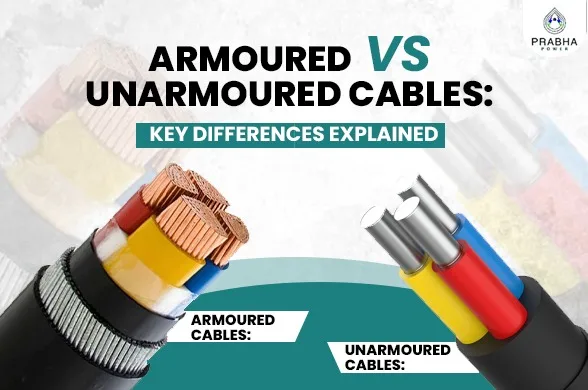
An armoured cable is a type of electrical cable that has an extra protective layer called armour. This armour is usually made of steel wires or steel tapes wrapped around the insulated conductors.
Structure of an Armoured Cable
An armoured cable generally has the following layers:
-
Conductor – Made of copper or aluminium to carry electricity
-
Insulation – Prevents leakage of current
-
Inner sheath – Holds the cores together
-
Armour layer – Steel wire or tape for mechanical protection
-
Outer sheath – Protects against moisture, chemicals, and dust
The armour layer is the key feature that makes this cable strong and durable.
What Is an Unarmoured Cable?
An unarmoured cable is an electrical cable that does not have the steel armour layer. It has fewer protective layers compared to an armoured cable.
Structure of an Unarmoured Cable
An unarmoured cable usually includes:
-
Conductor – Copper or aluminium
-
Insulation – Protects against electric shock
-
Outer sheath – Basic protection from environmental factors
Because it does not have armour, this type of cable is lighter and more flexible.
Key Differences Between Armoured and Unarmoured Cable
Understanding the difference between armoured and unarmoured cables becomes easier when we compare them point by point.
1. Level of Protection
-
Armoured Cable: Offers high protection against physical damage, pressure, and impact.
-
Unarmoured Cable: Offers basic protection only and can be damaged easily if not handled carefully.
2. Strength and Durability
-
Armoured Cable: Very strong and suitable for harsh environments.
-
Unarmoured Cable: Less strong and best suited for safe, controlled environments.
3. Weight and Flexibility
-
Armoured Cable: Heavier and less flexible due to steel armour.
-
Unarmoured Cable: Lightweight and easy to bend and install.
4. Installation Location
-
Armoured Cable: Ideal for underground, outdoor, and industrial areas.
-
Unarmoured Cable: Mostly used indoors and in protected conduits.
5. Cost
-
Armoured Cable: More expensive due to extra materials and protection.
-
Unarmoured Cable: More affordable and cost-effective for simple installations.
Where Are Armoured Cables Commonly Used?
Armoured cables are mainly used where safety and durability are very important. Some common applications include:
Underground Installations
Armoured cables are often buried underground because the steel armour protects the cable from soil pressure, moisture, and accidental digging damage.
Industrial Areas
Factories and plants have heavy machinery and movement. Armoured cables can handle rough conditions and reduce the risk of damage.
Outdoor Wiring
When cables are exposed to weather conditions like rain, heat, and dust, armoured cables provide better protection.
Power Distribution Systems
These cables are used in main power supply lines where high reliability is required.
Where Are Unarmoured Cables Commonly Used?
Unarmoured cables are suitable for areas where the cable is not exposed to physical damage.
Residential Wiring
Most home wiring uses unarmoured cables inside walls, ceilings, and conduits.
Commercial Buildings
Offices, shops, and schools often use unarmoured cables for lighting and power sockets.
Control Panels
Inside control panels and electrical cabinets, cables are well protected, so armour is not necessary.
Temporary Installations
For short-term projects or light-duty use, unarmoured cables are often preferred.
Safety Aspects of Armoured Cables
Safety is one of the biggest reasons people choose armoured cables.
Mechanical Safety
The steel armour protects the cable from cuts, pressure, and accidental damage.
Electrical Safety
In many cases, the armour can act as an earthing path, improving safety during fault conditions.
Fire Resistance
Some armoured cables are designed to offer better performance in high-temperature conditions.
Because of these features, armoured cables are often chosen for critical power systems.
Safety Aspects of Unarmoured Cables
Unarmoured cables are safe when used correctly and in the right environment.
Proper Insulation
The insulation layer prevents electric shock and short circuits.
Safe Indoor Use
When installed inside conduits or trunking, unarmoured cables are well protected.
Lower Risk Areas
In areas with low mechanical stress, unarmoured cables perform safely and efficiently.
However, they should not be used in areas where physical damage is likely.
Installation Differences
Installation methods also differ between armoured and unarmoured cables.
Installing Armoured Cables
-
Requires skilled electricians
-
Heavier and harder to bend
-
Special tools may be needed
-
Proper earthing of armour is important
Installing Unarmoured Cables
-
Easier and faster to install
-
Can be bent easily around corners
-
Suitable for conduit and casing wiring
-
Requires less labour
The choice of cable affects both installation time and cost.
Maintenance and Lifespan
Armoured Cable Lifespan
Armoured cables generally have a longer lifespan because they are well protected. They can last many years even in tough environments with minimal maintenance.
Unarmoured Cable Lifespan
Unarmoured cables also last long when used indoors and protected properly. However, they may need replacement sooner if exposed to damage.
Environmental Considerations
Environmental conditions play a major role in cable selection.
Armoured Cables
-
Suitable for moisture-prone areas
-
Can handle rough outdoor conditions
-
Better resistance to rodents and pests
Unarmoured Cables
-
Best for dry, indoor environments
-
Not suitable for direct burial
-
Need additional protection outdoors
Choosing the right cable based on the environment improves safety and performance.
Cost vs Performance
When comparing Armoured vs Unarmoured Cable, cost is often a deciding factor.
-
Armoured cables cost more initially, but they reduce repair and replacement costs over time.
-
Unarmoured cables are cheaper and ideal for simple and safe installations.
It is important to look at long-term benefits, not just initial cost.
How to Choose the Right Cable for Your Project
Here are some simple questions to help you choose:
-
Will the cable be installed underground or outdoors?
-
Is there a risk of physical damage?
-
Is the installation temporary or permanent?
-
What is your budget?
-
Are safety and durability a high priority?
If the environment is harsh or risky, armoured cable is the better choice. If the area is safe and controlled, unarmoured cable works well.
Common Myths About Armoured and Unarmoured Cables
Myth 1: Armoured cables are always better
This is not true. They are better only where extra protection is needed.
Myth 2: Unarmoured cables are unsafe
Unarmoured cables are safe when installed properly in the right environment.
Myth 3: Armoured cables do not need maintenance
Even armoured cables need regular inspection to ensure safety.
Final Thoughts on Armoured vs Unarmoured Cable
Understanding the difference between armoured and unarmoured cables helps you make smarter and safer electrical decisions. Both types of cables have their own role and importance. The key is to match the cable type with the application, environment, and safety needs.
Choosing the right cable improves performance, reduces risks, and ensures long-term reliability of your electrical system.
Conclusion
When comparing Armoured vs Unarmoured Cable, there is no single option that fits every situation. Armoured cables are ideal for tough conditions where safety and protection are critical, while unarmoured cables are perfect for indoor and low-risk installations. Making the right choice helps avoid future problems and ensures smooth electrical operation.
For high-quality electrical solutions and expert guidance on selecting the right cable, Prabha Power focuses on delivering reliable products that meet safety and performance standards.

 English
 Arabic
 French
 Spanish
 Portuguese
 Turkish
 Dutch
Dutch
 Italiano
 Russian
 Romaian
 Portuguese (Brazil)
 Greek
Greek