


Beyond the Basic Stream: Technological Progress in Fire Hose Design and Materials
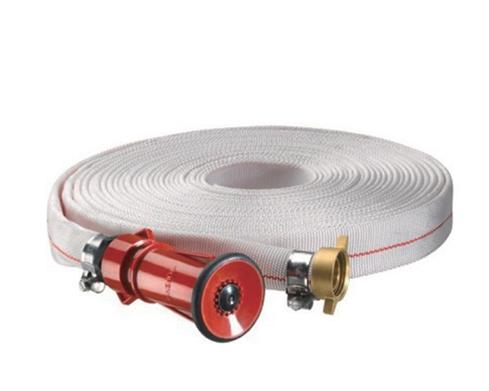
The domain of fire fighting hose products is characterized by continuous refinement guided by practical experience, technological innovation, and stringent manufacturing standards. These standards, established by organizations such as the National Fire Protection Association (NFPA), define minimum requirements for performance, testing, and serviceability. A new fire fighting hose must undergo a battery of tests, including pressure verification, elongation checks, adhesion tests for its layers, and evaluations of its resistance to weathering and abrasion. This regulatory framework ensures a baseline of reliability and safety for all fire fighting hose products entering service, providing fire departments with critical performance data for procurement decisions.
Material science plays a central role in the progression of these products. Contemporary development efforts aim to reduce the weight of fire hoses without sacrificing strength or durability, thereby decreasing firefighter fatigue. Advances in polymer chemistry have yielded inner liners with lower coefficient of friction, which translates to improved water flow and reduced pump pressure requirements for the same stream effectiveness. Outer covers are being formulated for enhanced resistance to specific threats like hydrocarbon fuels, extreme temperatures, or sharp debris. Some modern fire fighting hose products incorporate lightweight, high-strength synthetic fibers for reinforcement that offer a favorable strength-to-weight ratio. Additionally, innovations in design, such as hose constructions that resist collapsing when bent under suction, improve functionality for drafting water from static sources.
Maintenance and testing protocols are equally sophisticated. After each use, a fire fighting hose must be meticulously cleaned to remove soot, debris, and potentially corrosive chemicals. It is then inspected visually and by touch for any compromise, such as cuts, gouges, or areas of unusual softness indicating internal damage. Periodic service testing involves subjecting the fire fighting hose to hydrostatic pressures significantly above its normal operating rating to verify its integrity. This process identifies weaknesses before they result in a catastrophic failure during an emergency. The lifecycle management of fire fighting hose products—from initial acceptance testing, through in-service care, to periodic recertification—is a systematic discipline. This comprehensive approach, combining robust initial manufacturing, intelligent material advancement, and rigorous ongoing care, ensures that every deployed length of hose meets the profound responsibility inherent in its function: to serve as a dependable lifeline in moments of extreme danger.

 English
 Arabic
 French
 Portuguese
 Deutsch
 Turkish
 Dutch
Dutch
 Italiano
 Russian
 Romaian
 Portuguese (Brazil)
 Greek
Greek