


The Fundamental Role of Mixing Tanks in Process Industries
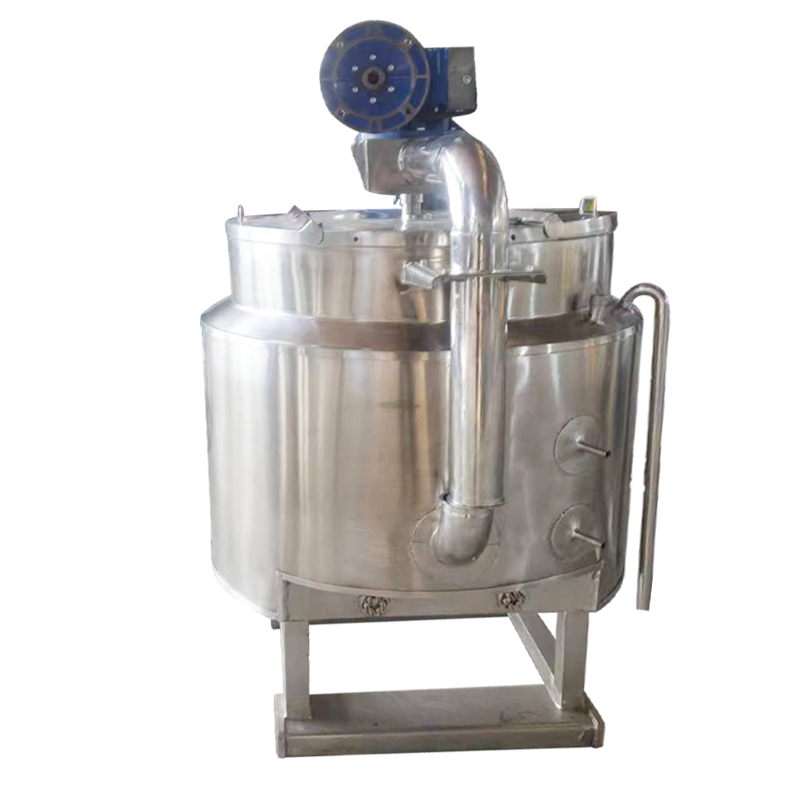
Mixing tanks are ubiquitous vessels in process industries, designed to blend, agitate, or homogenize two or more substances into a uniform mixture. Their primary function is to facilitate physical or chemical interactions between ingredients by providing controlled mechanical energy and a contained environment. These tanks are fundamental across sectors such as chemical manufacturing, food and beverage production, pharmaceuticals, cosmetics, and water treatment. A standard mixing tank typically consists of a cylindrical vessel, often with a dished or conical bottom to aid in complete drainage, and a top cover that may be open or sealed. The vessel is constructed from materials compatible with the process, with stainless steel being predominant for its corrosion resistance and cleanability, especially in food-grade and pharmaceutical applications where hygiene is paramount.
The core component that defines the tank's capability is the agitation system. This system comprises a motor, a drive shaft, and an impeller mounted inside the vessel. The design of the impeller is critical and is selected based on the desired mixing action. For low-viscosity liquids requiring gentle blending, axial flow impellers like propellers or hydrofoils are used to create a top-to-bottom flow pattern. For higher viscosity materials or applications needing intense shearing and dispersion, radial flow impellers such as turbines or high-shear rotor-stator assemblies are employed. The motor's power and speed, along with the impeller's size and position, are engineered to achieve the necessary fluid dynamics within the mixing tank. Baffles, which are vertical plates attached to the tank wall, are often installed to prevent the formation of a vortex and to convert rotational flow into more turbulent, effective mixing.
Beyond basic agitation, modern mixing tanks are integrated systems. They frequently include jackets for heating or cooling to maintain precise temperature control during reactions or blending. Ports are provided for adding ingredients, sampling, and connecting instrumentation for monitoring parameters like temperature, pH, or pressure. In batch processes, ingredients are charged into the mixing tank, processed for a defined period, and then discharged. In continuous processes, mixing tanks may serve as inline reactors where materials enter and exit continuously while being agitated. The selection of an appropriate mixing tank depends on numerous factors: the physical properties of the materials (viscosity, density), the required degree of homogeneity, process duration, and whether the mixing is for simple blending, dissolving solids, dispersing gases, or facilitating a chemical reaction. This versatility makes the mixing tank a foundational piece of equipment in transforming raw materials into consistent, processed products.

 English
 Arabic
 French
 Spanish
 Portuguese
 Deutsch
 Dutch
Dutch
 Italiano
 Russian
 Romaian
 Portuguese (Brazil)
 Greek
Greek