


Understanding Power Sources, Feeders, and Accessories in Welding Setups
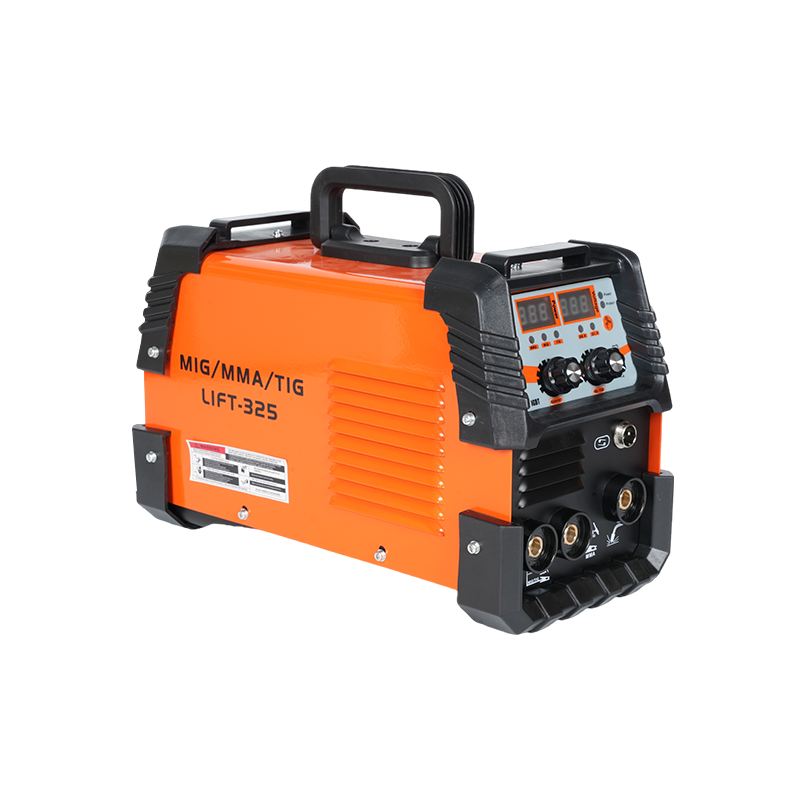
Beyond the basic classification, a complete welding machine setup comprises several integrated subsystems that enable consistent and safe operation. The heart of the system is the power source. This unit takes the facility's primary electrical power and converts it into a form suitable for welding. Key outputs from a welding machine power source include voltage, amperage (current), and polarity (DC positive, DC negative, or AC). Modern inverter welding machines allow fine digital control over these parameters. The amperage setting on a welding machine is particularly critical, as it directly determines the heat input and penetration of the weld; too low amperage results in poor fusion, while too high can burn through the material.
For processes like GMAW, an integrated or separate wire feeder is an essential subsystem. This component precisely controls the speed at which the consumable electrode wire is fed into the weld joint. The synchronization between wire feed speed and the electrical output of the welding machine is vital for maintaining a stable arc. The welding gun or torch is the operator's interface. It conducts the welding current, delivers the wire (for GMAW) or gas (for GMAW/GTAW), and often includes a trigger to start and stop the process. For stick welding, a simple electrode holder serves this purpose. Shielding gas apparatus is another key component for gas-shielded processes. It consists of gas cylinders, pressure regulators, flowmeters, and hoses that deliver the correct gas at the correct flow rate to the weld zone, a function managed alongside the welding machine's operation.
Auxiliary components and safety systems complete a functional welding station. A robust work clamp, or ground clamp, is necessary to complete the electrical circuit between the welding machine and the workpiece. High-quality welding cables with adequate gauge are required to carry the high current from the machine to the gun and back with minimal voltage drop. For operator safety, the welding machine and its environment must include ventilation systems to remove harmful fumes, and the operator must use personal protective equipment like an auto-darkening welding helmet, gloves, and flame-resistant clothing. Many advanced welding machines also feature built-in safety mechanisms like thermal overload protection to prevent damage from overuse and hot-start functions to improve arc ignition. Understanding these interconnected components—the power source, process-specific feeders and torches, gas systems, and safety gear—is essential for selecting, setting up, and operating a welding machine effectively for any given task.

 English
 Arabic
 French
 Spanish
 Portuguese
 Deutsch
 Turkish
 Dutch
Dutch
 Italiano
 Russian
 Portuguese (Brazil)
 Greek
Greek