


The Fundamental Operation and Construction of Industrial Vibrating Motors
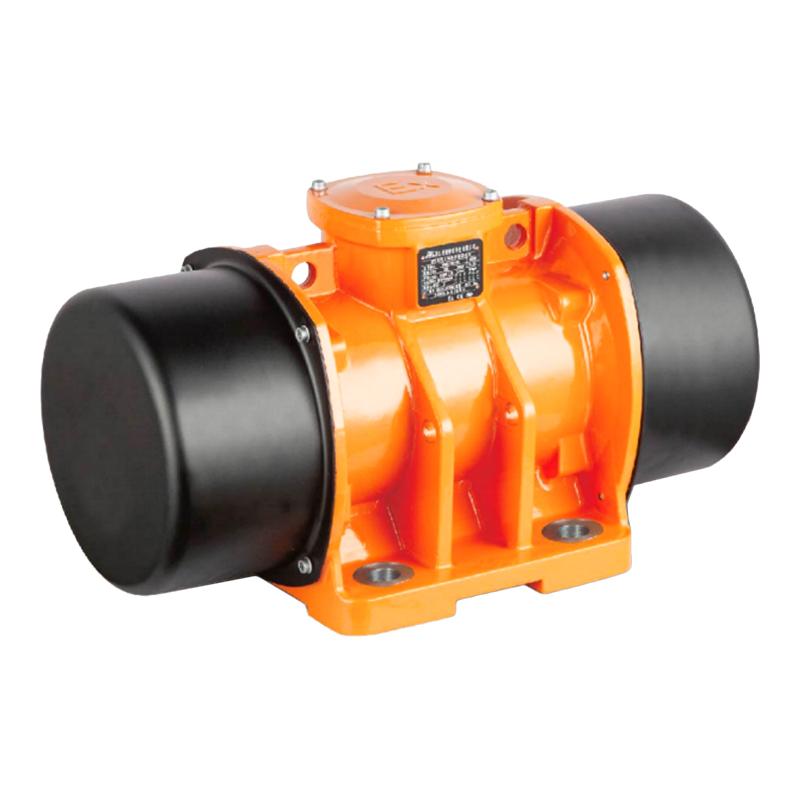
An industrial vibrating motor is a specialized electric motor designed to generate high-intensity, controlled mechanical vibrations for industrial processes such as material conveying, screening, compaction, and feeding. Its primary function is to convert electrical energy into directed vibrational force, thereby driving equipment to perform specific process actions. Unlike standard rotary motors, the design focus of an industrial vibrating motor is not on delivering smooth rotational torque, but on producing periodic excitation forces with specific frequencies and amplitudes. This excitation force is typically generated by a key component: the eccentric weight (or counterweight). The eccentric weight is securely mounted on both ends of the motor shaft, with its center of mass deliberately offset from the motor's rotational axis. When the rotor of the industrial vibrating motor spins at high speed, the centrifugal force generated by the eccentric weight cannot be balanced in the radial direction, resulting in a periodic, directionally changing excitation force. This force is transmitted through the motor housing to the rigidly connected equipment (such as a vibrating screen deck or silo wall), forcing the equipment into forced vibration.
The structural design of an industrial vibrating motor must withstand the continuous, alternating stress generated by its own operation. Therefore, its housing, end covers, and bearing housings are typically made of high-strength cast iron or cast steel, offering structural rigidity far exceeding that of standard motors. Bearings are among the most critical components in an industrial vibrating motor and must be specialized bearings designed for vibrating machinery, capable of withstanding enormous radial loads. The stator and rotor windings of the motor also require special reinforcement to prevent insulation damage or short circuits caused by coil loosening under prolonged vibration. Many industrial vibrating motors feature totally enclosed fan-cooled (TEFC) or forced-air cooling designs to ensure effective heat dissipation even in harsh, dusty environments. Based on the need for adjustable excitation force, eccentric weights can be categorized as fixed or adjustable. An industrial vibrating motor with a fixed eccentric weight delivers constant vibrational force; an adjustable type allows for stepless adjustment of the excitation force by changing the relative angle between two eccentric blocks, enabling flexible adaptation to different process requirements without replacing the motor.
The selection of an industrial vibrating motor is based on several core parameters: excitation force (measured in kilonewtons, kN), vibration frequency (in hertz, Hz, determined by the motor's rotational speed), and the mounting method. The power rating of the motor determines its overall capacity. Additionally, the protection rating is crucial; for environments with high dust or moisture, an industrial vibrating motor with a high IP rating is necessary to ensure reliable operation. This motor serves as the "heart" of numerous vibrating mechanical systems. Its robust design and precise force output make it an indispensable power source for automation and efficiency in modern industries such as mining, metallurgy, chemicals, and food processing. By selecting the appropriate model and configuring it correctly, an industrial vibrating motor can reliably drive equipment for tens of thousands of hours, providing stable vibrational energy for production lines.

 English
 Arabic
 French
 Spanish
 Portuguese
 Deutsch
 Turkish
 Dutch
Dutch
 Italiano
 Russian
 Portuguese (Brazil)
 Greek
Greek