


Optimizing Response in Installation Automatic Pump Control
The Importance of Response Speed and Accuracy
Installation Automatic Pump Control systems plays a vital role in water supply, industrial processes, and wastewater management. The effectiveness of these systems depends heavily on two key factors: response speed and control accuracy. Response speed determines how quickly the pump reacts to changes in water levels or pressure, while accuracy ensures the system maintains the desired operational setpoints. A well-optimized system improves energy efficiency, protects equipment, and ensures consistent performance. Understanding the factors that influence speed and precision helps operators and engineers achieve reliable automatic pump control.
Factors Affecting Response Speed
The response speed of an automatic pump control system is influenced by several factors. Sensor selection and placement are crucial, as high-quality float switches, ultrasonic sensors, or pressure transducers provide rapid and accurate feedback. The control unit’s processing capability, whether a programmable logic controller (PLC) or microcontroller-based system, affects how quickly the system interprets data and sends commands to the pump. Mechanical components of the pump, including valves and motors, also contribute to overall reaction time. Faster motors and precision-engineered valves reduce delays, enabling the system to adjust quickly to fluctuations in water demand or pressure changes.
Achieving Control Accuracy
Control accuracy is essential to maintain stable water levels or pressure within the system. Precise sensor calibration ensures that readings reflect actual conditions. The control logic within the automatic pump control system determines how the pump responds to deviations from setpoints. Many systems use proportional-integral-derivative (PID) algorithms or advanced feedback loops to minimize overshoot and maintain steady operation. Variable speed drives (VSDs) allow pumps to operate at varying speeds instead of simple on/off cycles, providing smoother control and reducing wear on the mechanical components. High accuracy prevents overpressure, underflow, and potential damage to pipelines or connected equipment.
Integration with Monitoring and Feedback Systems
Modern automatic pump control systems often include monitoring platforms that collect real-time data from sensors and log operational history. This integration allows operators to detect performance issues, analyze trends, and fine-tune the control logic for optimal response and accuracy. Remote monitoring and alerts can notify operators of abnormal behavior, such as delayed response or sensor malfunctions, enabling timely intervention before issues escalate. This combination of feedback, data analysis, and system alerts enhances both speed and precision.
Benefits of Fast and Accurate Automatic Pump Control
A system with high response speed and precise control offers numerous advantages. Rapid adjustment to changing water levels prevents dry running or overfilling of tanks, protecting pumps and storage units. Accurate control reduces energy consumption by avoiding unnecessary pump operation, while maintaining consistent pressure ensures safe operation of downstream equipment. In industrial or municipal applications, optimized response and precision contribute to operational efficiency, minimize maintenance costs, and improve overall system reliability.
Installation Automatic Pump Control systems rely on a combination of high-quality sensors, precise control logic, responsive mechanical components, and integrated feedback to achieve optimal speed and accuracy. By focusing on these factors, operators can maintain stable water levels and pressure, prevent equipment damage, and ensure efficient, reliable operation. High-performance automatic pump control systems not only improve safety and efficiency but also extend the lifespan of pumps and associated infrastructure, making them a critical component in modern fluid management.
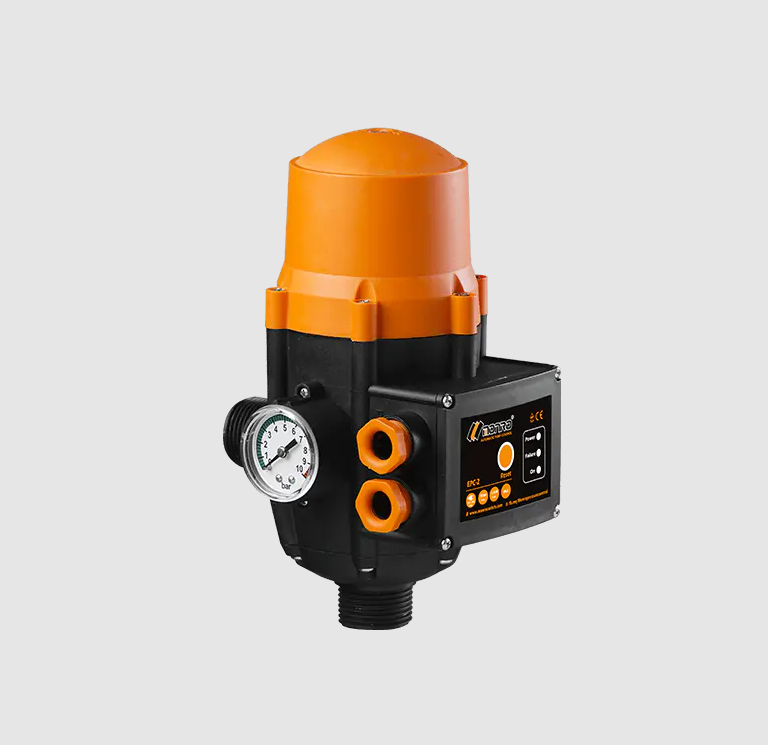
The working principle of the device adopts dual control of Pressure and flow. It goes auto on and auto off for the water pump when water pressure changes based on water consumption.

 English
 Arabic
 French
 Spanish
 Portuguese
 Deutsch
 Turkish
 Dutch
Dutch
 Italiano
 Russian
 Romaian
 Portuguese (Brazil)