


Increasing Sewing Productivity with Automated Button Handling
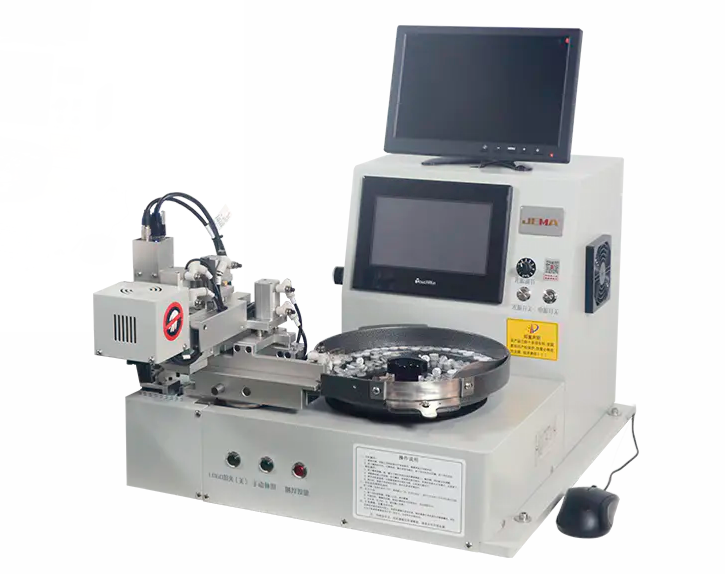
The Growing Need for Efficiency in Button Sewing Operations
In garment manufacturing, button sewing is a repetitive but essential process that directly affects production speed and labor efficiency. Traditional manual button feeding relies heavily on operator skill and concentration, which can slow down output and increase the risk of errors. As production volumes grow and delivery times shorten, manufacturers increasingly turn to automation to improve consistency and productivity. A Button Feeding Machine addresses these challenges by streamlining how buttons are supplied to the sewing position, allowing operators to focus on stitching accuracy rather than handling small components.
Reducing Manual Handling and Operator Fatigue
One of the most immediate ways automated button feeding improves sewing efficiency is by reducing manual handling. Manually picking up, positioning, and aligning buttons requires repeated hand movements that slow down the sewing cycle and cause operator fatigue over time. Automated feeding systems deliver buttons directly to the correct position, eliminating unnecessary motion. As a result, operators can maintain a steady working rhythm for longer periods, increasing overall output without increasing physical strain.
Improving Stitching Speed and Cycle Time
Sewing efficiency is closely linked to cycle time, which includes every step from material placement to button attachment. Automated feeding significantly shortens this cycle by synchronizing button delivery with the sewing process. Instead of pausing to manually place each button, the operator can proceed immediately to stitching once the garment is positioned. This smoother workflow allows sewing machines to operate closer to their optimal speed, increasing the number of completed garments per hour.
Enhancing Placement Accuracy and Consistency
Inconsistent button placement can lead to rework, quality complaints, and production delays. Automated feeding systems ensure that each button is oriented and positioned uniformly before sewing begins. This consistency reduces alignment errors and minimizes the need for adjustments during operation. When placement accuracy improves, fewer garments are rejected or reworked, which directly contributes to higher effective production efficiency.
Supporting High-Volume and Repetitive Production
Factories producing uniforms, shirts, jeans, or children’s clothing often deal with large batches of similar garments. In these scenarios, repetitive manual button handling becomes a bottleneck. A Button Feeding Machine is particularly effective in high-volume environments, where it maintains consistent performance over long production runs. By stabilizing output and reducing variability, automated feeding supports predictable production schedules and easier line balancing.
Integrating Seamlessly with Sewing Equipment
Another key factor in efficiency improvement is equipment compatibility. Modern button feeding systems are designed to integrate with various button sewing machines, allowing for smooth communication between feeding and stitching actions. This integration reduces setup time and minimizes interruptions during production. When machines work together as a unified system, overall efficiency increases due to fewer stoppages and smoother transitions between operations.
Lowering Skill Dependency and Training Time
Manual button feeding requires a certain level of dexterity and experience, which can limit productivity when new operators are introduced. Automated feeding systems reduce dependency on individual skill levels by standardizing the feeding process. New operators can reach stable productivity more quickly, reducing training time and labor costs. This standardization is especially valuable in factories with high workforce turnover or seasonal production demands.
Minimizing Errors and Material Waste
Errors such as misaligned buttons, skipped placements, or dropped components result in wasted materials and lost time. Automated feeding reduces these issues by delivering buttons in a controlled and repeatable manner. Fewer errors mean less downtime for corrections and less waste of buttons and garments. Over time, these savings contribute significantly to improved operational efficiency and cost control.
Achieving Sustainable Productivity Gains
Improving sewing efficiency is not just about increasing speed but also about maintaining quality and consistency over time. Automated button feeding achieves this balance by optimizing workflow, reducing operator fatigue, and stabilizing production output. When properly implemented, a Button Feeding Machine becomes a long-term productivity tool that supports scalable growth, reliable delivery schedules, and competitive manufacturing performance.

 English
 Arabic
 French
 Spanish
 Deutsch
 Turkish
 Dutch
Dutch
 Italiano
 Russian
 Romaian
 Portuguese (Brazil)
 Greek
Greek