


Where Form Follows the Tightest Function
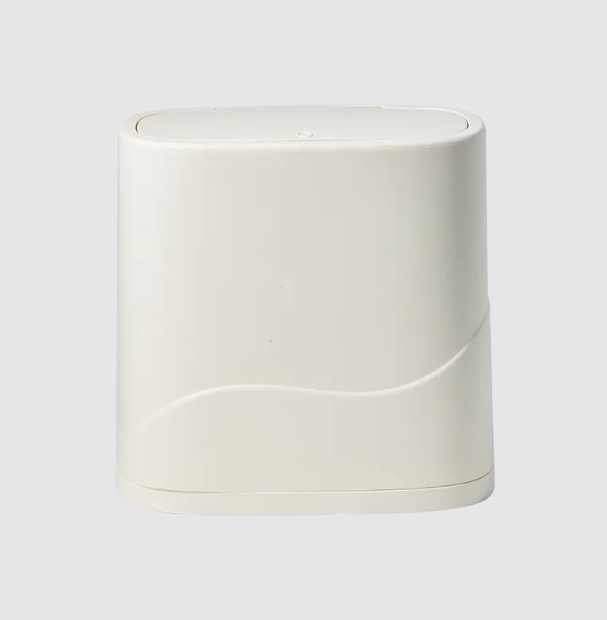
Navigating the Negative Space: The Philosophy of the Slim Profile
In the meticulously planned ecosystems of modern bathrooms—from compact urban apartments to standardized hotel suites—the trash bin is often an afterthought in design, yet a critical component in function. For a bathroom slim plastic trash bin wholesale supplier, success is dictated by a masterful understanding of negative space. A product labeled "slim" or "space-saving" is not simply a smaller version of a standard bin; it is the outcome of a rigorous design process that navigates a complex web of physical constraints, user behavior, and logistical imperatives, transforming a potential spatial obstacle into a discreet and efficient necessity.
The Primary Constraint: Mapping the Installation Environment
The foundational design challenge is a precise understanding of where. Designers and engineers must first map the universe of potential installation points, each with its own strict limitations. The most common niches dictate the core silhouette:
The Toilet-Side Gap: The space between a toilet bowl and a wall or vanity is typically narrow and shallow. A bin for this niche must have a minimized width and a depth that allows it to tuck in without obstructing foot traffic or cleaning access.
The Under-Sink Void: The cavity beneath a bathroom sink is often wider but constrained by height due to plumbing. Here, the bin's height and profile must allow it to slide in and out easily, often requiring a tapered design or a low-profile lid hinge mechanism.
The Corner: A true corner unit must utilize a triangular or wedge-shaped footprint, which presents significant challenges in mold design, structural rigidity, and maintaining a usable interior volume that doesn't feel compromised.
The goal is to create a family of profiles that address these common scenarios with precision, ensuring the bin appears purpose-built for its location, not merely squeezed into it.
The Engineering Response: Balancing Form, Volume, and Stability
Once the spatial envelope is defined, the engineering begins. The core paradox is maximizing interior capacity while minimizing exterior footprint. This is solved through clever geometry.
Vertical Emphasis: The primary strategy is to redirect volume upward. A slim bin will typically be significantly taller than it is wide or deep, using vertical space that is often underutilized in a bathroom.
Tapered and Organic Shapes: Walls are often tapered—wider at the top, narrower at the base—to create a visually lighter appearance and to facilitate nesting for shipping. The interior cavity might be designed with rounded corners to eliminate waste pockets and make liner insertion easier, effectively increasing usable space.
Low-Center-of-Gravity Design: A tall, narrow object is inherently prone to tipping. Counteracting this requires strategic weight distribution, often achieved by using a heavier-gauge plastic in the base, designing a broad, non-slip foot pattern, or offering an optional wall-mounting bracket. The lid and mechanism must be lightweight to prevent top-heaviness.
The User-Interaction Layer: Access and Aesthetics in Confinement
A bin in a tight space must be exceptionally easy to use, or it will create frustration. The lid mechanism is paramount. A swing lid must have a restricted arc to avoid hitting walls. A lift-off lid must be easy to grasp and lightweight. For premium lines, a tip-top or flip-up lid that operates within the bin's own footprint is ideal. The aesthetic is one of quiet discretion; colors tend to be neutral, finishes are matte to hide scratches, and any branding is subtle. The product should visually recede, fulfilling its function without demanding attention.
For a wholesale supplier, mastering this category means offering a curated portfolio of these precision-engineered profiles. Each model is a solution to a specific spatial equation, allowing procurement managers for hotels, rental properties, and retail chains to select the exact tool for the job. It demonstrates an advanced understanding that in the world of contract and bulk furnishings, the most intelligent design is often the one that solves the problem of fitting in.

 English
 Arabic
 Spanish
 Portuguese
 Deutsch
 Turkish
 Dutch
Dutch
 Italiano
 Russian
 Romaian
 Portuguese (Brazil)
 Greek
Greek