


Achieving a Natural Hairline: The Art and Science of Graft Placement
Achieving a Natural Hairline: The Art and Science of Graft Placement
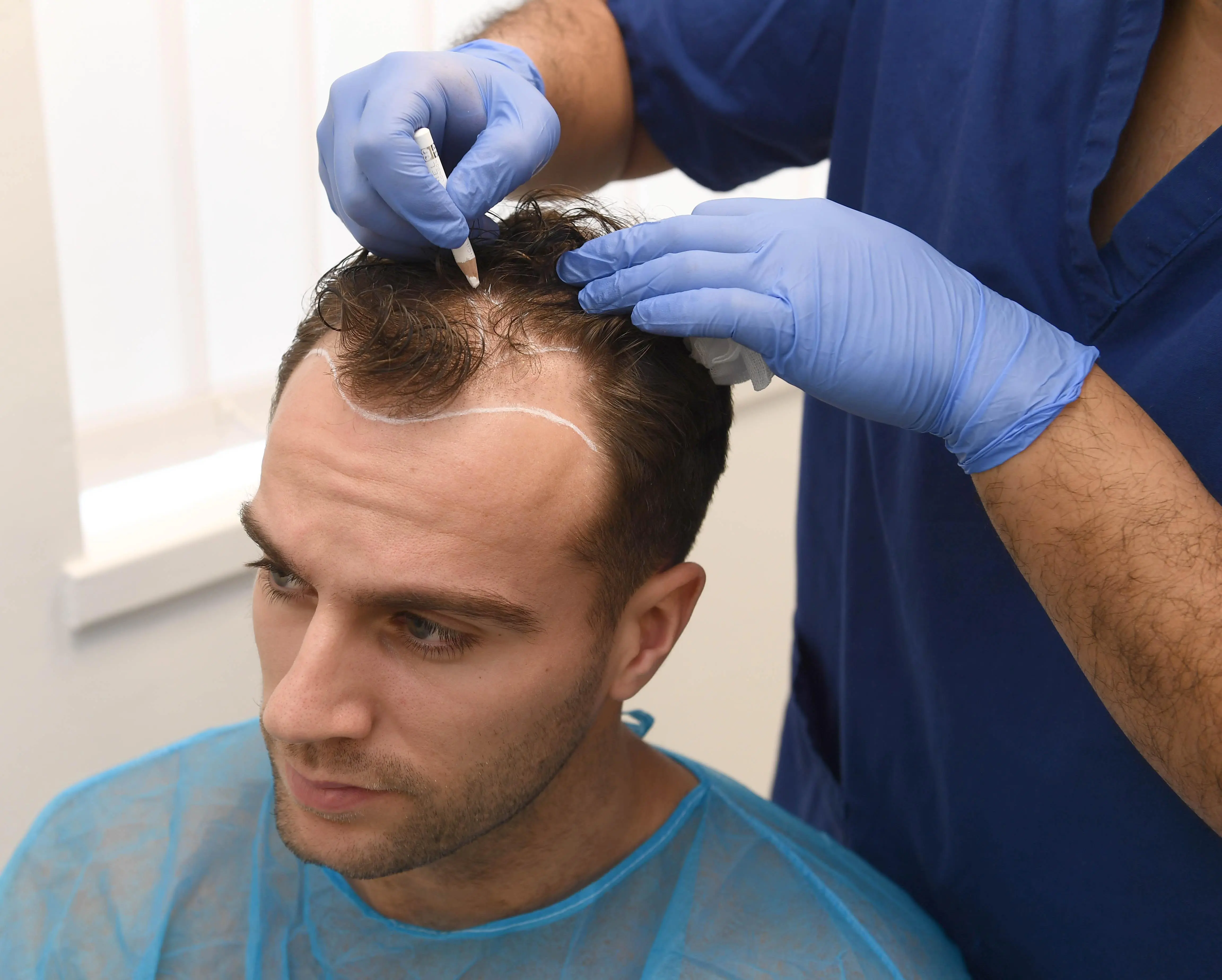
The most critical hallmark of a successful restoration is a hairline that appears to have grown organically rather than through surgical intervention. For many individuals in the Eastern Province, the choice of a hair transplant in Dammam(زراعة الشعر في الدمام) is motivated by the desire to restore a facial frame that looks both youthful and entirely undetectable. Achieving this level of realism requires a sophisticated blend of medical science and artistic vision. A natural hairline is never a straight, rigid line; instead, it is a complex "transition zone" characterized by subtle irregularities, varying densities, and precise angulation. By mimicking the "organized chaos" of nature, modern transplantation techniques ensure that the new hair integrates seamlessly with the patient's existing features, providing a result that enhances the face without ever drawing unwanted attention to the procedure itself.
The Architecture of the Transition Zone
A common mistake in early hair restoration was creating a hairline that was too low, too straight, or too dense at the very front—often referred to as a "doll-hair" or "pluggy" look. Today, specialists use a multi-layered approach to ensure softness and realism.
-
The Leading Edge (Micro-Irregularity): The very front of the hairline is designed with a staggered, zigzag pattern rather than a straight row. This "macro and micro-irregularity" mimics the way natural hair grows in slightly uneven clusters, preventing a harsh, synthetic appearance.
-
Single-Hair Grafts: The first 0.5 to 1.0 centimeter of the new hairline—the transition zone—is exclusively populated with single-hair follicular units. These finer, thinner hairs create a soft "feathered" effect that blurs the boundary between the forehead and the scalp.
-
Gradual Density Building: Just behind the delicate transition zone, the practitioner begins to place multi-hair grafts (containing 2 to 4 hairs). This strategy builds the necessary "bulk" and volume further back on the head while keeping the frontal view soft and natural.
The Science of Angulation and Direction
Even if the placement is perfect, a hairline will look artificial if the hair grows at the wrong angle. In a natural scalp, hair does not grow straight up; it flows in specific directions and at shallow angles that vary across different regions of the head.
-
Angle of Exit: Hairs at the very front of the hairline typically exit the scalp at a very acute angle (often 15 to 30 degrees) and point forward. Replicating this shallow angle is what allows the hair to lie flat and look natural as it grows.
-
Directional Flow: The specialist must carefully match the "whorl" patterns and the natural lean of the patient’s hair. In the temples, the hair typically flows downward and backward, while at the center, it may have a slight cowlick or a forward-leaning peak.
-
Temple Integration: A successful hairline must also harmonize with the "temporal points"—the areas of hair on the sides of the forehead. If the central hairline is restored but the temples are left receded, the result can look disconnected and unbalanced.
Age-Appropriate Design and Future-Proofing
In Dammam’s competitive social and professional landscape, many younger patients request the low, flat hairlines they had in their teens. However, a truly expert practitioner will advise a "mature" or "conservative" design.
-
Designing for the Future: A hairline that looks great at 25 must also look natural at 65. If a practitioner sets a hairline too low on a young patient, it may look bizarre as the person ages and natural thinning occurs behind the transplant.
-
Preserving Donor Hair: By setting the hairline at a more conservative height (typically 7 to 9 cm above the eyebrows), the specialist saves precious donor follicles for the crown or mid-scalp, which may need attention in the future.
-
Facial Proportions: The "Rule of Thirds" is often used to ensure the hairline perfectly balances the forehead, nose, and chin, creating a harmonious frame that highlights the eyes and strengthens the jawline.
By prioritizing these artistic and scientific principles, a hair transplant becomes more than just a medical procedure—it becomes a customized reconstruction of your identity. When the art of design meets the science of placement, the result is a restored hairline that is as durable as it is beautiful.

 English
 Arabic
 French
 Spanish
 Portuguese
 Deutsch
 Turkish
 Dutch
Dutch
 Italiano
 Russian
 Portuguese (Brazil)
 Greek
Greek