


Lightweight Hiking Gear Carrier: When It’s a Great Idea (and When It’s Not)
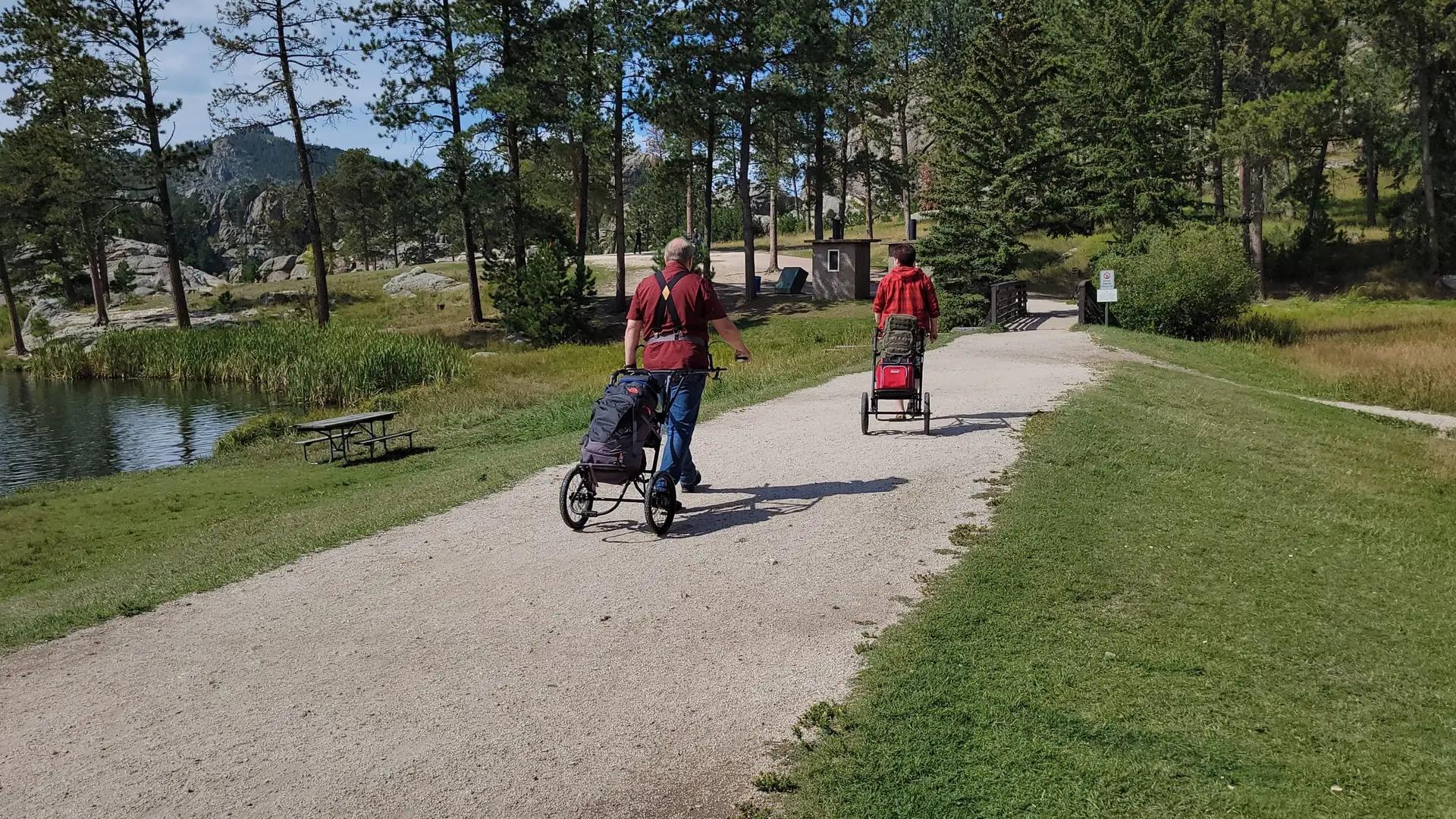
If you’ve ever finished a hike feeling like your shoulders did more work than your legs, you already know the downside of carrying everything on your back. Backpacks are simple and reliable—but once your load becomes bulky (or just heavy enough), they can turn a fun day outside into a slow grind.
That’s where a lightweight hiking gear carrier comes in. Instead of wearing the load, you tow it behind you—usually with a waist/hip attachment—so your hands stay free and your posture stays more natural. For the right type of hiking, it can feel like a completely different experience.
This article is a practical look at what these trailers are, who they help most, and what to watch out for before you buy one.
What is a lightweight hiking gear carrier?
A lightweight hiking gear carrier is a lightweight gear trailer designed to be towed while walking—typically using a hip/waist connection instead of a handle. The point isn’t speed. It's a hiking trolley for heavy loads: keeping the weight off your shoulders and letting your body move more naturally over distance.
You’ll also see similar terms online like hiking cart, trekking trailer, or outdoor walking cart. The wording varies, but the idea is the same: carry more gear without carrying it on you.
signs a hiking trailer might be perfect for you
1) Your “backpack load” is always bulky
Camping setups, extra water, food, layers for changing weather, camera gear—these are hard to pack comfortably and get annoying fast. A trailer often handles bulk better than a pack.
2) Your hikes are long enough that comfort matters
On shorter hikes, discomfort is tolerable. On longer hikes, discomfort becomes the whole story. Rolling the load can keep the day enjoyable—especially if you’re doing longer distances regularly.
3) You want your hands free
Trekking poles, balance on uneven trails, taking photos, checking a map—hands-free movement is a real benefit.
When it’s not the best choice
lightweight hiking gear carriers aren’t magic, and they aren’t ideal for every route.
You’ll probably prefer a backpack if:
· The trail is extremely narrow, steep, or requires scrambling
· you’re constantly stepping over large obstacles
· you’re doing technical terrain where carrying and lifting is unavoidable
· your local trails restrict wheeled devices (some parks do)
A good rule: if the trail is “walkable,” a trailer can work well. If the trail is “climbable,” a backpack wins.
How these trailers work (simple version)
Most lightweight hiking gear carriers are built around three elements:
1. The trailer body — where the gear sits
2. The harness/attachment — often hip/waist mounted
3. The connection system — something that lets the trailer track behind you smoothly without jerking
In the best designs, the trailer follows your natural stride. In the worst designs, it feels like it’s fighting you—especially when the load shifts.
What to look for before you buy
If you’re comparing options, skip the marketing language and focus on what affects real use:
Stable tracking (more important than you think)
A trailer that sways or pulls oddly becomes annoying quickly. Stability matters more than extra pockets or “cool features.”
Load security
If the gear shifts inside the trailer, you’ll feel it with every step. Look for designs that help keep the load balanced and secure.
Comfort at the waist/hips
With hands-free towing, comfort depends heavily on how the harness sits. A poor fit can ruin the idea completely.
Article Content
Wheels that match your terrain
Smooth paths and rocky trails are different problems. Make sure the wheels and overall build make sense for the surfaces you actually hike.
Storage and transport
If you drive to trailheads or travel, compactness matters. Foldable/collapsible designs can be the difference between “I use it all the time” and “it stays in the garage.”
Tips for your first hikes
A few small habits make a huge difference:
Article Content
· Start lighter than you think you need (learn how it tracks)
· Pack heavier items closer to the attachment point
· Do a short test hike before committing a long route
· Check trail rules if you’re in parks with restrictions
· Inspect and clean wheels/connection points after use
Bottom line
A lightweight hiking gear carrier makes the most sense when your hikes are long, your gear is bulky, and you want more comfort without going minimalist. It won’t replace backpacks for every route—but for the right terrain, it can make the difference between “surviving the hike” and enjoying it.

 English
 Arabic
 French
 Spanish
 Portuguese
 Deutsch
 Turkish
 Italiano
 Russian
 Romaian
 Portuguese (Brazil)
 Greek
Greek