


From Raw Material to Finished Protector: The Production Line
Inside the World of Industrial Safety Manufacturing
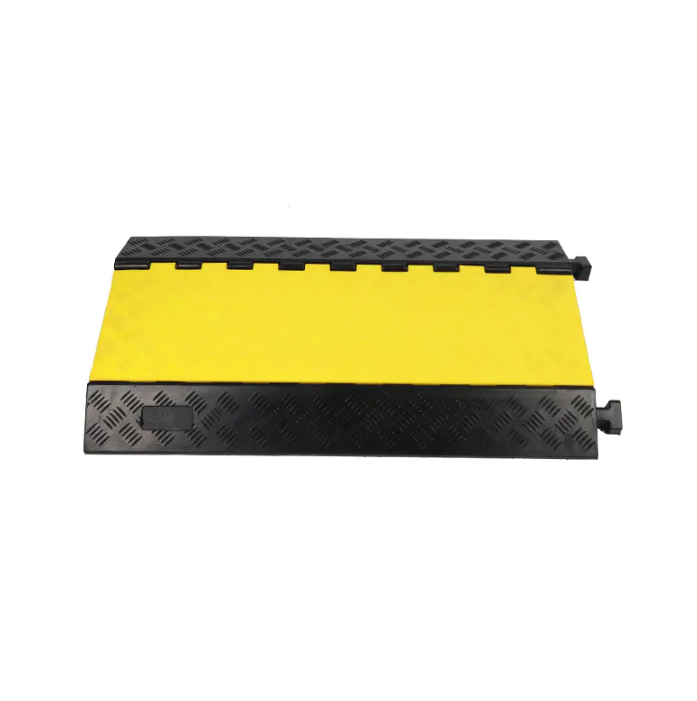
A cable ramp factory is a specialized industrial facility dedicated to the design, engineering, and production of cable protectors and management systems. Far from being a simple molding workshop, such a factory integrates materials science, structural engineering, and stringent safety standards to create products that manage tripping hazards and protect vital cabling in diverse environments. The core mission of this operation is to transform raw polymers into robust, reliable pathways that safeguard both people and infrastructure on worksites, event venues, and industrial floors.
The Production Workflow: From Pellet to Product
The manufacturing process typically begins with high-quality raw materials, such as High-Density Polyethylene (HDPE), polyurethane, or recycled rubber composites. These materials are selected for their durability, weather resistance, and load-bearing capacity. In a modern plant, the process is often automated: plastic pellets are fed into large injection molding machines, where they are heated and injected under high pressure into precision molds that form the individual ramp segments. For rubber products, a vulcanization process is used. Post-molding, components move to assembly stations where features like interlocking mechanisms, hinge pins, and non-slip surfaces are integrated. Each stage is governed by precise temperature, pressure, and cycle-time controls to ensure consistency and structural integrity across thousands of units.
Customization and Application-Specific Engineering
One of the key advantages of dealing directly with a manufacturing center is access to customization. While standard traffic-grade ramps are staple products, a proficient plant can engineer solutions for unique challenges. This may involve creating wider channels for bulky hydraulic hoses, altering the durometer (hardness) of rubber for extreme temperatures, incorporating corporate colors, or designing unique connector systems for complex layouts. Engineers at the facility work with clients to understand the specific load requirements (from foot traffic to heavy forklifts), environmental conditions (UV exposure, chemicals, temperature ranges), and cable types to recommend or tailor the optimal product, demonstrating the move from commodity manufacturing to solution-based engineering.
Quality Assurance and Compliance Frameworks
A reputable manufacturing operation is built on a solid foundation of quality control. This involves multiple checkpoints: raw material inspection, in-process checks of dimensional accuracy and weight, and final product testing. Critical tests often include load testing, where a ramp segment is subjected to forces exceeding its rating to validate safety margins, and slip-resistance testing. Leading facilities adhere to international management standards like ISO 9001 and ensure their products meet relevant safety specifications, such as ASTM F1637 for walkway safety. The ability of a supplier to provide transparent test reports and certifications is a direct reflection of its operational rigor and commitment to producing reliable safety equipment.

 English
 Arabic
 French
 Spanish
 Portuguese
 Deutsch
 Turkish
 Dutch
Dutch
 Italiano
 Russian
 Portuguese (Brazil)
 Greek
Greek