


Methods to Guarantee Gear Rack Processing Accuracy
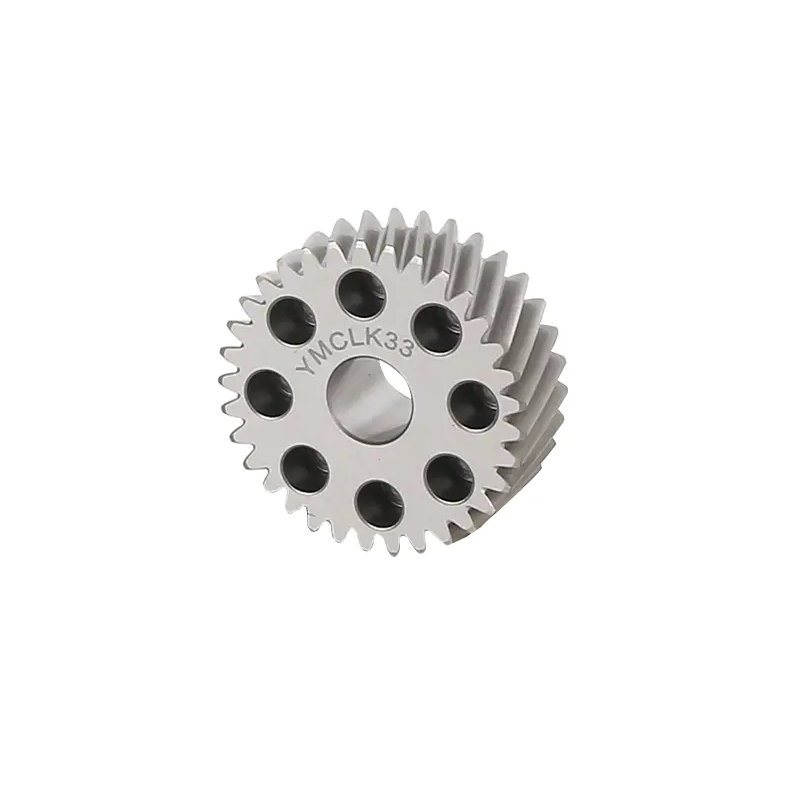
Introduction to Precision Gear Rack Accuracy
Precision Gear Racks are critical components in industrial automation, CNC machinery, and robotic systems. Their machining accuracy directly affects transmission smoothness, positioning precision, and overall system performance. High-quality gear racks require strict control over tooth geometry, surface finish, straightness, and dimensional tolerances. Achieving this level of accuracy depends on a combination of advanced manufacturing techniques, careful material selection, and precise quality control.
Material Selection and Preparation
The first step in ensuring precision is selecting suitable materials with consistent mechanical properties. High-strength alloy steels or hardened metals are commonly used to maintain dimensional stability during processing. Material preparation, including stress-relief treatments and surface flattening, reduces deformation and warping that could affect tooth alignment. Using uniform, defect-free stock minimizes errors that might propagate through the manufacturing process.
Advanced Cutting and Milling Techniques
The machining process is crucial for maintaining high precision. Gear racks are typically produced using hobbing, rack milling, or grinding methods, depending on the required accuracy. CNC milling machines with high-resolution control allow exact tooth spacing and profile consistency. For ultra-precision applications, grinding with specialized gear rack grinding machines can achieve very tight tolerances and superior surface finishes, ensuring smooth meshing with mating pinions.
Controlled Heat Treatment
Heat treatment processes such as carburizing, quenching, or induction hardening enhance the strength and wear resistance of the teeth. However, thermal processes can introduce distortion. Precision Gear Rack manufacturers carefully control heating and cooling rates, often combining stress-relief steps to maintain straightness and tooth profile integrity. Accurate fixturing during heat treatment prevents bending and warping, which is essential for maintaining long-term dimensional accuracy.
Quality Control and Measurement
Measurement and inspection play a key role in guaranteeing machining precision. Tools such as coordinate measuring machines (CMM), gear tooth measurement systems, and surface profilometers are used to verify tooth spacing, pitch error, and profile accuracy. Checking straightness and parallelism ensures that the rack will transmit motion without backlash or misalignment. Regular inspection throughout production allows immediate correction of deviations, reducing defective output.
Assembly and Installation Considerations
Even a perfectly machined Precision Gear Rack can underperform if improperly installed. Alignment with the mating pinion and correct mounting are essential to maintain precision in operation. Many manufacturers provide guides and mounting fixtures to minimize installation errors. Lubrication and maintenance further reduce wear and help preserve the machined accuracy over the lifespan of the gear rack.
Conclusion
Maintaining machining accuracy in a Precision Gear Rack involves careful material selection, advanced cutting or grinding methods, controlled heat treatment, and rigorous quality control. Each stage of production, from raw material to final inspection, contributes to the final precision and performance. By combining these techniques, manufacturers can ensure high-accuracy gear racks that provide reliable and efficient operation in demanding industrial applications.

 Arabic
 French
 Spanish
 Portuguese
 Deutsch
 Turkish
 Dutch
Dutch
 Italiano
 Russian
 Romaian
 Portuguese (Brazil)
 Greek
Greek