


Blending Science, Shade, and Skincare in Every Bottle
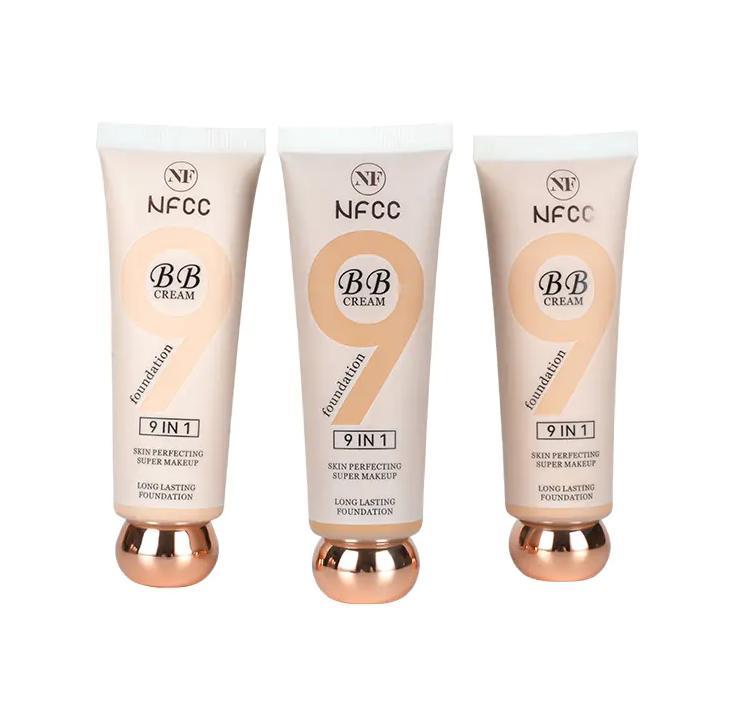
The Architects of the Flawless Canvas
Liquid foundation manufacturers operate at the sophisticated nexus of cosmetic chemistry, dermatology, and color science, dedicated to producing the complex emulsions that serve as the base for millions of makeup routines worldwide. Their core challenge is to formulate a product that is both a cosmetic and a quasi-skincare item—a pigmented fluid that must evenly mask imperfections, match living skin tones, feel comfortable for all-day wear, and interact harmoniously with a wide variety of skin types and conditions. This requires a deep mastery of emulsion technology, pigment dispersion, and stabilizing chemistry to create a product that won't separate, oxidize, or cause irritation, delivering a consistent experience from the first drop to the last.
The Science of the Base: Emulsion Engineering
At its heart, liquid foundation is an oil-in-water (O/W) or water-in-oil (W/O) emulsion, or increasingly, a silicone-based system. The choice of base dictates the final feel and performance. O/W emulsions (lighter, more hydrating) are created by dispersing oil droplets within a continuous water phase using emulsifiers like cetyl alcohol or glyceryl stearate. W/O emulsions (more water-resistant, richer) trap water droplets in oil, often using emulsifiers like sorbitan sesquioleate. Silicone-based foundations use volatile silicones (like cyclomethicone) for an initial smooth, dry-touch application that evaporates, leaving pigments and conditioning agents on the skin. The manufacturing process begins with creating a stable pre-mix of the water and oil phases separately, heating them to dissolve ingredients, and then combining them under high-shear homogenization to form micro-droplets for a stable, smooth emulsion.
The Art of Color: Pigment Dispersion and Shade Matching
The true technical prowess lies in color incorporation and stability. Manufacturers use inorganic pigments (iron oxides for red, yellow, black) and organic lakes for vibrancy. These hydrophobic pigments must be perfectly wetted, de-agglomerated, and dispersed into the emulsion. This is achieved through roller milling or high-pressure homogenization, which breaks down particle clusters to sub-micron levels, preventing a gritty feel and ensuring even color distribution. Shade matching is a precise science involving spectrophotometers and standardized lighting booths. Manufacturers maintain extensive shade libraries and use computer-aided formulation to create bases with specific undertones (pink, yellow, neutral, olive) and adjust for oxidation—a chemical reaction where foundation darkens upon contact with air and skin oils, which must be predicted and corrected for in the lab.
The Production Line: From Vat to Vial
Scale production is a controlled, sequential process. Large batches are made in stainless steel jacketed kettles with temperature and shear controls. After the base emulsion is formed and cooled, the pre-dispersed pigment paste is incorporated under gentle mixing to avoid introducing air. Active ingredients (like hyaluronic acid, vitamins, SPF filters) are added last, at lower temperatures, to preserve their efficacy. The final product undergoes de-aeration to remove bubbles before filling. Filling occurs in a cleanroom environment to ensure microbiological integrity. Product is dispensed into bottles, which are then fitted with pumps, droppers, or caps. The entire line must be calibrated for the specific viscosity of the formula, from thick creams to runny serums.

 English
 Arabic
 French
 Spanish
 Deutsch
 Turkish
 Dutch
Dutch
 Italiano
 Russian
 Romaian
 Portuguese (Brazil)
 Greek
Greek