


Manufacturing the Critical Voice of Air Intake Systems
The Precision Hub of Engine Management Supply
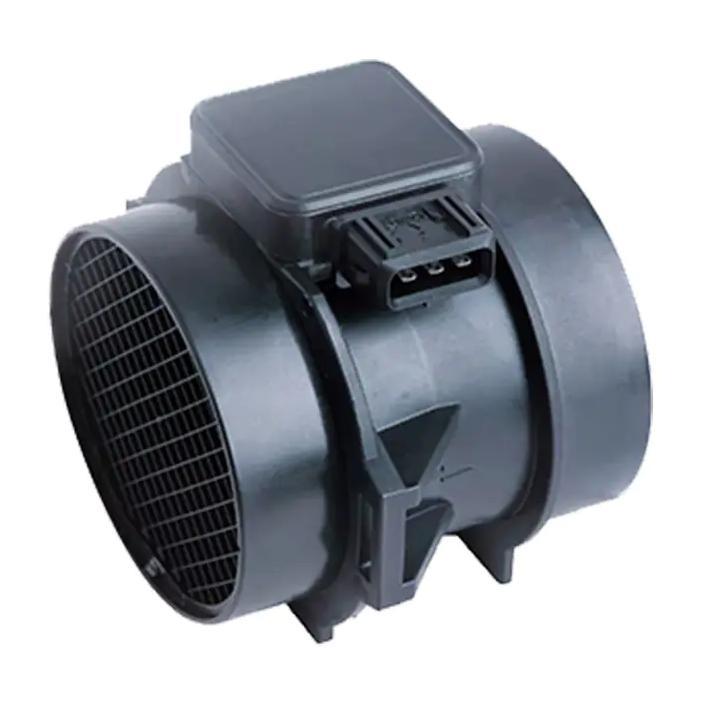
An air flow meter factory is a highly specialized manufacturing facility dedicated to the design, production, and calibration of sensors that measure the mass or volume of air flow, primarily for internal combustion engines. This factory operates at the intersection of precision mechanics, microelectronics, and advanced materials science. Its core product—the Mass Air Flow (MAF) sensor—is a critical component in modern engine management, providing the essential data that engine control units (ECUs) use to calculate fuel injection for optimal combustion, performance, and emissions control. The factory's role is to transform raw materials into reliable, accurate, and durable metrological instruments that must perform flawlessly under the harsh conditions of an automotive engine bay for over a decade.
Production Lines: Tailored for Sensor Technology
A full-scale factory typically houses separate lines for different sensor technologies. The most prominent is the hot-wire/hot-film MAF sensor line, which dominates the automotive market. This line focuses on the delicate assembly of the sensing element: a platinum thin-film or wire deposited on a ceramic or silicon substrate, housed in a bypass channel to ensure laminar flow and protect it from contamination. A parallel line may produce vane-type (VAF) meters, which involve precision potentiometers and spring-loaded flaps, though these are largely legacy technology. For industrial applications, lines for thermal mass flow meters and vortex shedding meters might also exist. Each line requires a cleanroom or highly controlled environment for assembling the sensitive sensing components, followed by robust assembly for the connector and housing.
The Heart of Production: Sensing Element Fabrication and Calibration
The most critical and proprietary process is the creation and calibration of the sensing element. For hot-film sensors, this involves thin-film deposition techniques like sputtering to apply the platinum track onto a miniature ceramic chip. This chip is then laser-trimmed to achieve a precise baseline resistance. The element is mounted into a plastic housing that defines the sampling channel. Calibration is the non-negotiable core competency of the factory. Each sensor is placed on a computer-controlled flow bench that simulates a wide range of air flows (from idle to wide-open throttle) and temperatures. The sensor's output (voltage or frequency) is measured and compared to a NIST-traceable standard. An embedded EEPROM in the sensor's circuitry is then programmed with unique calibration coefficients that linearize its output across the entire operating range. This step ensures every sensor that leaves the factory meets tight OEM specifications, often with accuracy demands of ±2-3%.
Automated Assembly and Integration
The assembly process is heavily automated to ensure consistency and throughput. Robotic pick-and-place machines install the calibrated sensing module, the temperature sensor (IAT), and other electronic components like filtering capacitors onto a printed circuit board (PCB). This sub-assembly is then potted or sealed with epoxy to protect against moisture, vibration, and thermal shock. The assembly is integrated into its final injection-molded housing, which is designed for a specific vehicle's intake duct. The electrical connector, often conforming to an automotive standard, is molded in or attached. Laser etching is used to mark part numbers, serial numbers, and date codes for full traceability, a requirement for automotive quality systems like IATF 16949.

 English
 Arabic
 French
 Spanish
 Portuguese
 Deutsch
 Turkish
 Dutch
Dutch
 Italiano
 Russian
 Romaian
 Portuguese (Brazil)