


Engineering the Invisible Filter for Enhanced Sight
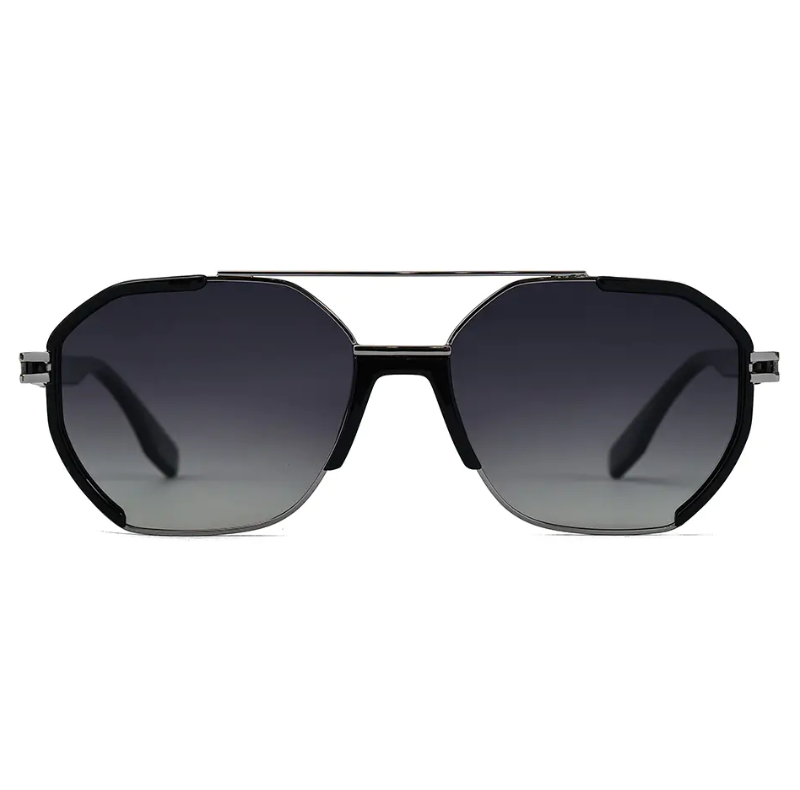
The Architects of Visual Clarity and Glare Elimination
A polarized sunglasses manufacturer is a specialized producer within the eyewear industry, whose primary expertise lies in integrating a microscopic glare-filtering layer into sunglass lenses. This manufacturer’s fundamental role is to master the science and scalable production of polarization—a technology that transforms visual comfort and safety by selectively blocking horizontally oriented light waves reflected from flat surfaces like water, roads, and snow. Unlike a standard tinted lens that merely dims light, a polarized lens is an engineered optical system. The manufacturer must ensure this critical filter is perfectly aligned, free of defects, and durably bonded within the lens structure, delivering on the core promise of reduced eye strain, improved contrast, and enhanced visual detail in high-glare environments.
The Core Technology: Creating and Embedding the Polarizing Filter
The magic lies in the polarizing film, a thin sheet of polyvinyl alcohol (PVA) or similar polymer that has been stretched and impregnated with iodine or dye molecules. This stretching aligns the long-chain molecules into a microscopic grid, creating a "venetian blind" effect that blocks horizontally oscillating light. The manufacturer’s key processes involve embedding this delicate film:
Lamination (for TAC & Glass Lenses): This is the most common method for high-clarity lenses. The polarizing film is sandwiched (laminated) between two layers of lens material. For Triacetate Cellulose (TAC) lenses, the film is placed between two curved sheets of TAC and fused under heat and pressure with adhesive. For glass, it’s laminated between two layers of optical glass. This protects the film and provides excellent optical quality.
Injection Molding (for Polycarbonate & NXT Lenses): The polarizing film is first cut into a precise "cookie" matching the lens curve. This film insert is then placed into an injection mold. Molten polycarbonate or Trivex (NXT) resin is injected behind it, enveloping the film and bonding it permanently into a single, impact-resistant lens. This method is favored for sports and safety sunglasses due to its durability.
Coating (A Less Common Method): A polarizing chemical coating can be applied to a lens surface, though it is generally less durable and effective than laminated or injected solutions.
Quality Assurance: Validating the Invisible Grid
Manufacturing polarization is pointless without rigorous validation. Every batch of lenses undergoes stringent testing:
Polarization Efficiency Test: Lenses are placed between two polarizing filters rotated 90 degrees apart. A quality lens will block nearly all light in this setup, with efficiency rates often exceeding 99%. Visual inspection against an LCD screen (which emits polarized light) is a quick check—a properly polarized lens will turn the screen black when rotated.
Optical Distortion & Clarity Testing: Using optical projectors or laser grids to ensure the lamination process hasn’t introduced waves, bubbles, or haziness (birefringence).

 English
 Arabic
 French
 Spanish
 Portuguese
 Deutsch
 Turkish
 Dutch
Dutch
 Italiano
 Russian
 Romaian
 Greek
Greek