


Where Durability Meets Exactitude in Gear Manufacturing
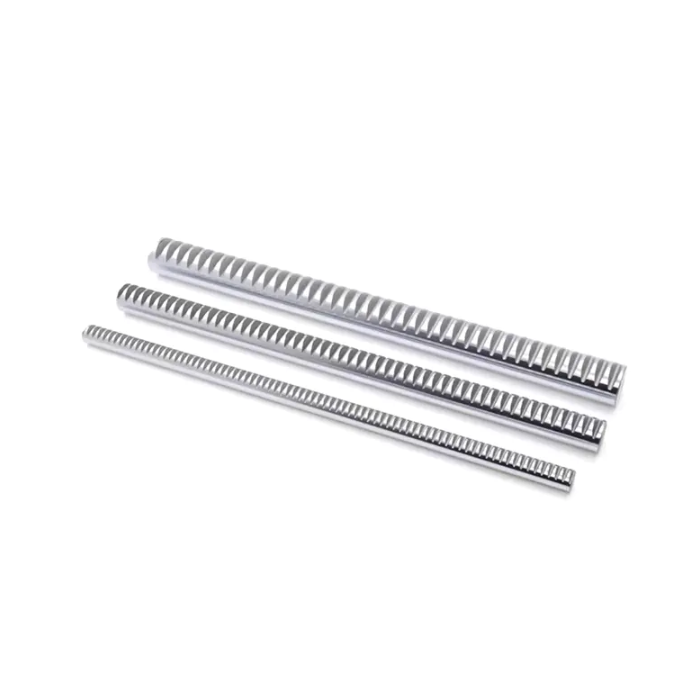
In the heart of massive industrial machinery—from mining excavators and wind turbine yaw drives to steel mill rollers and large printing presses—lies a critical rotational component. A specialized ground gear manufacturer focuses on producing large-diameter, high-precision ring gears and pinions that are finished by grinding to achieve exceptional accuracy and surface integrity. These are not standard gears; they are engineered for applications where immense torque, minimal backlash, long-term reliability, and precise motion transfer under heavy load are non-negotiable, often serving as the foundational rotational element in a "ground" assembly or system.
The Critical Role of the Grinding Finishing Process
The distinction of a ground gear lies in its final manufacturing step. After the gear teeth are initially cut (via hobbing or shaping) and the component undergoes heat treatment to achieve the required hardness, a precision grinding process is employed. This post-hardening grind uses formed grinding wheels to accurately finish the tooth flanks. This process achieves two vital outcomes: it corrects any micro-distortions or warpage induced by heat treatment, and it produces an extremely smooth, precise tooth profile with tight tolerances on pitch, profile, and lead. The result is a gear with superior geometric accuracy, optimal contact patterns, reduced noise, and the ability to transmit power with minimal loss and vibration, which is essential for the smooth operation of large-scale systems.
Material Science and Robust Design for Extreme Service
Given the severe operating conditions, material selection and design are paramount. These gears are typically forged from high-strength alloy steels such as 42CrMo4, 4340, or similar grades, chosen for their excellent through-hardening or case-hardening properties. The gear design is analyzed using advanced software to model tooth root stresses, contact fatigue (pitting), and bending strength under expected loads. For open gearing exposed to the elements, like that on a slewing ring for a crane, manufacturers apply specialized hardened coatings or recommend periodic corrosion-inhibiting lubricants. The design often includes features for secure mounting, such as drilled and tapped flange holes or integrated bolt circles, ensuring the gear becomes a rigid part of the larger machine structure.
Manufacturing Scale and Metrology for Large Components
Producing gears that can measure several meters in diameter requires specialized, large-scale machinery and meticulous process control. Manufacturers utilize large gear hobbers, vertical grinding machines, and custom furnaces for controlled heat treatment. Metrology is a significant challenge and a key differentiator. High-end manufacturers employ large gear inspection machines (like Gleason or Klingelnberg units) capable of measuring the tooth geometry of massive components, generating detailed reports on profile deviation, pitch error, and cumulative error. This data is not just for final inspection; it is fed back into the manufacturing process to ensure consistency and validate that the gear meets the stringent AGMA or DIN accuracy class specified by the customer.

 English
 Arabic
 Spanish
 Portuguese
 Deutsch
 Turkish
 Dutch
Dutch
 Italiano
 Russian
 Romaian
 Portuguese (Brazil)
 Greek
Greek