


The Science of Follicular Units: Ensuring Natural-Looking Beard Growth
The Science of Follicular Units: Ensuring Natural-Looking Beard Growth
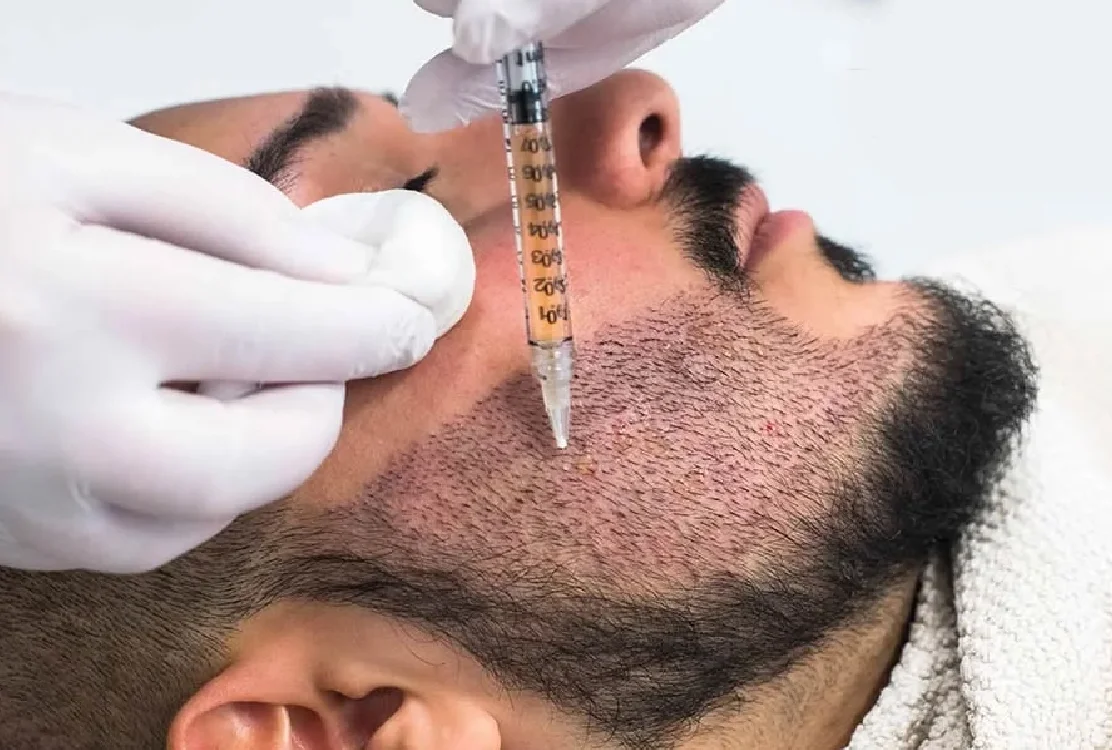
The ultimate goal of any facial hair restoration is a result that is indistinguishable from nature, and achieving this requires a deep dive into the microscopic world of follicular units. For those undergoing a beard hair transplant in Riyadh(زراعة شعر اللحية في الرياض), the difference between a "surgical" look and a "natural" one lies in the surgeon's ability to replicate the biological complexity of facial hair. Unlike the scalp, where hair often grows in large clusters of three or four, the beard is a unique anatomical landscape primarily composed of single and double hair units. In the high-precision medical clinics of Saudi Arabia, the science of follicular unit management is treated with the same rigor as a fine art, ensuring that every transplanted graft mimics the density, texture, and irregular growth patterns that define a truly masculine and authentic beard.
What is a Follicular Unit?
A follicular unit is a naturally occurring group of hairs that grow together from a single pore, accompanied by nerves, sebaceous (oil) glands, and a small muscle.
-
Scalp Units: Typically contain 1 to 4 hairs. On the head, multiple-hair units are preferred because they provide maximum coverage and "bulk."
-
Beard Units: Primarily consist of single hairs (70-80%) and occasional double hairs. This lower density is what gives a natural beard its characteristic "separated" texture, allowing the underlying skin to remain slightly visible.
To ensure a natural look, a surgeon must meticulously sort the harvested grafts. Using multi-hair units on the cheeks or the edges of a beard creates an unnaturally "clumpy" or "plotted" appearance. Therefore, for a successful beard restoration, the surgeon primarily uses single-hair units for the visible borders and reserves double-hair units for the "bulk" areas like the chin or the jawline.
Anatomical Mapping: The "Swirls" and "Grain" of the Face
The most scientific challenge of a beard transplant is not just the placement of hair, but the angulation. Scalp hair generally grows in a consistent downward or forward direction at an angle of 45 degrees. Facial hair, however, is much more chaotic.
-
The Mandible Angle: Along the jawline, hair often grows at extremely acute (flat) angles, nearly parallel to the skin.
-
The Neck Whorls: On the neck and under the chin, hair frequently grows in circular patterns or "whorls," changing direction every few centimeters.
-
The Mustache: Mustache hair grows outward from the center (the philtrum) toward the corners of the mouth.
In Riyadh, elite surgeons use high-magnification loupes to map these natural "grains." If the transplanted follicular units are not placed at these ultra-acute angles—typically 10 to 20 degrees—the beard will look "bristly" and stand straight out from the face, making it impossible to groom or style.
The Importance of "Feathering" the Border
A natural beard does not begin with a sharp, solid line. If you look closely at a natural beard, the edges on the upper cheeks are "feathered," with hairs becoming progressively sparser as they move toward the eyes.
-
Macro-Patterning: The surgeon creates a slightly irregular, non-linear border. Perfectly straight lines in nature are rare and usually look "fake."
-
Micro-Patterning: Only the finest single-hair follicular units are used for the leading edge. These "transition hairs" are placed with greater spacing to mimic the natural thinning of facial hair at the borders.
-
Density Gradients: The density is gradually increased as the surgeon moves from the cheekbone down toward the jaw. This gradient creates the depth and shadow that give a beard its powerful, 3D appearance.
Texture Matching: From Head to Face
Because the donor hair is usually taken from the scalp, there is a scientific difference in hair diameter. Beard hair is typically twice as thick and has twice as many cuticle layers as scalp hair.
-
Selection: Surgeons select hair from the lower neck or just above the ears (the "fringe" of the donor area), as these hairs are often coarser and a better match for facial hair.
-
Post-Transplant Adaptation: Interestingly, once transplanted into the facial skin, the "donor" follicles often undergo a biological shift. Influenced by the facial blood supply and local hormones, the transplanted hairs tend to become slightly coarser over time, better integrating with any existing beard hair.
Follicular Unit Viability and Storage
The science of a natural look also depends on the health of the grafts. Once a follicular unit is removed from the body, it begins to lose viability.
-
Chilled Storage: Grafts are kept in a specialized, chilled "bio-storage" solution (like HypoThermosol) that mimics the body’s internal environment.
-
Rapid Implantation: The DHI (Direct Hair Implantation) technique is often preferred for beards because it reduces the time a follicular unit spends outside the body, ensuring the hair begins its new life in the face with maximum vitality.
Conclusion
Ensuring natural-looking beard growth is a complex symphony of biological understanding and surgical precision. By focusing on the unique properties of facial follicular units—their single-hair composition, acute growth angles, and feathered density—the process of a beard hair transplant in Riyadh moves beyond a mere "filling of gaps" to a true restoration of facial identity. When the science is handled with expertise, the result is a beard that grows, feels, and looks so authentic that even a barber would be unable to tell it was transplanted. It is the perfect marriage of human anatomy and medical innovation.

 English
 Arabic
 French
 Spanish
 Portuguese
 Deutsch
 Dutch
Dutch
 Italiano
 Russian
 Romaian
 Portuguese (Brazil)
 Greek
Greek