


Pico vs. Nano: Choosing the Best Laser for Your Skin Type
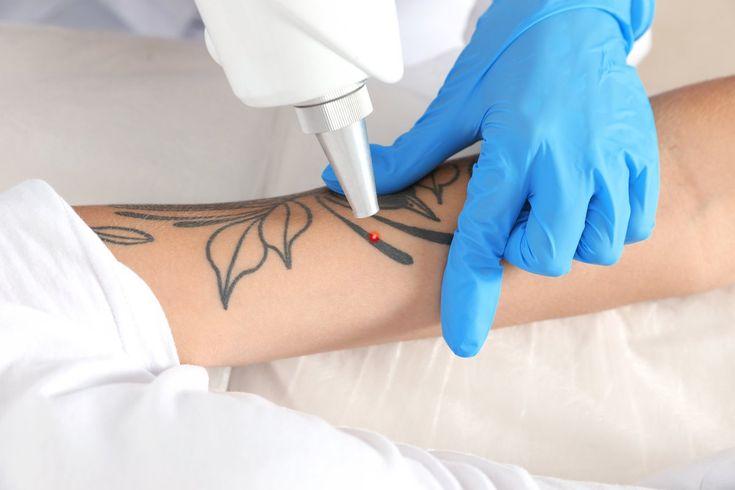
Pico vs. Nano: Choosing the Best Laser for Your Skin Type
Navigating the world of aesthetic technology can feel overwhelming, but understanding the tools is the first step toward a successful transformation. When seeking permanent tattoo removal in Riyadh(إزالة الوشم الدائم في الرياض), you will primarily choose between two categories of technology: the traditional Nanosecond (Nano) lasers and the next-generation Picosecond (Pico) lasers. While both utilize light energy to break down ink, they interact with your skin in fundamentally different ways. In a region where sun exposure and diverse skin tones are key considerations, choosing the technology that aligns with your specific biological profile is essential for achieving clear results without compromising skin health.
The Pulse Speed: Why It Matters
The names "Nano" and "Pico" refer to the duration of the laser pulse—the amount of time the light energy is in contact with your skin.
-
Nanosecond (Nano) Lasers: These have been the "gold standard" for decades. They fire pulses in billionths of a second. This speed creates a photothermal effect, essentially using heat to break the ink into smaller chunks.
-
Picosecond (Pico) Lasers: These represent the latest evolution, firing 1,000 times faster than Nano lasers (in trillionths of a second). Because they are so fast, they create a photoacoustic effect. Instead of heating the ink, they use pressure waves to shatter it into a fine "dust."
Matching Technology to Your Skin Type
In dermatology, skin is often categorized by the Fitzpatrick Scale, which ranges from Type I (very fair) to Type VI (deeply pigmented). Your skin type is the most influential factor in deciding between Pico and Nano.
1. Lighter Skin Tones (Fitzpatrick I–III)
For individuals with fair to olive skin, both technologies are highly effective. However, Pico lasers are often preferred for their efficiency. They can clear tattoos in fewer sessions and are better at targeting stubborn "cool" colors like turquoise and green. Nano lasers remain a reliable, cost-effective option for simple black ink tattoos on lighter skin.
2. Darker Skin Tones (Fitzpatrick IV–VI)
This is where the distinction becomes critical. Darker skin contains more natural melanin, which can inadvertently absorb laser energy intended for the tattoo ink.
-
The Risk with Nano: Because Nano lasers rely on heat, there is a higher risk of "collateral" thermal damage to the surrounding skin, which can lead to hyperpigmentation (dark spots) or hypopigmentation (light spots).
-
The Pico Advantage: Because Pico technology uses pressure rather than heat, it is significantly safer for darker complexions. Systems like the PicoWay (utilizing a 1064nm wavelength) are specifically designed to bypass the surface melanin and target the ink deep in the dermis, minimizing the risk of pigment changes.
Comparing Clinical Performance
| Feature | Nanosecond (Nano) | Picosecond (Pico) |
| Primary Action | Photothermal (Heat) | Photoacoustic (Pressure) |
| Ink Particle Size | Large "Pebbles" | Fine "Dust" |
| Best For | Black ink on fair skin | Multi-color and all skin types |
| Recovery Time | 7–10 Days | 3–5 Days |
| Pain Level | Higher (Hot snap) | Lower (Pressure snap) |
| PIH Risk | Higher for dark skin | Significantly lower |
Color Sensitivity: The Wavelength Factor
While speed is important, the color of the laser light (wavelength) must match the color of your ink.
-
Black Ink: Both Pico and Nano lasers using a 1064nm wavelength excel here.
-
Red and Warm Tones: A 532nm wavelength is required. Pico lasers tend to be gentler on the skin surface when using this wavelength.
-
Blue and Green: These are notoriously difficult for traditional Nano lasers. The 755nm (PicoSure) or 730nm/785nm (PicoWay) wavelengths are the current champions for erasing these "stubborn" pigments.
Making the Final Choice
Choosing between Pico and Nano isn't just about picking the "newest" machine; it's about the safety profile for your specific skin. In Riyadh's leading clinics, a specialist will often combine these technologies—using the power of Nano to break up dense, dark ink in early sessions, and switching to the precision of Pico to "sweep up" the remaining fine particles and difficult colors.
By prioritizing technology that minimizes heat and maximizes precision, you ensure that the only thing disappearing is your unwanted ink, leaving your natural skin tone intact and healthy.

 English
 Arabic
 French
 Spanish
 Portuguese
 Deutsch
 Turkish
 Italiano
 Russian
 Romaian
 Portuguese (Brazil)
 Greek
Greek