


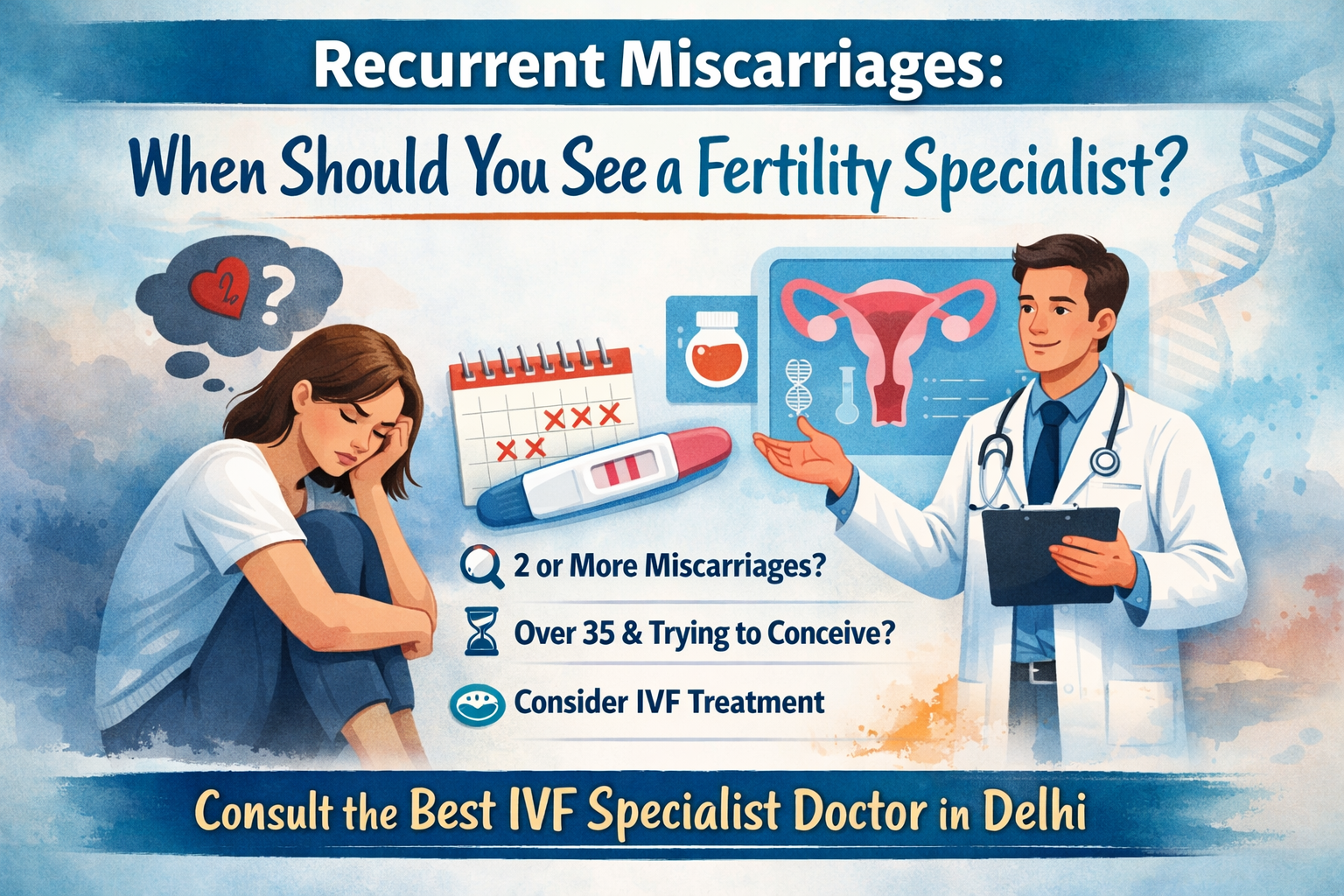
Recurrent Miscarriages: When Should You See a Fertility Specialist?
Pregnancy is often described as a beautiful journey. But what happens when that journey keeps getting interrupted? If you’ve experienced two or more miscarriages, you may feel confused, heartbroken, and full of questions. You might wonder, Is something wrong with me? Will I ever have a healthy pregnancy?
First, take a deep breath. You are not alone. Recurrent miscarriages are more common than many people realize, and in many cases, they can be treated. Think of your body like a garden. Sometimes, the soil just needs the right care, nutrients, and attention for seeds to grow properly. With the right guidance—especially from the best ivf specialist doctor in delhi—many couples go on to have successful pregnancies.
Let’s understand what recurrent miscarriage means and when it’s time to seek expert help.
1. What Is Recurrent Miscarriage?
A miscarriage is the loss of a pregnancy before 20 weeks. When this happens two or more times consecutively, doctors call it recurrent miscarriage or recurrent pregnancy loss.
It's not just "bad luck." Repeated losses may indicate an underlying issue that needs medical attention.
2. How Common Are Recurrent Miscarriages?
While a single miscarriage is quite common, affecting about 10-- 20% of pregnancies, recurrent miscarriages are less common, affecting around 1-- 2% of couples.
If you've had two losses, doctors now recommend evaluation rather than waiting for a third. Early action can make a big difference.
3. Emotional Impact of Repeated Pregnancy Loss
Let's talk about something equally important-- the emotional side.
Repeated miscarriages can feel like an emotional rollercoaster. You may experience:
Grief
Guilt
Anxiety
Fear of trying again
Strain in relationships
It's okay to feel this way. Healing is not just physical-- it's emotional too. Seeking counseling or support groups can be incredibly helpful.
4. Common Causes of Recurrent Miscarriages
Understanding the cause is like finding the missing puzzle piece.
Chromosomal Abnormalities
Sometimes, embryos develop with genetic issues that prevent proper growth.
Uterine Problems
Issues like fibroids, uterine septum, or scar tissue can interfere with implantation.
Hormonal Imbalance
Low progesterone or thyroid disorders may increase miscarriage risk.
Immune Disorders
Conditions like antiphospholipid syndrome can cause clotting problems affecting pregnancy.
Infections
Certain infections may impact early pregnancy development.
The good news? Many of these conditions are treatable.
5. Role of Age in Pregnancy Loss
Age plays a significant role in fertility and miscarriage risk
Under 35: Lower risk.
35-- 40: Moderate increase
Over 40: Higher risk
As women age, egg quality declines. This increases the chance of chromosomal abnormalities.
That's why consulting the best ivf specialist doctor in delhi becomes even more important if you're over 35 and experiencing losses.
6. When Should You See a Fertility Specialist?
Here's the simple answer:
After two consecutive miscarriages
If you're over 35 years old
If you have known medical conditions
If you've been trying for over a year without success
Waiting too long can delay treatment. Early consultation means early solutions.
7. What Tests Are Recommended?
A fertility specialist may recommend:
Genetic Testing
To check for chromosomal issues in parents.
Hormone Tests
Thyroid levels, progesterone levels, etc.
Ultrasound or Hysteroscopy
To examine the uterus.
Blood Clotting Tests
To rule out immune-related causes.
Testing helps doctors create a personalized treatment plan.
8. Treatment Options Available
Treatment depends on the cause.
Hormone therapy
Blood-thinning medications
Surgery for uterine abnormalities
Thyroid treatment
Lifestyle modifications
Each case is unique. A tailored approach gives the best results.
9. Lifestyle Changes That Can Help
Sometimes small changes make a big difference.
Maintain healthy weight
Avoid smoking and alcohol
Manage stress
Eat a balanced diet
Regular moderate exercise
Think of it like preparing fertile soil before planting seeds.
10. IVF and Advanced Fertility Treatments
In some cases, doctors may recommend IVF (In Vitro Fertilization).
How IVF Helps
Embryos can be tested through genetic screening (PGT).
Only healthy embryos are transferred.
Reduces risk of chromosomal miscarriage.
For many couples, IVF becomes a path to hope. Consulting the best ivf specialist doctor in delhi ensures you receive advanced technology and personalized care.
11. Importance of Choosing the Right Specialist.
Not all clinics are the same.
Look for:.
Experience in recurrent pregnancy loss.
Advanced lab facilities.
Transparent communication.
Personalized treatment plans.
An experienced specialist understands both medical and emotional needs.
12. Hope After Recurrent Miscarriage.
Here's something reassuring:.
Even after two or three miscarriages, more than 60-- 70% of women eventually have successful pregnancies with proper treatment.
Science has advanced significantly. What seemed impossible a decade ago is now manageable.
13. Preparing for Your Next Pregnancy.
Before trying again:.
Complete recommended tests.
Follow prescribed treatments.
Take prenatal vitamins.
Schedule early pregnancy monitoring.
Early scans and blood tests provide reassurance and timely intervention if needed.
14. When Miscarriage Has No Clear Cause.
Sometimes, despite all testing, doctors find no clear reason.
This can be frustrating. But unexplained does not mean untreatable.
Close monitoring, supportive medication, and early care often lead to success.
15. Final Thoughts.
Recurrent miscarriages can feel like walking through a storm without an umbrella. But storms don't last forever. With the right diagnosis, emotional support, and medical expertise-- especially from the best ivf specialist doctor in delhi-- your chances of a healthy pregnancy improve significantly.
Don't wait in silence. If you've experienced repeated losses, it may be time to seek expert guidance. Your dream of parenthood is still possible.
FAQs.
1. How many miscarriages are considered recurrent?
Two or more consecutive pregnancy losses are considered recurrent miscarriages.
2. Can stress cause recurrent miscarriages?
Stress alone usually doesn't cause miscarriage, but chronic stress may affect hormonal balance.
3. Is IVF necessary after recurrent miscarriages?
Not always. IVF is recommended only if genetic or fertility-related issues are identified.
4. Can I have a healthy pregnancy after three miscarriages?
Yes, many women go on to have healthy pregnancies with proper treatment and monitoring.
5. Should my partner also get tested?
Yes, genetic testing of both partners may be recommended to identify chromosomal issues.

 English
 Arabic
 French
 Spanish
 Portuguese
 Deutsch
 Turkish
 Dutch
Dutch
 Italiano
 Romaian
 Portuguese (Brazil)
 Greek
Greek