


Self Pierce Riveting: Advanced Metal Joining Solutions for Modern Manufacturing
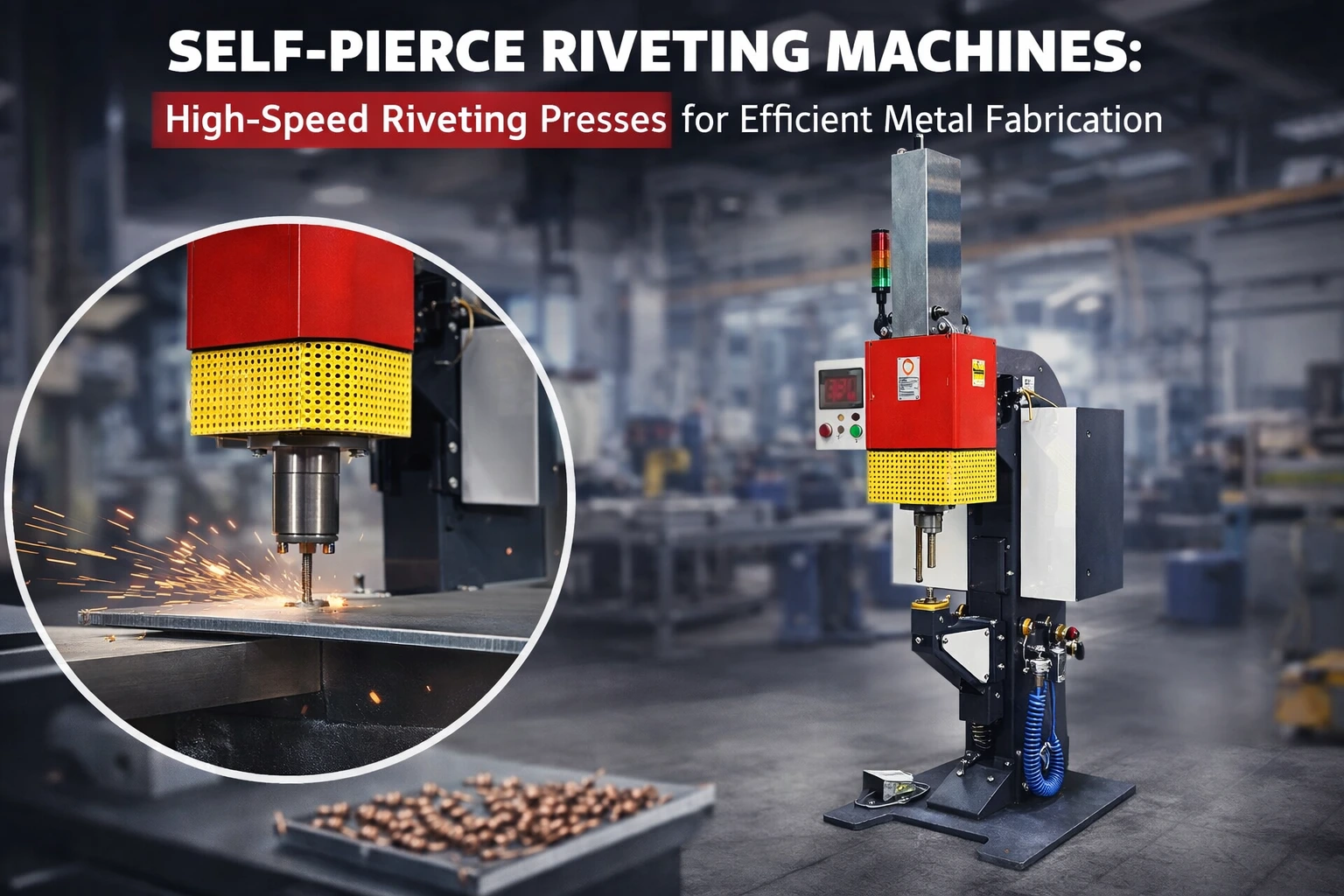
In today’s competitive manufacturing landscape, efficiency, reliability, and precision in metal joining processes are more critical than ever. Self pierce riveting (SPR) has emerged as a transformative solution, enabling manufacturers to join dissimilar materials without pre-drilled holes or welding. At Heron Welder, we specialize in delivering cutting-edge SPR machines and automated systems that streamline production while ensuring structural integrity and consistency.
In this guide, we will explain the principles, applications, advantages, comparisons with other joining methods, and best practices for self pierce riveting, helping engineers and OEMs optimize their production lines.
What is Self Pierce Riveting?
Self pierce riveting is a mechanical fastening technique that joins two or more sheets of metal (or metal and composite materials) by driving a semi-tubular rivet through the top layer(s) and flaring it in the bottom sheet. Unlike traditional riveting, SPR does not require pre-drilled holes, allowing for faster cycle times and reduced preparation work.
The process is highly versatile and is particularly suitable for aluminum, steel, and lightweight alloys, making it ideal for the automotive, aerospace, electronics, and appliance industries.
How Self Pierce Riveting Works
The self pierce riveting process involves several precise steps:
-
Rivet Positioning – A semi-tubular rivet is aligned on the sheets to be joined.
-
Rivet Driving – Using a hydraulic or servo-driven force, the rivet is pushed through the top sheet.
-
Rivet Flare Formation – The rivet flares in the lower sheet, creating a strong mechanical interlock without puncturing the bottom material.
-
Finished Joint – The riveted joint is ready for immediate handling, often suitable for subsequent coating or painting.
Heron’s SPR machines are engineered for high repeatability and precision, ensuring uniform joint quality even at high production volumes.
Applications of Self Pierce Riveting
SPR is widely used in industries that demand lightweight, high-strength, and corrosion-resistant assemblies:
-
Automotive Manufacturing: Joining aluminum body panels, roof modules, and mixed-material assemblies to reduce vehicle weight without compromising strength.
-
Aerospace and Aviation: Connecting lightweight alloys and composites for fuselage panels, interiors, and support structures.
-
Consumer Electronics: Producing durable enclosures for laptops, tablets, and appliances with minimal thermal impact.
-
Appliances and HVAC: Joining steel and aluminum sheets in washing machines, air conditioners, and HVAC units.
Heron Welder’s SPR systems can be integrated into fully automated production lines, providing consistent quality and reduced labor requirements.
Advantages of Self Pierce Riveting Over Other Joining Methods
Compared to welding and traditional mechanical fastening, SPR offers several advantages:
| Feature | SPR | Spot Welding | Bolted/Jigged Fastening |
|---|---|---|---|
| Material Compatibility | Dissimilar metals, composites | Mostly steel | Limited by hole prep |
| Thermal Impact | Minimal | High | None |
| Cycle Time | Fast | Moderate | Slow |
| Structural Strength | High | Moderate | Moderate |
| Surface Finish | No burn marks | Possible discoloration | Requires finishing |
By avoiding high heat, SPR preserves material properties and reduces distortion, making it a preferred solution for aluminum-intensive and hybrid assemblies.
Best Practices for Implementing SPR
To maximize efficiency and joint reliability, manufacturers should follow these best practices:
-
Material Assessment – Choose rivets compatible with your sheet thickness and materials.
-
Machine Calibration – Adjust force, stroke, and press speed according to material specifications.
-
Joint Testing – Conduct destructive and non-destructive tests to validate joint strength and consistency.
-
Automation Integration – Combine SPR with robotic arms or conveyors for high-volume, repeatable operations.
-
Maintenance and Tooling – Regular inspection of dies, rivets, and tooling ensures sustained quality.
Heron Welder provides full consultation, training, and technical support for SPR machine setup and process optimization.
SPR vs. Welding: When to Choose Which
While SPR and resistance spot welding are both popular joining methods, the choice depends on material, design, and production requirements:
-
Use SPR when:
-
Joining dissimilar metals or aluminum to steel.
-
Surface aesthetics are critical.
-
Heat-sensitive coatings or composites are involved.
-
-
Use Welding when:
-
Joining homogeneous steel components in simple geometries.
-
Maximum shear strength is required for thick sections.
-
Heat-induced metallurgical changes are acceptable.
-
Heron Welder’s portfolio includes both resistance welding and SPR solutions, allowing manufacturers to select the optimal technology for each application.
Frequently Asked Questions (FAQs)
Q1: Can SPR be used on coated or painted materials?
Yes. SPR can join pre-coated sheets without damaging the surface, preserving aesthetic quality.
Q2: How thick can SPR join?
Depending on the rivet and machine configuration, SPR can join sheets ranging from 0.8 mm to 5 mm or more.
Q3: Are SPR joints corrosion-resistant?
When combined with appropriate rivet materials and coatings, SPR joints offer excellent corrosion resistance.
Q4: Can SPR be automated?
Absolutely. Heron’s SPR systems are designed for robotic and conveyor integration, providing full automation options.
Q5: How does SPR affect production speed?
SPR significantly reduces cycle times compared to pre-drilled or welded joints, improving overall production efficiency.
Partner with Heron Welder for Self Pierce Riveting Solutions
Optimizing metal joining processes is essential for modern manufacturing efficiency. Heron Welder’s self pierce riveting machines, automation systems, and expert support provide manufacturers with reliable, high-speed, and high-strength joining solutions.
Whether you are an OEM, factory decision-maker, or automation integrator, Heron Welder can design customized SPR setups tailored to your production needs.
Contact us today to request a quote or consult with our experts on the ideal SPR solution for your manufacturing line. Let us help you improve productivity, reduce costs, and achieve consistent, high-quality joints.

 Arabic
 French
 Spanish
 Portuguese
 Deutsch
 Turkish
 Dutch
Dutch
 Italiano
 Russian
 Romaian
 Portuguese (Brazil)
 Greek
Greek