


What Are 3D Furniture Rendering Services? A Complete Guide for Designers
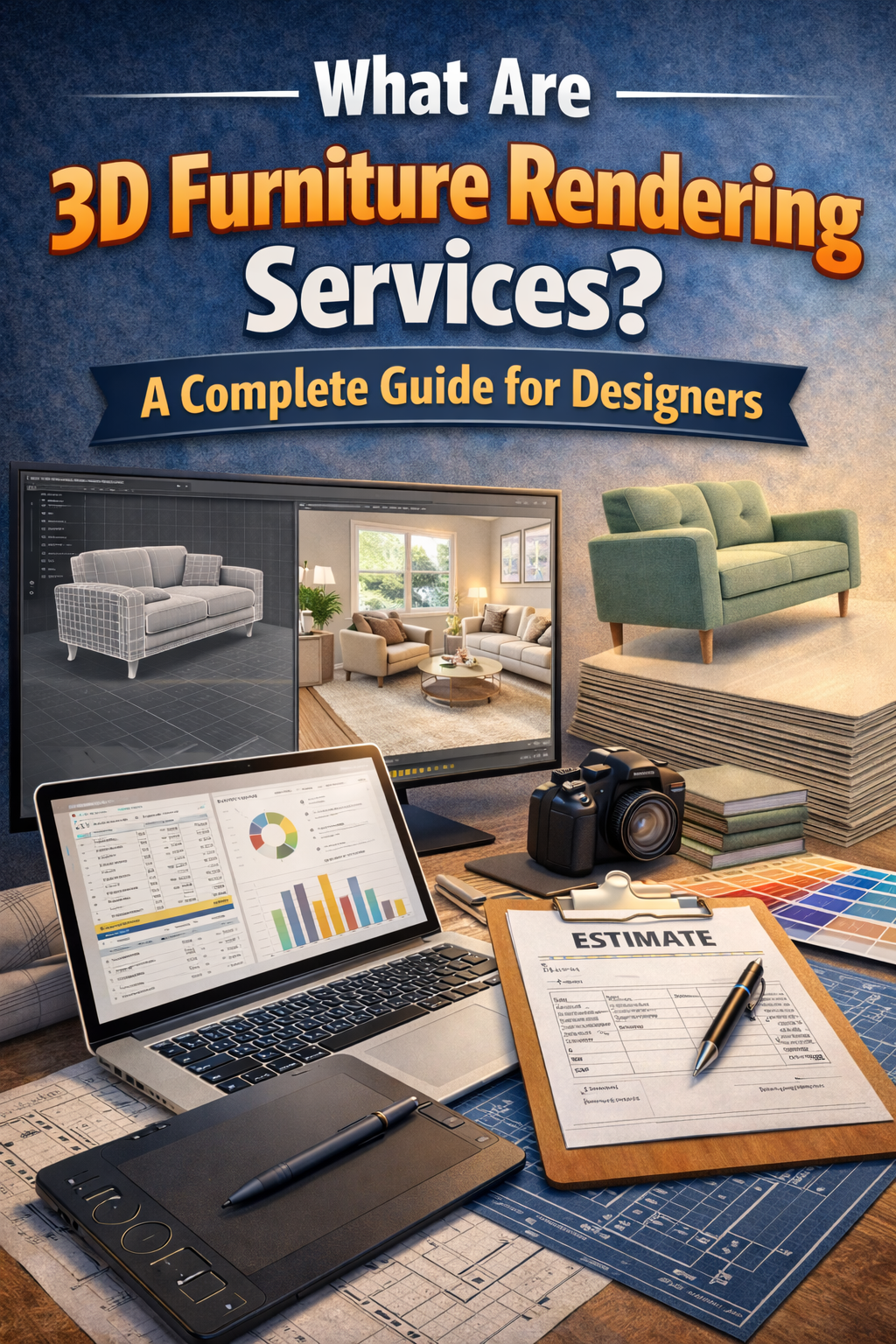
In today’s design-driven market, visual presentation is everything. Whether you are an interior designer, furniture manufacturer, product developer, or eCommerce brand, showcasing furniture in the most realistic and visually appealing way is essential. This is where 3D furniture rendering services come into play.With advancements in digital visualization technology, designers no longer need to rely solely on physical prototypes or expensive photoshoots. Instead, high-quality 3D renders can present furniture designs with stunning realism, accuracy, and flexibility. In this complete guide, we’ll explore what 3D furniture rendering services are, how they work, and why they are becoming an essential tool for designers worldwide.
What Are 3D Furniture Rendering Services?
3D furniture rendering services involve creating photorealistic digital images of furniture using advanced 3D modeling and rendering software. These services transform design concepts, sketches, or CAD drawings into highly detailed visual representations that look like real photographs.The goal of 3D rendering is to showcase furniture designs in realistic environments with accurate materials, textures, lighting, and shadows. Designers can present products in various settings, colors, and configurations without physically manufacturing each variation.
3D furniture rendering is widely used for.
-
Product catalog
-
eCommerce websites
-
Marketing campaigns
-
Client presentations
-
Interior design proposals
-
Trade show promotions
-
Social media advertising
Why 3D Furniture Rendering Is Important for Designers
In a competitive market, visual impact can make or break a product’s success. High-quality 3D furniture renders help designers and brands communicate their ideas clearly and professionally.
Enhanced Visual Communication
Design concepts can sometimes be difficult to explain through 2D drawings. 3D renders provide a realistic preview of the final product, helping clients and stakeholders visualize details more effectively.
Faster Product Launches
Traditional photography requires physical prototypes, studio setups, and logistics. With 3D rendering, designers can create marketing visuals before production even begins.
Cost-Effective Marketing
Eliminating the need for physical samples and photoshoots significantly reduces marketing costs while maintaining high visual quality.
How 3D Furniture Rendering Services Work
Understanding the process helps designers make informed decisions when outsourcing rendering services.
3D Modeling
The first step involves creating a digital 3D model of the furniture piece. Designers may provide.
-
CAD files
-
Technical drawings
-
Sketches
-
Reference images
-
Material specifications
The 3D artist builds an accurate digital replica, ensuring correct proportions and details.
Texturing and Material Application
Realistic materials are applied to the model, such as.
-
Wood grains
-
Metal finishes
-
Fabric textures
-
Leather surfaces
-
Glass reflections
Advanced rendering tools simulate how light interacts with each material.
Lighting Setup
Lighting plays a crucial role in realism. Artists carefully position light sources to create natural shadows, highlights, and depth.
Scene Creation
Furniture can be placed in realistic interior environments to enhance presentation. Designers can choose modern, classic, minimalistic, or luxury settings based on their target audience.
Final Rendering
The completed scene is processed to generate high-resolution images suitable for print and digital platforms.
Key Benefits of 3D Furniture Rendering Services
Photorealistic Quality
Modern rendering software produces images that are nearly indistinguishable from real photographs. This enhances credibility and buyer confidence.
Customization and Flexibility
Designers can experiment with.
-
Different fabric colors
-
Alternative materials
-
Multiple finishes
-
Various room settings
All without manufacturing new prototypes.
Time Efficiency
Creating a digital render is often faster than arranging a physical photoshoot. Quick revisions can also be made if design changes occur.
Improved Client Approval Process
Clients can review highly detailed visuals before production begins, reducing misunderstandings and costly revisions.
Scalable Content Creation
Brands can create entire product catalogs digitally, saving time and resources.
Applications of 3D Furniture Rendering in Design Industries
3D furniture rendering services are used across multiple industries.
Interior Design
Interior designers use 3D renders to present furniture layouts within complete room designs. This helps clients visualize the final look before implementation.
Furniture Manufacturing
Manufacturers can showcase new collections without producing large inventories for photography.
eCommerce Platforms
Online furniture stores rely heavily on high-quality visuals. 3D rendering allows them to display products from multiple angles and variations.
Real Estate and Architectural Visualization
Furniture renders enhance property marketing by staging virtual interiors that appeal to buyers.
3D Furniture Rendering vs. Traditional Photography
While traditional product photography remains valuable, 3D rendering offers unique advantages.
No Physical Inventory Required
Photography requires finished products. Rendering allows visualization even during the concept phase.
Unlimited Creative Control
Designers can modify lighting, background, and materials without re-shooting images.
Lower Long-Term Costs
Although professional rendering has upfront costs, it eliminates expenses related to studio rental, shipping, and setup.
Easy Revisions
If a client requests a different fabric color, it can be adjusted digitally rather than reshooting the entire product.
Choosing the Right 3D Furniture Rendering Service Provider
Selecting the right rendering partner is crucial for achieving high-quality results. Designers should consider.
-
Portfolio quality
-
Level of realism
-
Turnaround time
-
Pricing structure
-
Revision policy
-
Experience in furniture visualization
An experienced provider will understand design aesthetics, lighting principles, and material accuracy.For example, professional visualization firms like SMA Archviz specialize in architectural and furniture rendering services, helping designers transform concepts into compelling visual experiences.
Common Challenges in 3D Furniture Rendering
Despite its advantages, 3D rendering requires skill and expertise.
Achieving Realism
Small details such as fabric wrinkles, reflections, and shadows significantly impact realism.
Accurate Scaling
Furniture proportions must match real-world dimensions to avoid unrealistic presentations.
Lighting Precision
Improper lighting can make even the best models appear artificial.
Working with experienced professionals helps overcome these challenges.
Future Trends in 3D Furniture Rendering
Technology continues to evolve, making 3D visualization even more powerful.
Real-Time Rendering
Designers can make instant adjustments and see changes immediately.
Augmented Reality (AR) Integration
Customers can place 3D furniture models into their own living spaces using mobile devices.
Virtual Reality (VR) Showrooms
Brands are creating immersive virtual showrooms where clients can explore products interactively.
AI-Enhanced Rendering
Artificial intelligence is streamlining workflows and improving efficiency in rendering processes.
These advancements are shaping the future of furniture design and marketing.
Who Should Use 3D Furniture Rendering Services?
3D furniture rendering is ideal for.
-
Interior designers
-
Furniture manufacturers
-
Product designers
-
eCommerce businesses
-
Real estate developers
-
Marketing agencies
Whether launching a new product line or presenting design proposals, high-quality renders provide a competitive edge.
Final Thoughts
3D furniture rendering services have transformed the way designers and brands present their products. By creating photorealistic digital visuals, these services eliminate the need for costly prototypes and traditional photoshoots while offering unmatched flexibility and customization.From enhancing client presentations and accelerating product launches to improving online engagement and boosting conversions, 3D furniture rendering plays a vital role in modern design and marketing strategies.As technology continues to advance, the demand for high-quality 3D visualization will only grow. Designers who leverage professional rendering services can stay ahead of the competition, communicate their ideas more effectively, and bring their creative visions to life with precision and impact.

 English
 Arabic
 Spanish
 Portuguese
 Deutsch
 Turkish
 Dutch
Dutch
 Italiano
 Russian
 Romaian
 Portuguese (Brazil)
 Greek
Greek