Understanding Male Infertility
Male infertility occurs when a man has difficulty producing healthy sperm that can fertilize an egg.
Normally, during ejaculation, millions of sperm are released. However, only one sperm needs to successfully fertilize the egg.
Problems arise when:
These issues can make natural pregnancy difficult.
The good news? Modern fertility treatments like IVF and ICSI provide powerful solutions.
Common Causes of Male Infertility
Male infertility can occur due to several reasons. Some are medical, while others are lifestyle-related.
Common causes include:
1. Low sperm count
When semen contains fewer sperm than normal.
2. Poor sperm motility
Sperm cannot swim properly to reach the egg.
3. Abnormal sperm morphology
Sperm shape affects fertilization ability.
4. Hormonal imbalance
Low testosterone or hormonal issues can impact sperm production.
5. Varicocele
Swelling of veins in the testicles that affects sperm quality.
6. Lifestyle factors
Examples include:
-
Smoking
-
Alcohol consumption
-
Obesity
-
Stress
-
Poor diet
Identifying the cause helps doctors decide whether IVF or ICSI is the better treatment option.
What Is IVF Treatment?
IVF (In Vitro Fertilization) is one of the most well-known fertility treatments.
In IVF:
-
The woman’s ovaries are stimulated to produce multiple eggs.
-
Eggs are retrieved from the ovaries.
-
Eggs and sperm are placed together in a laboratory dish.
-
Fertilization occurs naturally in the lab.
-
The resulting embryo is transferred to the uterus.
In simple terms, IVF allows fertilization to occur outside the body in a controlled environment.
But sometimes sperm cannot fertilize the egg on its own. That’s where ICSI becomes important.
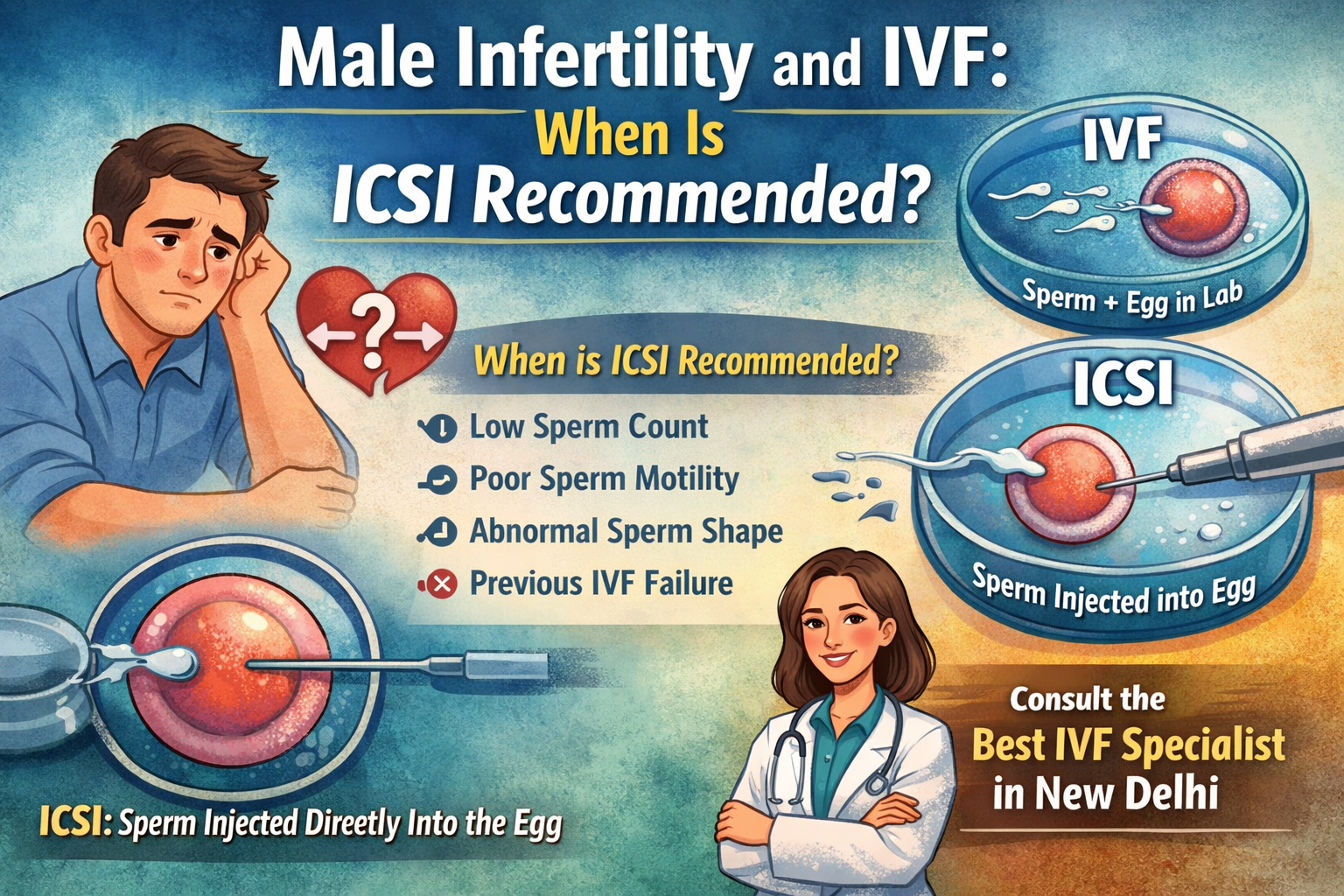
What Is ICSI in IVF?
ICSI stands for Intracytoplasmic Sperm Injection.
It is a specialized IVF technique designed specifically for male infertility problems.
In this procedure:
-
A single healthy sperm is selected.
-
The sperm is injected directly into the egg using a microscopic needle.
-
Fertilization occurs inside the egg.
This technique significantly increases the chances of fertilization when sperm quality is poor.
Think of it like planting a seed directly into soil rather than hoping the wind carries it to the right spot.
IVF vs ICSI: What Is the Difference?
Many couples wonder whether IVF and ICSI are the same.
The main difference lies in how fertilization occurs.
| IVF |
ICSI |
| Sperm fertilizes egg naturally in lab |
Sperm injected directly into egg |
| Requires good sperm quality |
Works even with poor sperm quality |
| Less complex procedure |
More precise laboratory technique |
Doctors decide which method is best after evaluating sperm quality through semen analysis.
When Do Doctors Recommend ICSI?
ICSI is not always necessary in IVF treatment. However, it becomes highly beneficial in certain situations.
Doctors may recommend ICSI if:
-
Sperm count is extremely low
-
Sperm motility is poor
-
Sperm shape is abnormal
-
Previous IVF cycles failed
-
Frozen sperm is used
-
Sperm is surgically retrieved
Consulting the best ivf specialist in new delhi can help determine whether ICSI is the right option for your case.
Low Sperm Count and ICSI
Low sperm count, also called oligospermia, is one of the most common causes of male infertility.
Normally, semen should contain at least 15 million sperm per milliliter.
When sperm numbers are low:
ICSI helps by selecting one healthy sperm and injecting it directly into the egg, bypassing the need for millions of sperm.
Poor Sperm Motility and Fertility
Sperm motility refers to how well sperm move.
Healthy sperm must swim through the reproductive tract to reach the egg.
When motility is poor:
ICSI solves this problem by placing the sperm exactly where it needs to be.
Abnormal Sperm Shape (Morphology)
The shape of sperm also matters.
Normal sperm have:
-
Oval heads
-
Long tails
-
Smooth structure
Abnormal sperm shapes can prevent proper fertilization.
During ICSI, embryologists carefully choose the healthiest-looking sperm, improving fertilization chances.
Previous IVF Failure
Sometimes couples undergo IVF but fertilization does not occur.
This may happen due to hidden sperm problems that were not detected earlier.
In such cases, doctors often recommend ICSI in the next IVF cycle to increase fertilization success.
ICSI for Genetic or Surgical Sperm Retrieval
In some men, sperm cannot be ejaculated normally.
This can happen due to:
-
Blocked sperm ducts
-
Vasectomy
-
Genetic conditions
Doctors can retrieve sperm directly from the testicles using procedures like:
These retrieved sperm are then used with ICSI for fertilization.
Success Rates of ICSI
ICSI has significantly improved the chances of fertilization for couples facing male infertility.
Studies show:
However, success depends on several factors such as:
-
Female age
-
Egg quality
-
Embryo quality
-
Clinic expertise
This is why choosing an experienced fertility expert is important.
Risks and Considerations of ICSI
ICSI is generally considered safe, but like all medical procedures, it has certain considerations.
Possible risks include:
-
Slightly higher cost than IVF
-
Rare chance of egg damage during injection
-
Small risk of genetic issues if sperm defects exist
However, with modern technology and experienced specialists, these risks remain minimal.
Choosing the Right Fertility Specialist
Choosing the right doctor can make a big difference in IVF success.
When looking for the best ivf specialist in new delhi, consider:
-
Doctor’s experience in IVF and ICSI
-
Success rates of the clinic
-
Laboratory technology
-
Personalized treatment plans
-
Patient reviews and reputation
Fertility treatment is both a medical and emotional journey, so trust and expertise matter greatly.
Lifestyle Changes to Improve Male Fertility
While treatments like ICSI help, improving overall health can also boost fertility.
Men can improve sperm health by:
Maintaining a healthy weight
Eating a balanced diet
Include:
-
Fruits
-
Vegetables
-
Nuts
-
Whole grains
Avoiding smoking and alcohol
Reducing stress
Exercising regularly
Small lifestyle changes can sometimes make a big difference in fertility outcomes.
Conclusion
Male infertility is more common than many people realize, but modern reproductive medicine offers powerful solutions.
Techniques like ICSI have revolutionized IVF treatment, allowing doctors to overcome even severe sperm problems. By directly injecting a single sperm into the egg, ICSI dramatically increases fertilization chances for couples struggling with male infertility.
If you or your partner are facing fertility challenges, understanding your options is the first step toward parenthood. Consulting the best ivf specialist in new delhi can help you receive the right diagnosis, personalized treatment plan, and the best possible chance of success.
With the right medical support and lifestyle improvements, many couples go on to achieve their dream of starting a family.
FAQs
1. What is the difference between IVF and ICSI?
IVF allows sperm to fertilize the egg naturally in the lab, while ICSI involves injecting a single sperm directly into the egg.
2. Is ICSI only used for male infertility?
Mostly yes, but doctors may also use ICSI in cases of unexplained infertility or previous IVF failure.
3. Does ICSI increase IVF success rates?
Yes, especially when male infertility factors such as low sperm count or poor motility are present.
4. Is the ICSI procedure safe?
ICSI is generally considered safe and has been used successfully worldwide for many years.
5. Who should consult an IVF specialist for ICSI treatment?
Couples experiencing male infertility, repeated IVF failure, or severe sperm abnormalities should consult a fertility expert for evaluation.
 English
 Arabic
 French
 Spanish
 Portuguese
 Deutsch
 Turkish
 Dutch
Dutch
 Italiano
 Russian
 Romaian
 Portuguese (Brazil)
 Greek
Greek