English
 Arabic
 French
 Spanish
 Portuguese
 Deutsch
 Turkish
 Dutch
Dutch
 Italiano
 Russian
 Romaian
 Portuguese (Brazil)
 Greek
Greek

YYGames——探索遊戲新世界的最佳選擇
Games |
2025-11-07 09:19:58
In a modern gaming landscape often characterized by accessibility and hand-holding, Diablo II Resurrected stands as a monument to a different philosophy. It is a game that does not apologize for its difficulty. It does not scale enemies to your level or offer to resurrect you on the spot with no penalty. It presents a dark, dangerous world and asks you to survive it on its own terms. This uncompromising challenge is not a flaw; it is the very core of its enduring appeal.
From the moment you create a character, the game establishes its rules. You have limited stamina, scarce resources, and enemies that can and will kill you if you are careless. The early levels are a brutal tutorial in caution and resource management. Every potion matters. Every unidentified item could be a vital upgrade. This struggle creates a sense of vulnerability that modern games often smooth over. You are not a demigod descending from on high; you are a desperate wanderer fighting for survival in a world consumed by darkness.
This philosophy extends to the game's infamous penalty for death. When your character falls in Diablo II Resurrected, you do not simply respawn at the nearest checkpoint with a slap on the wrist. You lose a percentage of your total experience and a chunk of your hard-earned gold. Furthermore, your corpse, containing all your equipped gear, remains exactly where you died. To recover it, you must trek back through the same dangerous territory, often naked and unarmed, to retrieve your belongings. This mechanic, known as the "Corpse Run," is a source of tension unmatched in most modern games. It forces you to weigh risk against reward, to consider whether pushing deeper into the unknown is worth the potential cost.
The difficulty is further magnified by the game's structure. Upon completing the game on Normal difficulty, players unlock Nightmare, and then Hell. Each subsequent difficulty level dramatically increases enemy resistances, health, and damage. In Hell mode, many monsters become immune to certain damage types, forcing players to adapt their strategies and gear. A Sorceress who breezed through Normal with a pure Fire build may find herself completely helpless against a Fire Immune enemy in Hell. This forces a deeper level of engagement with the game's complex systems, encouraging theorycrafting and cooperation.
This challenging design fosters a unique sense of community. Players band together to tackle obstacles they cannot face alone. A Paladin's Conviction aura can break immunities for a Sorceress. A Barbarian's shouts can provide the survivability a Necromancer needs. The shared struggle against the game's brutal mechanics creates bonds and shared stories that are far more memorable than any easy victory.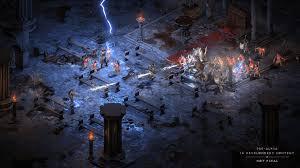
In the end, the challenge of runeword d2r is not a barrier to entry; it is an invitation. It invites players to learn, to adapt, and to persevere. It respects their intelligence and rewards their dedication. In a world of easy victories, it reminds us that the most satisfying triumphs are the ones we truly earn.