English
 Arabic
 French
 Spanish
 Portuguese
 Deutsch
 Turkish
 Dutch
Dutch
 Italiano
 Russian
 Romaian
 Portuguese (Brazil)
 Greek
Greek

Whiteout Survival Hero Gear Calculator – Resources & SVS
Games |
2025-10-30 04:19:34
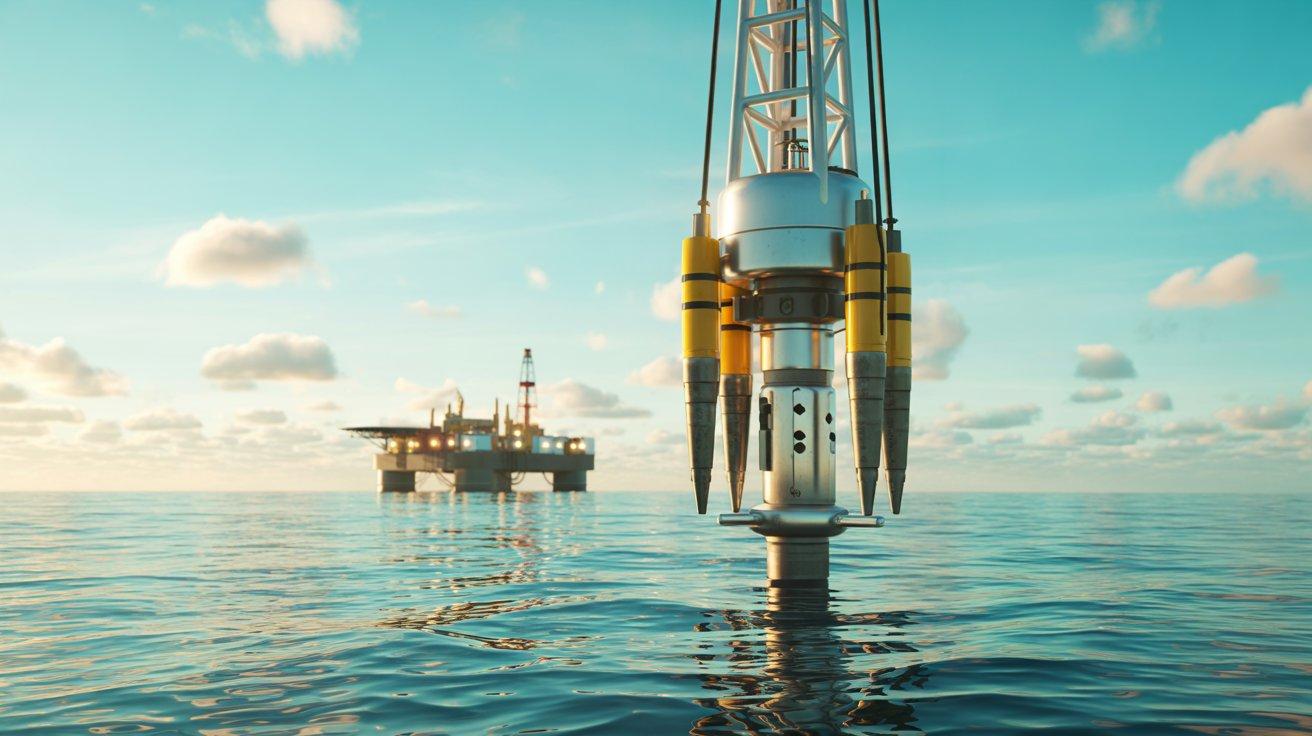
Offshore energy exploration is one of the most technologically demanding sectors in the world. Drilling operations take place in remote environments where powerful ocean currents, extreme pressure, and unpredictable weather conditions create constant operational challenges. In such settings, safety is not just a priority—it is a necessity that determines the success or failure of an entire project.
Over the past decade, the offshore industry has witnessed a transformation driven by advanced technologies and smarter equipment. Modern drilling operations are no longer dependent solely on mechanical strength and manual monitoring. Instead, intelligent systems, real-time data, and automated equipment are helping companies detect risks earlier and respond faster. Among these innovations, smart drilling tools are playing a crucial role in improving operational safety while also increasing efficiency and reliability.
Offshore drilling environments present unique safety risks that are rarely encountered in land-based operations. Workers must operate heavy machinery on floating platforms while dealing with high-pressure reservoirs and complex drilling systems. Even a minor error can escalate into a serious incident.
Historically, many offshore accidents occurred due to limited real-time monitoring, delayed decision-making, or mechanical failures that were detected too late. Traditional drilling systems relied heavily on manual inspections and reactive maintenance strategies.
Today, the industry is shifting toward proactive safety management. By integrating digital technologies and smart monitoring capabilities, modern drilling tools are designed to detect potential hazards before they become critical problems. This shift is helping companies create safer working environments and more resilient offshore operations.
Technological advancements have transformed drilling equipment into intelligent systems capable of collecting and analysing operational data in real time. Sensors embedded in drilling components continuously monitor pressure, temperature, vibration, and drilling performance.
These advanced offshore drilling tools provide engineers with valuable insights about the condition of the drilling system and the surrounding environment. Real-time data enables faster decision-making and allows operators to adjust drilling parameters instantly when abnormal conditions appear.
Instead of relying solely on human observation, smart tools now function as an additional layer of safety. They alert operators to potential issues such as equipment fatigue, formation instability, or unexpected pressure changes deep beneath the seabed.
One of the most powerful safety improvements in offshore drilling comes from real-time monitoring technology. Smart drilling tools continuously transmit data to control centres on the drilling rig and sometimes even to remote onshore facilities.
This constant flow of information allows engineers to track drilling performance and detect warning signs early. For example, sudden pressure fluctuations may indicate a potential well control issue, while abnormal vibration levels can signal equipment wear or structural stress.
Early detection allows operators to respond quickly by adjusting drilling parameters or temporarily stopping operations. This proactive approach significantly reduces the likelihood of accidents and helps maintain stable drilling conditions throughout the project.
Human expertise remains essential in offshore operations, but automation is increasingly helping reduce the risk of mistakes during complex drilling procedures. Smart drilling tools often incorporate automated control features that assist operators in maintaining optimal drilling conditions.
Automated systems can regulate drilling speed, adjust weight on the drill bit, and control pressure levels more precisely than manual operations alone. These automated adjustments reduce the chances of sudden system overloads or equipment damage.
By supporting human operators with intelligent automation, drilling teams can maintain higher safety standards even during demanding operations. Automation also helps reduce operator fatigue by handling routine monitoring tasks that previously required constant manual attention.
Equipment failure is one of the leading causes of safety incidents in offshore drilling. Heavy machinery operating under extreme conditions is exposed to constant mechanical stress, corrosion, and wear.
Smart drilling tools now use predictive maintenance technology to address this challenge. Sensors track equipment performance and identify subtle changes that may indicate developing problems. Instead of waiting for a component to fail, maintenance teams can repair or replace parts before a breakdown occurs.
Predictive maintenance improves safety by preventing unexpected failures during drilling operations. It also reduces costly downtime and extends the lifespan of expensive offshore equipment.
Well control is one of the most critical aspects of offshore drilling safety. Maintaining proper pressure balance between the drilling fluid and the underground formation is essential to prevent dangerous events such as blowouts.
Modern smart drilling systems include advanced pressure monitoring technologies that provide continuous feedback on well conditions. These systems analyse pressure data in real time and alert operators when abnormal trends appear.
By providing immediate visibility into subsurface conditions, smart tools allow drilling teams to maintain precise pressure control throughout the drilling process. This capability significantly reduces the risk of uncontrolled fluid releases and other hazardous events.
Another major advantage of smart drilling technology is improved communication between offshore teams and onshore experts. In the past, decision-making often relied solely on personnel located on the drilling platform.
Today, digital communication networks allow real-time data from drilling tools to be transmitted to onshore operations centres. Engineers and specialists on land can analyse the information and provide guidance to offshore teams when complex situations arise.
This collaborative approach improves decision-making and ensures that multiple experts can contribute to solving technical challenges. As a result, safety decisions are often made faster and with greater accuracy.
Smart drilling technology is also improving training programmes for offshore workers. Data collected from drilling operations can be used to create highly realistic training simulations.
These simulations allow drilling crews to practise responding to emergency scenarios such as sudden pressure changes, equipment malfunctions, or severe weather conditions. By experiencing these scenarios in a controlled environment, workers develop the skills needed to react effectively during real incidents.
Better training leads to improved confidence and preparedness among offshore teams. When workers understand how smart tools function and how to interpret their data, they can respond more effectively to potential safety risks.
Offshore safety is closely linked to environmental protection. Drilling incidents can have serious consequences for marine ecosystems, coastal communities, and global energy markets.
Smart drilling tools help minimise environmental risks by improving monitoring and control throughout the drilling process. Early detection of equipment issues or pressure anomalies reduces the likelihood of spills, leaks, or uncontrolled releases.
In addition, improved drilling accuracy helps minimise disturbance to surrounding geological formations. By maintaining stable operations, companies can reduce their environmental footprint while still meeting global energy demands.
The future of offshore drilling safety will likely be shaped by continued technological innovation. Artificial intelligence, machine learning, and advanced robotics are already beginning to influence drilling operations.
In the coming years, drilling tools may become even more autonomous, capable of adjusting drilling strategies based on real-time geological data. AI systems could analyse massive data streams from drilling equipment and identify patterns that human operators might overlook.
Integration with digital twin technology may also allow companies to simulate drilling operations in virtual environments before work begins. These digital models could help engineers identify potential safety risks and optimise drilling strategies in advance.
As these technologies evolve, offshore drilling operations will become safer, more efficient, and more environmentally responsible.
Offshore drilling remains one of the most complex and challenging industrial activities in the world. The combination of harsh ocean environments, high-pressure reservoirs, and sophisticated machinery creates unique safety challenges that require advanced solutions.
Smart drilling tools are transforming the industry by providing real-time monitoring, predictive maintenance capabilities, and intelligent automation. These technologies help detect risks early, support faster decision-making, and reduce the likelihood of human error.
As offshore projects continue to expand into deeper waters and more complex environments, the role of smart technology will become even more critical. By investing in intelligent drilling systems and innovative safety solutions, the offshore industry is building a safer and more sustainable future for energy production.