


Comparing Graft Counts: How to Estimate the Scope of Your Procedure
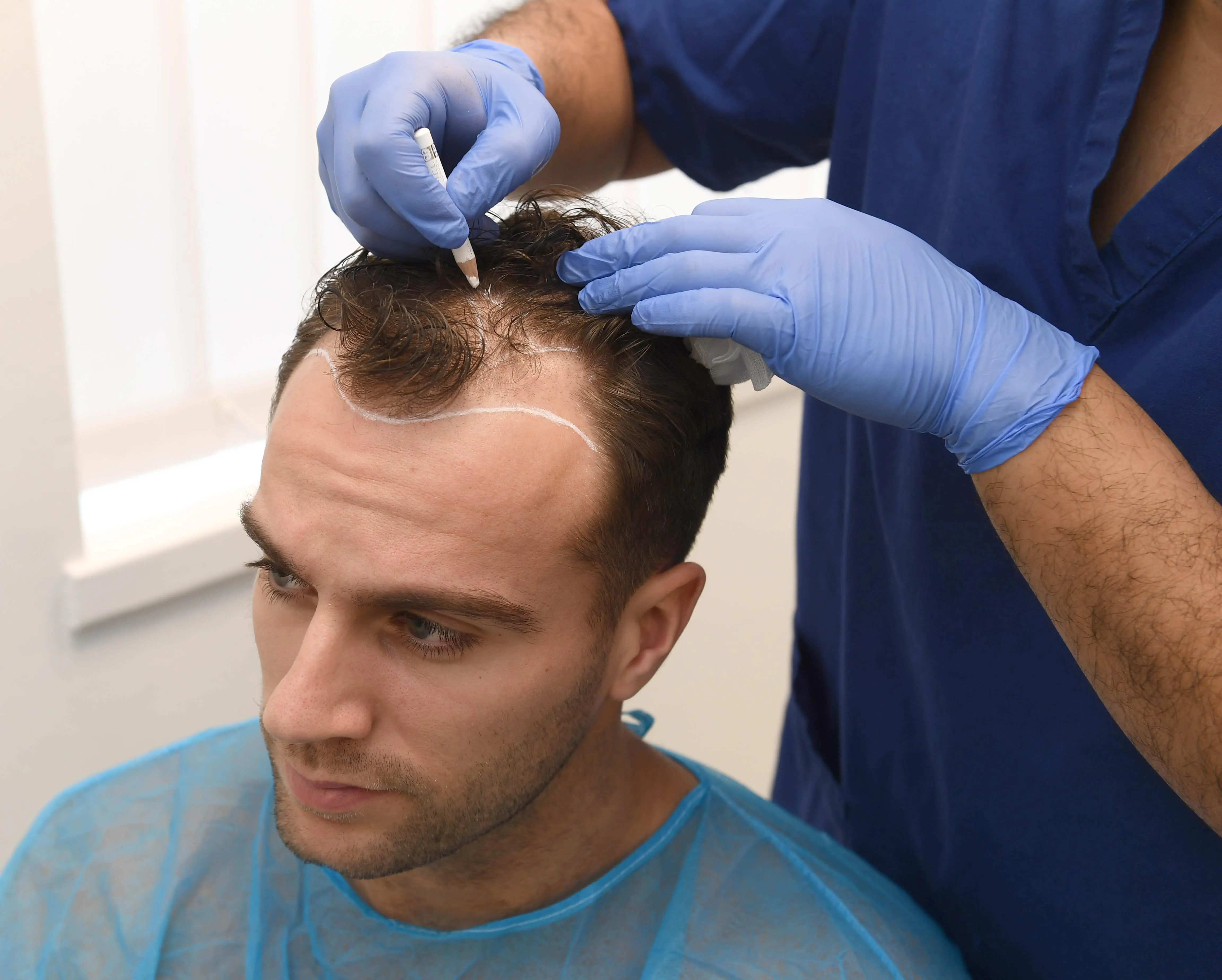
Estimating the number of grafts needed for a hair transplant in dammam(زراعة الشعر في الدمام) is part science, part art. While only a specialist with a densitometer can give you an exact figure, you can get a solid "ballpark" estimate by understanding how surgeons categorize hair loss.
1. The Norwood Scale: Your Starting Point
Most surgeons use the Norwood Scale to determine the scope of a procedure. This scale classifies male pattern baldness into seven stages.
-
Stage 2 (Minor Recession): Usually requires 500 – 1,000 grafts to fill in the temple "corners."
-
Stage 3 (Deep Recession): Often requires 1,000 – 2,000 grafts to restore the hairline and frontal peak.
-
Stage 4 (Thinning Crown & Front): Generally requires 2,000 – 3,000 grafts to bridge the gap between the front and the back.
-
Stage 5-7 (Advanced Loss): Can require 4,000+ grafts, often split over two separate sessions to preserve the "donor area" at the back of the head.
2. Factors That Change the Math
It isn't just about the size of the bald spot; your hair’s physical characteristics play a massive role in how much coverage a single graft provides.
| Factor | Impact on Graft Count |
| Hair Thickness | Coarser hair covers more surface area; fine hair requires more grafts for the same look. |
| Hair Color Contrast | Low contrast (e.g., blonde hair on light skin) hides thinning better than high contrast. |
| Donor Density | If your "permanent" hair at the back is thin, the surgeon may have to use fewer grafts to avoid over-harvesting. |
| Hair Curl | Curly hair provides significantly more "visual volume" than pin-straight hair. |
3. The "Grafts vs. Hairs" Distinction
One common point of confusion is the difference between a follicular unit (graft) and an individual hair.
-
A single graft usually contains 1 to 4 hairs.
-
Surgeons aim for an average of 2.2 to 2.5 hairs per graft.
-
Strategic Placement: Single-hair grafts are used for a natural-looking hairline, while 3-4 hair grafts are placed in the mid-scalp and crown for maximum density.
4. Setting Realistic Expectations
A "full" natural head of hair typically has a density of about 80–100 grafts per $cm^2$. However, in a transplant, surgeons usually aim for 40–50 grafts per $cm^2$.
Why? Because of the "Illusion of Density." You don't actually need 100% of your original hair to look like you have a full head of hair; 50% is often enough to satisfy the eye, provided the placement is strategic.
Note: Over-packing grafts (too much density) can actually decrease the "take rate" because the scalp's blood supply can't support too many new

 Arabic
 French
 Spanish
 Portuguese
 Deutsch
 Turkish
 Dutch
Dutch
 Italiano
 Russian
 Romaian
 Portuguese (Brazil)
 Greek
Greek