


Understanding the Science Behind Permanent Tattoo Removal
Understanding the Science Behind Permanent Tattoo Removal
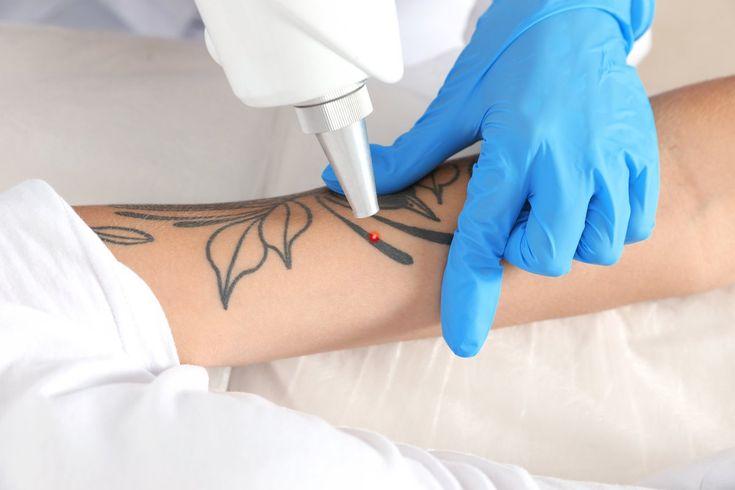
The process of erasing ink from the human body is a fascinating intersection of high-energy physics and complex biological immune responses. For individuals exploring Permanent tattoo removal in Riyadh(إزالة الوشم الدائم في الرياض), understanding the underlying science is the first step toward appreciating why the process requires multiple stages and specialized equipment. Unlike superficial skin treatments, tattoo removal must penetrate the protective upper layers of the skin to interact with foreign pigments trapped deep within the dermis. This guide delves into the mechanical and cellular mechanisms that allow a laser to break down stubborn ink and how the body’s natural filtration system completes the job.
The Dermal Trap: Why Tattoos Are Permanent
To understand how removal works, one must first understand why tattoos stay in the skin in the first place. When a tattoo needle punctures the skin, it deposits ink into the dermis—the second, deeper layer of skin that does not shed like the surface epidermis.
The body immediately recognizes these ink particles as foreign invaders. White blood cells, known as macrophages, rush to the site to "swallow" the ink and carry it away. However, tattoo ink particles are significantly larger than the white blood cells. The cells end up "cloaking" the ink but are unable to move it, effectively trapping the pigment in a cellular suspension. Over time, some ink naturally fades as the body slowly breaks down tiny bits, but the vast majority remains locked in place, visible through the translucent epidermis.
The Power of Photothermolysis
The scientific breakthrough that made modern removal possible is called Selective Photothermolysis. This principle allows a specific wavelength of light to pass through the skin without damaging it, only to be absorbed by a specific color of ink.
When the laser hits the ink, two major scientific events occur:
-
The Photothermal Effect: The ink absorbs the light energy and heats up incredibly quickly. This heat causes the ink structure to become unstable.
-
The Photoacoustic Effect: Because the laser pulse is so incredibly short (measured in nanoseconds or picoseconds), the energy creates a mechanical shockwave. This "snap" vibrates the ink particle so violently that it shatters into microscopic dust, much like a high-pitched note can shatter a wine glass.
The Role of the Lymphatic System
Once the laser has done its job of "pre-processing" the ink into smaller fragments, the biological phase begins. The once-immovable ink particles are now small enough for the body’s immune system to handle.
The lymphatic system—a network of tissues and organs that help rid the body of toxins and waste—takes over. Macrophages now successfully engulf the shattered ink dust and transport it through the lymph nodes. From there, the ink is filtered by the liver and excreted from the body as natural waste. This is a slow, gradual process, which is why the visual fading of a tattoo often continues for weeks or even months after a laser session has ended.
Wavelengths and the Color Spectrum
Science dictates that different colors of light absorb different frequencies. This is why a "one-size-fits-all" laser approach rarely works for complex tattoos.
-
Black Ink: Absorbs all wavelengths, making it the most scientifically straightforward color to remove.
-
Red Ink: Requires a green light wavelength (532 nm) to be absorbed effectively.
-
Blue and Green Inks: These require specific red or infrared wavelengths (755 nm or 694 nm) to "see" the pigment.
Without the correct scientific calibration of the laser's wavelength, the energy would simply bounce off the ink or be absorbed by the skin's natural melanin, potentially leading to burns or ineffective treatment.
The Importance of Thermal Relaxation Time
A crucial scientific concept in safe removal is Thermal Relaxation Time (TRT). This refers to the amount of time it takes for a target (the ink) to lose 50% of its heat to the surrounding tissue.
Modern lasers are engineered to deliver pulses that are shorter than the TRT of the ink. This ensures that the energy hits the ink and shatters it before the heat has a chance to leak out and burn the surrounding healthy skin cells. This precision is what allows for "Permanent tattoo removal in Riyadh" to be performed with minimal risk of scarring, provided the technology is used by trained professionals who understand these delicate variables.

 English
 Arabic
 French
 Spanish
 Portuguese
 Deutsch
 Turkish
 Dutch
Dutch
 Italiano
 Romaian
 Portuguese (Brazil)
 Greek
Greek